Back to rentalsguide
Kayak Rental Boston: Best Spots on the River & Harbor
Explore the best kayak rental opportunities in Boston, from the flat waters of the Charles River to the tidal challenges of the Harbor. This guide covers essential safety regulations, top paddling locations, and tips for enjoying an urban wilderness experience.
5 min readLast reviewed
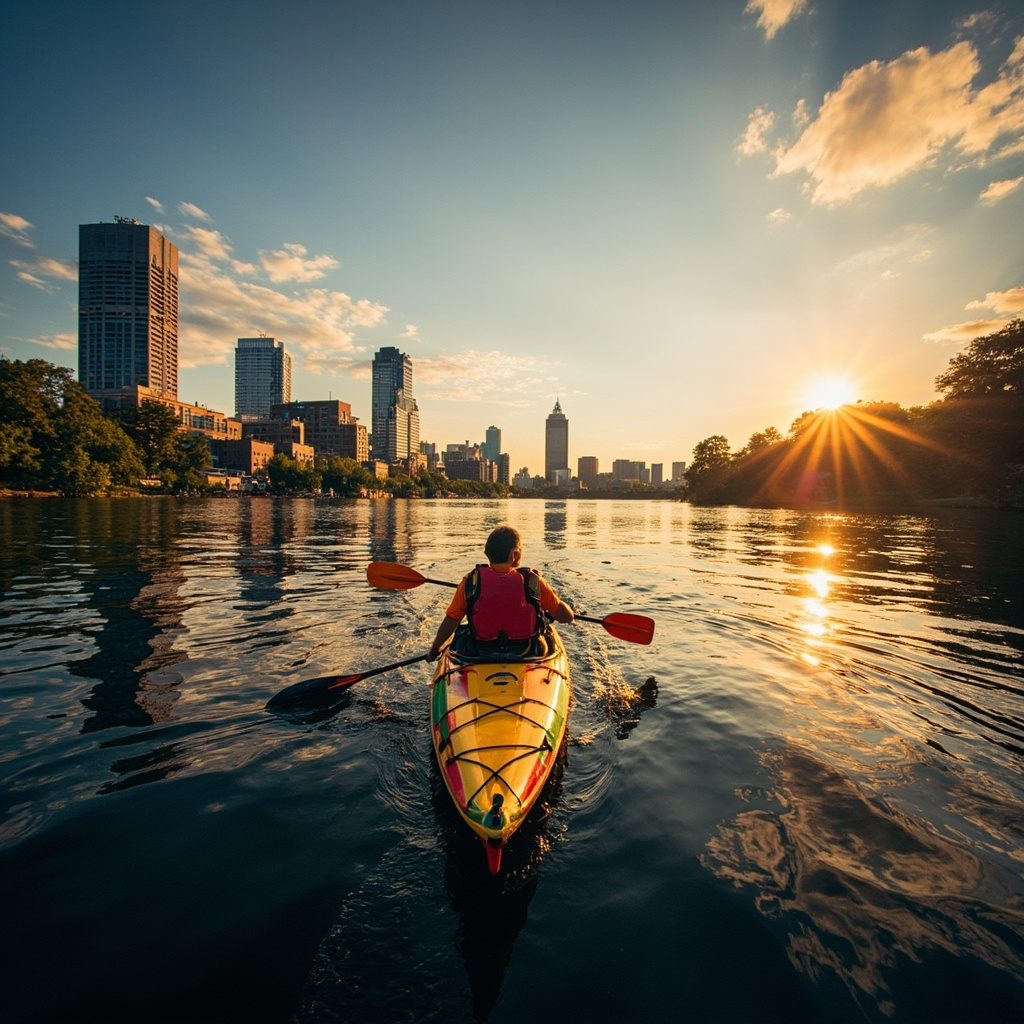
Table of contents
- Why Paddle Boston? The "Why" Before the "How"
- The Urban Wilderness
- Accessibility and Skill Progression
- Safety First: Protocols for Boston Waterways
- USCG and Massachusetts Regulations
- The American Canoe Association (ACA) Golden Rules
- The Charles River: The Heart of Boston Paddling
- The Upper Charles (Lush and Sinuous)
- The Lower Basin (The Iconic Skyline)
- The Boston Harbor: Saltwater Exploration
- Harbor Islands National Park
- Inner Harbor and Fort Point Channel
- Quiet Waters: Lakes and Ponds
- Jamaica Pond
- Mystic Lakes (Medford/Winchester)
- Kayak Fishing in Boston: Habitat and Gear
- Striped Bass in the Harbor
- Largemouth Bass in the Upper Charles
- Comparison of Boston Kayak Rental Environments
- Logistics: What to Know Before You Go
- Booking and Reservations
- What to Wear
- Frequently Asked Questions (FAQ)
- 1. Do I need a permit to launch my own kayak in Boston?
- 2. Can I paddle from the Charles River into the Boston Harbor?
- 3. What happens if I flip my kayak?
- 4. Are there age restrictions for renting kayaks in Boston?
- 5. Can I bring my dog on a rental kayak?
- About the Author
Boston is a city that only truly makes sense from the water. From the iconic curve of the Charles River to the salty, rugged islands scattered across the Harbor, the capital offers way more than just a history lesson. Whether you’re looking for a quiet afternoon on a pond or a technical challenge in tidal waters, this guide breaks down the best places to rent, the safety rules you can't ignore, and how to navigate the city like a pro.
Why Paddle Boston? The "Why" Before the "How"
Boston has a deep, historic bond with the water. Before you grab a paddle, you should know that the city is a world-class destination for water sports for a reason. If you're a total beginner, you'll find "controlled" environments -- mostly flat water where the current won't give you a hard time. For the more experienced or the kayak fishing crowd, it's a gateway to complex ecosystems and some of the best urban photography spots in the country.
The Urban Wilderness
Paddling here gives you a front-row seat to the "urban-wild" interface. On the Charles River, you can drift past the Esplanade with the city's hum in your ears while being inches away from nesting herons and painted turtles. In the Harbor, you're navigating the same channels used by 18th-century merchant ships, now shared with massive ferries and sailboats. It's a trip through time.
Accessibility and Skill Progression
The Boston rental scene is great because you can actually scale your experience. Start at a dead-calm spot like Jamaica Pond, graduate to the managed flow of the Charles, and eventually take on the open-ocean challenges of Boston Harbor. Each step requires a bigger toolkit -- from basic forward strokes to mastering tidal offsets and the U.S. Coast Guard (USCG) Navigation Rules of the Road. The leap that humbled me most wasn't the open water -- it was the wind on the Lower Basin catching my wide, stable rental broadside and reminding me that "no current" is not the same as "no challenge."
Safety First: Protocols for Boston Waterways
Safety isn't just a suggestion; it's the law. Before you push off, you need to know the federal and state rules governing these waters.
USCG and Massachusetts Regulations
The U.S. Coast Guard classifies kayaks as "vessels" under federal law, which means you are legally required to carry specific gear. Most reputable rental shops will hand these to you, but it's on you to use them:
- Personal Flotation Devices (PFDs): Massachusetts law requires every canoeist and kayaker to wear a Coast Guard-approved PFD at all times between September 15 and May 15 -- the cold-water season, when an unexpected swim can paralyze your breathing muscles within minutes (the rule is codified at 323 CMR 2.00: The Use of Vessels and explained in plain language in the Massachusetts Boating Law Summary). The water is cold, and cold-water immersion is no joke. Children under 12 must wear a properly fitted PFD year-round, per the same Massachusetts boating law summary.
- Sound Signaling Device: You need a whistle or horn. If the fog rolls in or you need help, you have to be heard. A pealess safety whistle clipped to your PFD is the cheapest piece of safety gear you can buy and the one most renters forget they have until they need it.
- Night Lighting: If you're out between sunset and sunrise, you must have a white light (like a waterproof flashlight) ready to show to prevent a collision. A small USB-rechargeable dive light on a lanyard weighs nothing in your hatch and satisfies the rule.
The American Canoe Association (ACA) Golden Rules
The American Canoe Association (ACA) publishes safety Best Practices for Paddlers that boil safe paddling down to the "Rule of Three": never paddle alone, always check the forecast, and dress for the water temperature, not the air. In Boston, the Atlantic stays dangerously cold well into June, even if it's a 80-degree day. Cold water shock can flip your day from fun to fatal in seconds. The first time I dumped in the Inner Harbor in late May, the air was 70°F and the water was still 52°F -- the gasp reflex hit before I had time to think, and the only reason I stayed calm was the PFD keeping my head above water while my chest sorted itself out.
The Charles River: The Heart of Boston Paddling
The Charles is easily the most popular spot in New England. But don't think of it as one long stream; it's divided into very different sections by dams and locks.
The Upper Charles (Lush and Sinuous)
Head to Newton or Waltham for the "Lakes" section. It's a bit of a misnomer; it's really just a very slow river with heavy tree cover and tiny islands.
- Best for: Families, bird watchers, and those just finding their balance.
- The Experience: The current is almost non-existent. It's the perfect place to practice your "J-stroke" or play around with maneuvers without worrying about wind or big wakes. On a weekday morning you'll often have a stretch of two-mile water to yourself; weekends get busier after 10 AM near the Moody Street Dam put-in.
- Where to rent: Two outfitters cover this stretch. Paddle Boston's Newton: Historic Boathouse sits at 2401 Commonwealth Avenue, Newton, MA 02466, and Paddle Boston's Waltham: Moody Street Dam is at 160 Riverview Avenue, Waltham, MA 02453. Central booking and current hours are at (617) 965-5110.
The Lower Basin (The Iconic Skyline)
This is where the postcard views live -- the stretch between Cambridge and Back Bay. The basin is the most rented slice of freshwater in the city and runs roughly nine miles with no current, which makes round-trip paddling easy.
- The Challenge: Wind. The Lower Basin is a natural wind tunnel. Even if the trees onshore aren't moving, an easterly 10-knot breeze is enough to start building "fetch" -- those rolling chop waves that travel faster than the wind that made them -- turning the water choppy and testing your stability. From my own time on the basin, anything over 15 knots of easterly stops being beginner-friendly, even in a 12-foot sit-on-top. Check the NOAA Boston marine forecast before you launch and aim for early-morning glass if the day calls for an afternoon seabreeze.
- Pro Tip: If the wind kicks up, hug the shoreline. Remember the USCG Navigation Rules of the Road: kayaks are small and slow. Stay clear of the larger boats and those lightning-fast rowing shells (sculls) that dominate this area. Sculls have right-of-way under the Inland Rules and they cannot turn quickly -- if you see a crew launching from the Weld Boathouse, give them a 50-yard buffer.
- Where to rent: Paddle Boston's Cambridge: Kendall Square location at 15 Broad Canal Way, Cambridge, MA 02142 sits in the heart of the basin and rents by the hour -- a single kayak is roughly $35 for 90 minutes, $45 for up to three hours, and $57 for the full day, with double kayaks at $51/$64/$78 per their published rate sheet. Paddle Boston's Boston: Allston/Brighton outpost at 1071 Soldier's Field Road is the closest launch to the BU Bridge and the Lower Basin lagoons. Across the Esplanade, Community Boating Inc. at 21 David G. Mugar Way, Boston, MA 02114 runs a walk-up-only kayak and SUP rental at $40 per person for two hours; the lagoon system is the operating area on high-wind days.
The Boston Harbor: Saltwater Exploration
For the intermediate paddler, the Harbor is a different beast. This is a tidal environment. If you don't check a tide chart before you go, you're in for a rough afternoon.
Harbor Islands National Park
Launching from the Seaport or East Boston lets you aim for the inner islands like Spectacle or Castle Island.
- Tidal Currents: In the inner narrows the flood and ebb at strength typically run about 1 to 1.4 knots -- the NOAA Coast Pilot 1, Chapter 11 lists 1.4 knots in the channel between Deer Island Light and Long Island Head, about 1.2 knots north of Ram Head, and roughly 1 knot in Hypocrite Channel, and the NOAA current station at Deer Island Light regularly records max flood values around 1.3-1.4 knots. That does not sound fast, but in a 12-foot recreational sit-on-top you paddle 3-4 knots on flat water, so a 1.4-knot current against you is the difference between making the next channel marker and falling short. Time the flood so you ride it out and the ebb back in.
- Commercial Traffic: The Harbor is a highway. Large tankers and ferries can't stop on a dime, and they have the right of way. Cross channels at a 90-degree angle and move like you mean it.
- Where to rent: Paddle Boston runs the only scheduled licensed kayak access into the Harbor from the Charles, departing from the Kendall Square (15 Broad Canal Way, Cambridge) and Somerville: Blessing of the Bay boathouses. Paddlers must sign a Harbor Rental Release and demonstrate wet-exit, self-rescue, and chart-and-compass skills before launching. A required "Harbor Kit" (compass, harbor chart, waterproof case, flashlight) is available for $21 per day.
Inner Harbor and Fort Point Channel
Want the skyline views without the ocean swells? Fort Point Channel is a protected "canyon" of water lined with historic warehouses. It's a photographer's dream, just keep an eye on bridge clearances if you're out at high tide. The Northern Avenue Bridge abutments hold striped bass at the flood change -- stand off 30 yards, drift, and let the current do the work; the way a striper schoolie sits just under the surface at slack water, waiting for the first push of moving water, is the easiest pattern to learn on this stretch.
Quiet Waters: Lakes and Ponds
If the river current or harbor salt feels like too much, Boston's "Emerald Necklace" offers some sanctuary.
Jamaica Pond
In the heart of Jamaica Plain, this kettle hole pond is a local treasure.
- Restrictions: You can't bring your own boat; you have to use their rentals. This keeps the water clean and free of motorized traffic or invasive species.
- Best for: A quick one-hour "reset" or practicing your strokes on glass-calm water. The pond's kettle-hole profile means the deepest water is in the middle and the shallows shelve slowly -- exactly why it is a forgiving place to learn a wet-exit and self-rescue before you take those skills to moving water.
- Where to rent: Courageous Sailing at the Jamaica Pond Boathouse (507 Jamaica Way, Jamaica Plain, MA 02130, phone (857) 452-1770 in season) runs the only public boat access on the pond. Single kayaks are $25 per hour ($20 for Boston residents), double kayaks $40 per hour ($35 for residents), and SUPs $25 per hour. The boathouse is open Tuesday-Friday from 4 PM to sunset and Saturday-Sunday from 10 AM to sunset; closed Mondays.
Mystic Lakes (Medford/Winchester)
Just north of the city, the Mystic Lakes give you more room to roam. The Upper Mystic Lake is a favorite for the local paddling community. It's bigger than Jamaica Pond but much more sheltered than the open Basin.
- Where to rent: Paddle Boston's Medford: Condon Shell location sits on the Mystic River and is the closest launch to the Upper and Lower Mystic Lakes.
Kayak Fishing in Boston: Habitat and Gear
Kayak fishing is booming here. Before you cast a line from a rental kayak, lock down the three non-negotiables: a properly fitted PFD you can actually paddle in (see the safety section), a whistle clipped to your vest for sound signals, and a valid Massachusetts saltwater or freshwater fishing license on your phone. Rods, tackle, crates, and anchor trolleys all come after that. The ACA Paddler's Safety Checklist lays out the priority gear in plain language, MassWildlife's Bass Fishing Tips covers the seasonal patterns, and our essential kayak fishing checklist (see also) walks through the full loadout so nothing gets left on the dock.
Striped Bass in the Harbor
"Stripers" are the marquee target the moment the season turns. According to Mass.gov, striped bass are present in Massachusetts waters from May through November, with the heaviest activity at dawn and dusk, and many Boston Harbor anglers pinning the spring arrival to Mother's Day, when the alewives and herring that stripers key on push back into the harbor and river mouths.
- Habitat: Tidal flats off the inner harbor islands, bridge pilings along the Mystic and Charles, and the seawalls near the Seaport and East Boston. Current-driven structure holds fish in the same spot for hours; the Beantown Bass buoys (G "5" off Graves Light, the "BG" buoy, Martins Ledge, Three-and-a-Half-Fathom Ledge) are proven marks once you clear the inner harbor.
- Best lures: Topwater plugs like the classic Rebel jumping minnow (bone with black over gold is a proven Boston color) work in low light. Sub-surface, a 6-inch 1.5-2 oz needlefish in a sand-eel pattern (olive over white) is a Boston staple, and big soft-plastic eels on a weighted swimbait hook or jighead cover the mid-column when fish drop below the surface.
- Best bait: Live eel is the top producer for trophy fish, followed by chunked pogies (menhaden) and mackerel. A wire leader is mandatory -- stripers have a sandpaper-like jaw that will shred mono in seconds.
Largemouth Bass in the Upper Charles
The weedy lagoons along the Esplanade and the slack-water pockets upstream toward West Roxbury and Newton are the heart of the city's largemouth bite. The reliable seasonal pattern, as documented by guides fishing the lower Charles, is to hit the shallow weedy cover early (May to mid-June) before the vegetation chokes off the water, then move to deeper structure (10-20 ft channel drop-offs, riprap, and bridge abutments) once the summer heat settles in.
- Habitat: The Esplanade Lagoons average three feet deep and are full of overhanging branches and submerged wood. Upstream, the quieter shoreline stretches near West Roxbury and Newton hold bass under downed timber and overhanging cover. Most of the river's bass weigh less than two pounds, but the lower river does produce fish over five pounds. MassWildlife's Bass Fishing Tips page makes the same point -- largemouth stack on downed trees and submerged wood in warm, shallow water, which is exactly the cover the Charles lagoons provide.
- Best lures: Early-season, fish Texas-rigged soft-plastic Stick Tail worms, Senko-style "wacky worms," and traditional white or chartreuse spinnerbaits through the weeds. As the water warms and bass slide deeper, switch to shad-style lipped plugs and weighted soft-plastics worked along the drop-offs. Topwater plugs (walking baits and Pop-R-style chuggers) are devastating at first light and last light.
- Approach: Drift through the structure in a stable, wide-hulled sit-on-top rental and cast parallel to the wood line. The slow, controlled presentation that MassWildlife recommends and that our complete guide to kayak fishing for bass walks through step by step is what converts follows into hookups on this water.
Note: Don't forget your Massachusetts fishing license. You can grab freshwater or saltwater permits on the Mass.gov saltwater fishing page.
Comparison of Boston Kayak Rental Environments
| Location | Water Type | Skill | Price (typical) | Weight (kayak) | Length | Typical Hull Material | Common Boat Type |
|---|---|---|---|---|---|---|---|
| Jamaica Pond | Flat Water | Beginner | ~$25/hr (single) | ~45-55 lb | ~10-12 ft | Rotomolded Polyethylene | Sit-on-top single and tandem |
| Upper Charles | Slow River | Beginner | ~$35-$45 / 90 min-3 hr | ~45-55 lb | ~12 ft | Rotomolded Polyethylene | Sit-on-top single |
| Lower Basin | Urban River | Beginner+ | $35 / 90 min, $45 / 3 hr, $57 full day (single) | ~45-55 lb | ~12 ft | Polyethylene | Sit-on-top single and double |
| Mystic Lakes | Open Lake | Intermediate | ~$35-$45 / 90 min-3 hr | ~50-60 lb | ~12-14 ft | Polyethylene or Composite | Sit-on-top single or touring |
| Boston Harbor | Tidal Estuary | Advanced | $57/day + $21 Harbor Kit | ~50-65 lb | ~14-17 ft | Polyethylene (sea-touring) | Sit-in sea kayak with bulkheads |
Price, kayak weight, and length are typical for the rental fleets listed at Paddle Boston's published rate sheet and Courageous Sailing's Jamaica Pond program. Specific makes and models vary by outfitter -- confirm the exact boat at booking.
Logistics: What to Know Before You Go
Booking and Reservations
- Book Early: Weekend slots are gone 7-10 days in advance during the summer. Don't show up expecting a boat to be waiting. Paddle Boston takes online reservations for most locations; Community Boating at the Esplanade is walk-up only. If you cannot find a weekend slot, try a Wednesday morning -- midweek is the easiest window for walk-ups at almost every outfitter.
- Paperwork: You'll sign digital waivers and need a photo ID.
- Storage: Most places have small lockers, but I always recommend bringing your own dry bag for your phone. Community Boating, for example, requires phones to be stored in a day locker that you bring your own lock for (locks are sold at the front office for $10). A 10-liter dry bag costs less than the locker deposit and keeps your phone on your body where you can actually use the camera.
What to Wear
- Skip the Cotton: Once cotton gets wet, it stays wet and sucks the heat right out of you. Stick to synthetics or wool. A thin merino base layer under a synthetic shell is the formula that has kept me warm through a February paddle on the Harbor.
- Footwear: Wear shoes you don't mind getting soaked. Water shoes or sandals are best. Flip-flops are a bad idea -- they slip on wet plastic when you're trying to get in or out. Old sneakers with heel straps are fine; just accept that they will get slimy.
- Sun Protection: The water acts like a mirror, doubling your UV exposure. Don't forget to put sunscreen under your chin and nose, where the reflection burns you even on cloudy days. A brimmed hat with a chin strap is the single most underrated piece of sun gear in the rental fleet.
- Spray Skirt (Harbor Only): If you're renting a sit-in sea kayak for the Harbor, ask whether the boat comes with a neoprene spray skirt. Without one, every wave breaks over your lap and the cockpit fills within minutes. Paddle Boston includes them with Harbor boats; if you're bringing your own, make sure the cockpit is a standard 81-83 cm touring size.
Frequently Asked Questions (FAQ)
1. Do I need a permit to launch my own kayak in Boston?
Most public ramps don't require a permit for your own boat, but places like Jamaica Pond are rental-only. On the Charles, stick to designated public launches so you aren't accidentally trespassing on a private rowing club's dock. The Charles River Watershed Association publishes an updated map of public put-ins versus private boathouses that is worth a quick check before any new-to-me launch.
2. Can I paddle from the Charles River into the Boston Harbor?
You can, but you have to go through the New Charles River Dam locks. It's an intense process that involves talking to the lock master and sitting in a chamber with massive boats. Most rental companies will strictly forbid you from doing this. Paddle Boston is the area outfitter that offers scheduled licensed Harbor access, and they require a signed Harbor Rental Release plus demonstrated wet-exit and self-rescue skills.
3. What happens if I flip my kayak?
In a sit-on-top, you just climb back on. In a sit-in, the boat might fill with water. The golden rule? Stay with your boat. A kayak is much easier for a rescue boat to spot than a person swimming alone. If your paddle is still tethered (it should be), keep it -- a floating paddle is easier to spot than your head in chop. On the Lower Basin the public rowing safety launches patrol on weekend mornings and will pick you up; just stay with the boat and wave.
4. Are there age restrictions for renting kayaks in Boston?
Most places require kids to be at least 5 (riding with an adult) and around 15-16 to go solo. If you're under 18, you'll need a parent to sign the waiver. Paddle Boston requires renters to be at least 18 (16 with a parental signature on the waiver), and they list a separate kid's kayak rate for ages 6-12.
5. Can I bring my dog on a rental kayak?
A lot of shops on the Charles are cool with dogs. Community Boating explicitly welcomes well-behaved dogs on kayaks and SUPs, provided the dog wears a life jacket (you bring your own). You'll need to bring your own canine life jacket, as most outfitters don't stock them. Always call first to make sure they're "paws-friendly." In my experience, the wider the kayak, the happier the dog -- a 12-foot sit-on-top is far more stable for a 50-pound Lab than a 14-foot sea kayak.
About the Author
Sarah Mitchell is a paddling writer who covers New England's urban and coastal waterways for KayakLens, with a focus on helping first-time paddlers and kayak anglers read the water, the weather, and the regulations before they push off the dock. Her writing on Boston draws on time spent drift-fishing the Charles lagoons, working the Inner Harbor on summer weekends, and learning the hard way that a wet-exit in February salt water is no joke.
Whether you're looking for the mirror-still surface of Jamaica Pond or the tidal current of the Harbor, Boston has a spot for you. The city looks entirely different from six inches above the waterline. Just remember to respect the Atlantic's temperature, keep your PFD buckled, and maybe check the tide one last time before you head out. Which skyline view are you hitting first?
— About the author
Lauren Bennett
Paddling Content Editor · Outdoor Recreation Writer · Beginner Kayaking, Safety, Buying Guides
Lauren Bennett writes educational kayaking guides for beginners and recreational paddlers. She covers safety practices, kayak selection, paddling techniques, and trip planning with clear, easy-to-follow advice designed to make kayaking more accessible for everyone.
View full profileRecommended for you
Related reads
 Guides
The Essential Kayak Fishing Checklist for First-Timers
An essential printable checklist for first-time kayak anglers covering safety, gear, and tactics.
 Species Guide
The Relentless Pursuit: Kayak Fishing for Bass Guide
The ultimate guide to chasing bass from a kayak, covering gear, stealth tactics, and safety.
You may also like
View all →Related rentals
 guide
guideKayak Rental in Erie, PA: Lake Erie & French Creek Guide
Planning a trip? Find the best kayak rental in Erie, PA. Explore Presque Isle State Park lagoons and French Creek with our guide to gear, safety, and spots.
 guide
guideKayak Rental Lake Tahoe: Best Alpine Paddling Spots
Plan your Lake Tahoe kayaking trip with our guide to the best rental spots, from Emerald Bay to Sand Harbor. Learn about cold water safety & gear requirements.
 guide
guideKayak Rental Dubrovnik: Best Caves & Hidden Beaches
Plan the ultimate Dubrovnik kayaking trip. Discover secluded sea caves, the best rental spots near Pile Gate, and vital USCG safety tips for the Adriatic Sea.