Back to speciesSpecies Guide
The Relentless Pursuit: Kayak Fishing for Bass Guide
Forget the noisy outboards. We're showing you how to turn a plastic hull into a stealthy bass-catching machine with the right gear and seasonal tactics.
5 min readLast reviewed
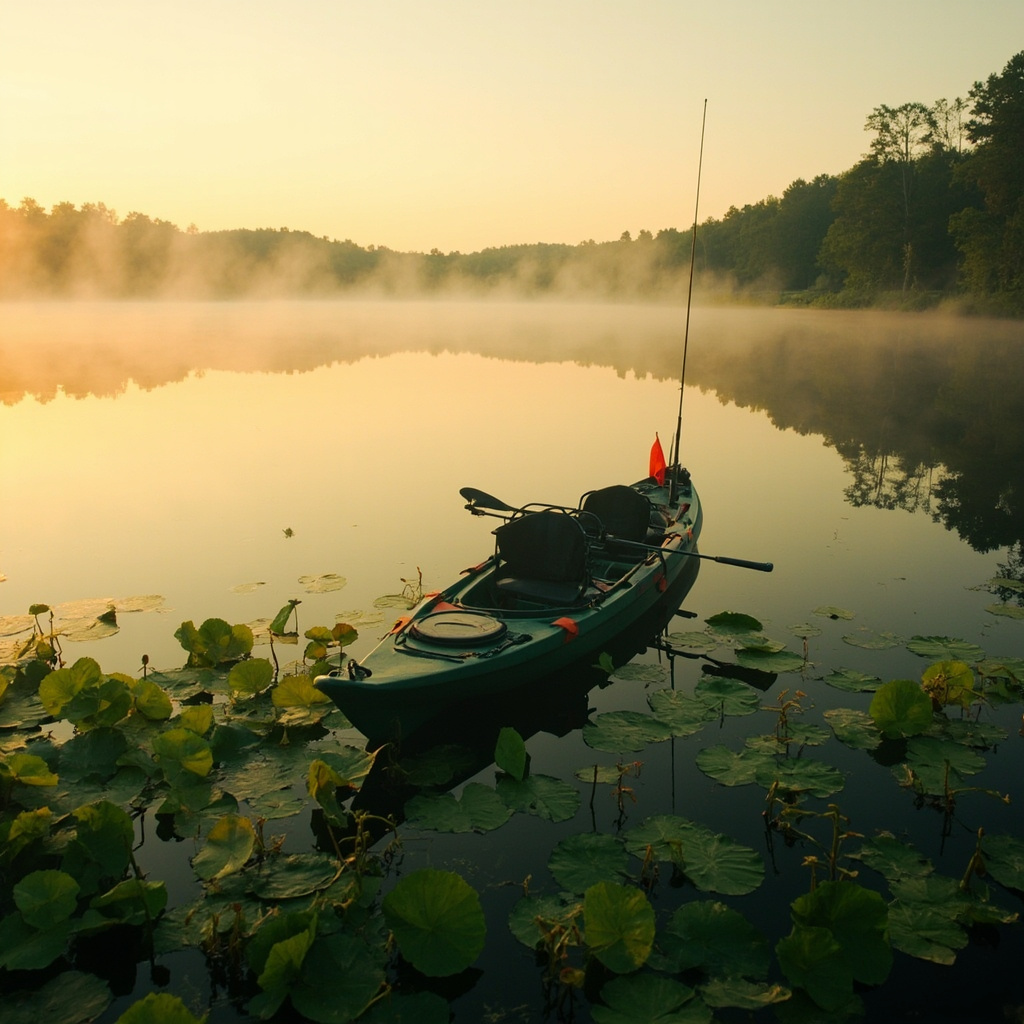
Table of contents
- Understanding the Target: Bass Species and Behavior
- Largemouth Bass (Micropterus salmoides)
- Smallmouth Bass (Micropterus dolomieu)
- Spotted Bass (Micropterus hensalli/punctulatus)
- The Kayak Advantage: Habitat and Stealth
- Identifying High-Yield Habitat
- Gear Recommendations for Modern Bass Fishing
- The Craft: Stability vs. Speed
- Rod and Reel Setup
- Electronics Integration
- Lures and Bait: The Kayak Specialist's Arsenal
- Topwater (Low Light)
- Subsurface: The Texas Rig
- Moving Baits: Bladed Jigs and Spinnerbaits
- Seasonal Strategies for Success
- Spring (The Spawn)
- Summer (Deep and Shady)
- Fall (The Feed)
- Winter (Slow and Low)
- Essential Safety Protocols
- The PFD (Personal Flotation Device)
- Visibility and Navigation
- Weather and The Rule of 120
- Communication and Float Plans
- Top Locations for Kayak Bass Fishing
- Conservation and Ethics
- FAQ
- Is it better to sit or stand while kayak fishing?
- How do I deal with wind?
- Do I really need a license?
- What's the biggest danger out there?
- Is a paddle enough, or do I need pedals?
There's something about kayak fishing that just makes sense for bass. It's about getting where others can't -- sneaking into those mirror-still backwaters and thick lily pads where the real monsters hide. This guide is your blueprint for gear, seasonal shifts, and the safety tech you need to stay on the water and on the fish.
The silence of a misty morning is broken only by the rhythmic dip of your paddle and the explosive surface strike of a largemouth. For many of us, ditching the powerboat for a kayak isn't just about saving money on gas -- it's about the raw, visceral connection to the hunt. When you're sitting just inches above the water, every strike feels personal. A well-placed black-and-blue jig floated into a hydrilla pocket can draw a largemouth out of the canopy like a guided missile. That kind of strike doesn't happen from a bass boat -- the prop wash can push fish out of a pocket before the first cast.
Safety standards cross-checked against the current U.S. Coast Guard Navigation Rules (33 CFR Part 83), the U.S. Coast Guard Boating Safety division, and the American Canoe Association's Smart Start program.
Kayak tech has reached a point where stability and efficiency are standard, but the real magic lies in the access. Whether you're stalking Smallmouth in the rocky currents of the Susquehanna or dragging a giant Largemouth out of Florida's thickest hydrilla mats, you need a technical blueprint to master the art of the plastic hull. Kayak fishing for beginners often starts with understanding these simple advantages before diving into the gear.
Understanding the Target: Bass Species and Behavior
Bass are opportunistic predators, but they aren't all the same. To catch them consistently, you have to get inside their heads and understand how their biology dictates where they hide and what they eat.
Largemouth Bass (Micropterus salmoides)
The king of North American gamefish. Largemouths are structure-oriented ambush hunters with a massive "gape" that lets them swallow anything from crawfish to unlucky baby ducks. Your biggest advantage in a kayak? You can slide into "unreachable" lily pad fields or timber-choked backwaters where a fiberglass bass boat would high-center in seconds.
Smallmouth Bass (Micropterus dolomieu)
Commonly known as "bronzebacks," these fish live for cooler, moving water and rocky bottoms. They're more nomadic than their largemouth cousins and fight like they have a personal grudge against you. If you're chasing Smallies, stick to river-optimized craft that can handle the shoals and eddies where they wait for a meal to drift by.
Spotted Bass (Micropterus hensalli/punctulatus)
Often confused with Largemouths, "Spots" prefer deeper, clearer water and love to school around offshore structures like submerged roadbeds or brush piles. If you're on a deep reservoir, precision electronics and vertical jigging are your best friends.
The Kayak Advantage: Habitat and Stealth
The core philosophy here is simple: be the ninja of the lake. Physics tells us a kayak displaces significantly less water and produces much lower acoustic signatures than a trolling motor. This lets you sneak up on wary fish that would normally spook the moment they felt the vibration of an outboard.
Identifying High-Yield Habitat
- The Transition Zone: Keep an eye out for where the shoreline changes -- maybe mud turns to rock, or a shallow grass line hits a sharp drop-off.
- Riprap and Retaining Walls: These act like giant batteries, soaking up solar heat. In early spring, bass flock here to warm up.
- The "Inaccessible" Pocket: Use that shallow draft (usually less than 6 inches) to find hidden pockets behind fallen logs or inside culverts that bigger boats can't touch.
Gear Recommendations for Modern Bass Fishing
Kayak fishing is its own discipline. You aren't just "fishing from a boat"; you're operating a specialized platform. Before heading out, it is wise to review a kayak fishing checklist to ensure you have all the necessary tools for a successful day.
The Craft: Stability vs. Speed
For most bass scenarios, stability wins over speed. You want to be able to stand up to sight-fish without taking an unplanned swim.
| Feature | Description | Importance |
|---|---|---|
| Hull Design | Tunnel hull or wide catamaran-style | High (for standing) |
| Length | 10 to 12.5 feet | Medium (maneuverability) |
| Beam Width | 32 to 36 inches | High (stability) |
| Weight | 75 to 120 lbs | Medium (transport) |
| Material | Rotomolded Polyethylene | High (durability) |
| Price range | Varies by model and outfitting | Compare total setup cost |
| Weight capacity | Check the manufacturer's rated capacity | High (safe loading) |
| Rod count | Varies by model and layout | Match your preferred setup |
Rod and Reel Setup
A 6'6" to 7' rod is usually the sweet spot. Anything longer becomes a headache when you're trying to land a fish right next to the hull. A medium-heavy fast action setup provides the backbone to pull a fish out of thick slop while keeping enough sensitivity to feel a light tick. Pro tip: Look for rods with shorter handles so they don't get snagged on your life jacket when you're casting.
Electronics Integration
Forward-facing sonar (FFS) has changed the game. You can now mount portable, high-res transducers on swing arms to see fish in real-time. It's a surreal experience to spot a specific fish holding on a stump 30 feet in front of your bow before you even make your first cast. A failed transducer cable on a cold morning is a reminder that cold temperatures and cheap connectors don't mix. Pack dielectric grease and a fully charged spare battery.
Lures and Bait: The Kayak Specialist's Arsenal
Topwater (Low Light)
"Walk-the-dog" lures or "plopper" style baits are lethal. Being lower to the water actually changes how you perceive the strike; the acoustic vibration travels through the hull and right into your hands.
Subsurface: The Texas Rig
If you could only take one lure to a desert island (or a secret pond), make it a 5-inch plastic worm rigged Texas style. It's weedless, which means you can chuck it right into the heart of the brush -- the exact places your kayak was meant to go.
Moving Baits: Bladed Jigs and Spinnerbaits
Bladed jigs are the gold standard for "searching" big flats. Use them to cover water quickly until you find a concentration of fish, then slow down and pick the area apart with a worm.
Seasonal Strategies for Success
Spring (The Spawn)
Bass move shallow to bed, and this is prime time for kayakers. Focus on sandy-bottomed backwaters. This is when stealth matters most -- dropping a pair of pliers on the floor of a plastic kayak sounds like a bomb going off to a trophy bass in three feet of water.
Summer (Deep and Shady)
When it gets hot, bass go deep or bury themselves in the thickest weeds they can find. Use a weighted "punch rig" to crash through the heavy vegetation canopy into the cool, oxygen-rich water underneath.
Fall (The Feed)
Follow the bait. Bass will corral shad into creek mouths like wolves. Look for "boiling" water and throw a silver spoon or a small swimbait to get in on the action.
Winter (Slow and Low)
Everything slows down. Use jigs or suspended jerkbaits and move them at a snail's pace. Focus on the mid-afternoon when the sun has had a few hours to warm the top layer of the water.
Essential Safety Protocols
Fishing from a human-powered craft requires a serious commitment to safety. The American Canoe Association (ACA) Smart Start program and the U.S. Coast Guard Navigation Rules lay out the standards we follow here -- and if you're new to paddling, work through our kayak fishing safety guide before your first launch.
The PFD (Personal Flotation Device)
Wear it. A USCG-approved Type III or Type V PFD is mandatory under 33 CFR § 175.15, and the U.S. Coast Guard Boating Safety division walks through the differences between the rating Types and Levels. The ACA's Smart Start for Safe Paddling -- Fishing Module is the quickest way to brush up on fit basics. Modern "fishing" life jackets are surprisingly comfortable, with high-back designs that fit kayak seats perfectly and pockets for your gear. If it's not snug, it won't work -- it shouldn't slide up to your ears when you pull on the shoulders.
Visibility and Navigation
If you're out at dawn, dusk, or in the fog, the USCG Navigation Rules (33 CFR § 83.25 for vessels under oars, with additional clarification in the USCG Navigation Center FAQ) require that you have an all-round white light or a ready-at-hand electric torch ready to exhibit in sufficient time to prevent collision. Most of us use a 360-degree white light on a 3-to-4-foot pole. It makes you visible to powerboats that might otherwise miss your low profile. Also, keep a whistle attached to your PFD.
Weather and The Rule of 120
Wind is your greatest enemy. A 15-mph headwind can turn a quick paddle back to the ramp into a grueling hour-long slog.
- The Rule of 120: The 120-degree heuristic is described in the American Canoe Association's Cold Water Survival: A Guide for Anglers and Paddlers. If the combined air and water temperature is less than 120°F, you need a wetsuit or drysuit. That ACA brief also recommends wetsuit or drysuit protection any time the water temperature is below 60°F. The rule is a useful starting point, but hypothermia risk also depends on immersion time, wind chill, body composition, and how quickly you can self-rescue.
Communication and Float Plans
Tell someone where you're going. A "Float Plan" is just a text to a friend saying where you're launching, where you're fishing, and when you'll be back. It sounds simple, but it's a lifesaver if things go sideways.
Top Locations for Kayak Bass Fishing
Every state has its honey holes, but these spots are legendary for kayak anglers:
- Lake Guntersville, Alabama: Endless grass flats that are a playground for giant largemouth.
- The Susquehanna River, Pennsylvania: Hands down the best Smallmouth river in the world for kayaks.
- Clear Lake, California: Home to double-digit monsters hiding under docks and in heavy tules.
- The Everglades, Florida: For catch numbers and a chance to fish in a prehistoric jungle.
Conservation and Ethics
We're the stewards of these waters. How we handle a bass on the deck determines a lot more than most anglers realize, and a growing body of fisheries research backs it up.
- Handle with Care: Bass have a protective slime coat that is easily damaged by carpeted surfaces, knotted nylon nets, and dry hands. Colotelo et al. (2011) used fluorescein dye to show that knotless rubber nets and lip-gripping devices leave far less epithelial damage than traditional alternatives. Use a rubberized net and always wet your hands before touching them.
- The "Lip" Grip: Never hold a heavy bass horizontally by the jaw without supporting its body. A study by Skaggs et al. (2017) on Florida largemouth found that two-handed horizontal support produced the shortest recovery time and the lowest injury rate, while jaw-only holds lengthened recovery and increased minor abrasions. Unsupported jaw-only holds can seriously injure the fish, especially when the body weight is hanging free.
- Invasive Species: Clean, drain, and dry your kayak. The U.S. Geological Survey's prevention FAQ and the U.S. Fish & Wildlife Service's Clean Drain Dry campaign spell out the same playbook -- wash your gear with warm, soapy water when you can, drain water from any live well or bilge, and let equipment dry before you launch somewhere new. Don't be the person who accidentally introduces Zebra Mussels to a pristine lake.
Safety guidance verified against current USCG Navigation Rules (33 CFR Part 83), U.S. Coast Guard PFD regulations (33 CFR Part 175), and American Canoe Association recommendations.
FAQ
Is it better to sit or stand while kayak fishing?
Standing gives you a massive advantage for spotting fish and casting further, but only if your boat is built for it (at least 32-34 inches wide). If you're new, practice your seated cast first.
How do I deal with wind?
An anchor trolley is a game-changer. It lets you move your anchor point from front to back so you can change the angle of the boat. Stake-out poles are also great for shallow water.
Do I really need a license?
Yes. Whether you're in a high-end fishing rig or a basic recreational boat, you need a freshwater license. Check your local DNR for the rules.
What's the biggest danger out there?
Honestly? Other boats. Motorized boaters often don't see kayaks. Use a high-visibility flag, wear bright colors, and keep that 360-degree light handy.
Is a paddle enough, or do I need pedals?
A paddle is often better in thick weeds or super shallow water where fins get tangled. Plus, it's the ultimate stealth move. Don't feel like you need a motor to be successful.
There's something about kayak fishing that just makes sense for bass. It's about getting where others can't -- sneaking into those mirror-still backwaters and thick lily pads where the real monsters hide. This guide is your blueprint for gear, seasonal shifts, and the safety tech you need to stay on the water and on the fish.
— About the author
Mason Rivera
Kayak Fishing, Gear Reviews · Fishing Kayak Specialist · Kayak Fishing, Gear Reviews
Mason Rivera focuses on kayak fishing equipment, rigging setups, and on-the-water performance. His articles compare popular fishing kayaks, electronics, and accessories while helping anglers find gear that matches their budget and fishing style.
View full profileRecommended for you
Related reads
 guide
guideKayak Fishing for Beginners: The Real-World Guide
The no-nonsense guide to starting kayak fishing safely, from choosing the right boat to landing your first big catch.
 Guides
The Essential Kayak Fishing Checklist for First-Timers
An essential printable checklist for first-time kayak anglers covering safety, gear, and tactics.