Back to rentalsguide
Kayak Rental Lake Tahoe: Best Alpine Paddling Spots
Plan your Lake Tahoe kayaking trip with our guide to the best rental spots, from Emerald Bay to Sand Harbor. Learn about cold water safety & gear requirements.
5 min readLast reviewed
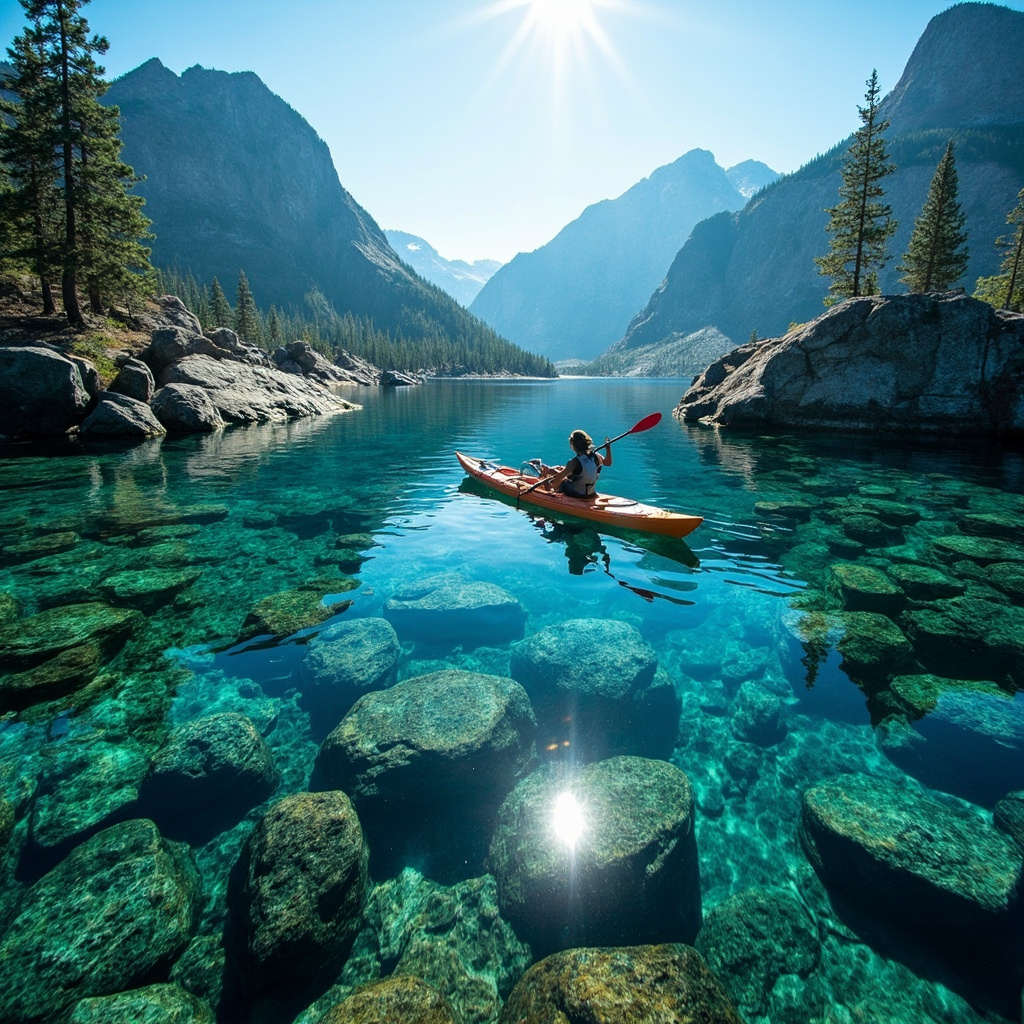
Table of contents
- Why Kayak Lake Tahoe? The Alpine Appeal
- The Physics of High-Altitude Paddling
- North Shore vs. South Shore
- Essential Safety and Regulations
- Cold Water Safety Protocols
- High-Altitude Sun and Wind
- Aquatic Invasive Species (AIS) Inspections
- If Something Goes Wrong
- Top Kayak Rental Spots: Where to Launch
- Sand Harbor (East Shore, NV)
- Emerald Bay (South Shore, CA)
- Carnelian Bay and Kings Beach (North Shore, CA)
- D.L. Bliss State Park to Rubicon Point (West Shore, CA)
- The Kayaker's Guide to Gear and Prep
- Don't Leave the Dock Without:
- Kayak Fishing in Lake Tahoe
- Mackinaw (Lake Trout)
- Kokanee Salmon
- Rainbow Trout
- Brown Trout
- Frequently Asked Questions
Lake Tahoe is a high-altitude sanctuary for anyone who loves the water. Straddling the California-Nevada border at 6,225 feet, it offers 72 miles of shoreline filled with massive granite boulders and bays so clear they look like the Caribbean. This guide walks you through the best rental spots and the safety essentials you need for a successful alpine paddling session.
Lake Tahoe isn't just another lake; it's a high-altitude spectacle for anyone who loves being on the water. Straddling the California-Nevada line at a crisp 6,225 feet, "The Big Blue" boasts 72 miles of shoreline. Imagine navigating through massive granite boulders and hovering over bays so clear they look like the Caribbean. Getting yourself into a kayak rental in Lake Tahoe is easily the best way to see the Sierra Nevadas from a fresh perspective.
Since the lake is a protected treasure, the rental scene here focuses on high-quality gear and keeping the water pristine. Whether you're a total novice looking for a stable sit-on-top or an intermediate paddler ready to log some miles in a touring hull, you need to know where to launch and what the mountain environment has in store for you. Traveling elsewhere? You might find a similar variety of gear at a kayak rental in Arizona or while exploring the Pacific Northwest with Seattle kayak rentals.
Why Kayak Lake Tahoe? The Alpine Appeal
So, why do paddlers obsess over this place? For starters, Lake Tahoe is oligotrophic -- a fancy way of saying it has very few nutrients, which keeps the water incredibly clear. The UC Davis Tahoe Environmental Research Center's annual Secchi-disk measurements have averaged roughly 60 to 70 feet in recent years, with winter readings pushing past 90 feet. On a glassy calm morning in those prime conditions, you can look down and follow your kayak's shadow 60 to 70 feet below the surface -- it feels more like flying than floating.
The Physics of High-Altitude Paddling
Paddling at 6,000 feet hits different. The air is thinner, so don't be surprised if your lungs burn a bit sooner than usual. The UV rays are also brutal up here -- nothing between you and the sun. And the water? It's bracing. Even in July, it stays cold enough to take your breath away. For anglers, this environment is a playground for Mackinaw (lake trout), Kokanee salmon, and rainbows, and a kayak gives you the silent, stealthy edge that gas-guzzling boats just can't match. The first time I rolled up to Sand Harbor at sunrise, I was already conscious of the thinner air before I even reached the water's edge, and the bow thermometer read a brisk 54 F at 7 a.m. on that same July launch.
North Shore vs. South Shore
The lake has two distinct personalities. The South Shore is where the energy is -- busy beaches and the legendary Emerald Bay. The North Shore is the quiet escape: rocky coastlines and "boulder gardens" that are a blast to weave through. My favorite launches sit on the East Shore because the morning glass lasts longer there before the Washoe Zephyr wakes up.
Essential Safety and Regulations
Safety isn't just a suggestion at Tahoe; the environment demands it. The U.S. Coast Guard (USCG) and the American Canoe Association (ACA) both warn that alpine lakes are beautiful but unpredictable -- cold water and sudden winds are the real deal, much like the conditions you'd encounter with a kayak rental in Erie, PA on Lake Erie.
Cold Water Safety Protocols
Even on a scorching 85-F afternoon, the water is rarely warmer than 65-F, and I have measured it colder than 55-F at 7 a.m. in late July. If you flip, cold water shock can hit you within a minute, causing a gasp reflex that leads to drowning before you even realize what's happening. The ACA's Smart Start curriculum identifies cold shock, hypothermia, and circum-rescue collapse as the three big immersion hazards paddlers need to plan around.
- The USCG Rule: Every kayak or SUP must have a USCG-approved life jacket (PFD) on board. Don't just tuck it under a bungee -- wear it. The PFD has to be readily accessible and the right size for the wearer; inflatable styles count only when they're actually being worn.
- What your rental shop hands you: Most Tahoe outfitters issue a basic USCG Type III foam vest, and the USCG's own PFD guidance is explicit on what that means -- a Type III is built to keep a conscious paddler upright, not to flip an unconscious person face-up. Cinch every strap before you launch: if the vest rides up past your chin or ears when you raise your arms, it is the wrong size or wrong fit. If your outfitter offers a manual-inflate belt-pack PFD instead, the National Center for Cold Water Safety warns that the gasp reflex of cold shock can keep you from finding the pull cord in time -- on a lake where I have measured 54 F at 7 a.m. in July, a foam PFD you have already clipped on is the safer rental default.
- The 120-Degree Rule: A guideline widely repeated in ACA cold-water safety education -- if the combined air and water temperature is under 120 degrees F, you need a wetsuit or drysuit. It's the difference between a funny story and a hypothermia emergency, and on Tahoe you will almost always say yes.
High-Altitude Sun and Wind
At this elevation, the atmosphere is thin, and the water acts like a giant mirror for UV rays. Then there's the "Washoe Zephyr" -- Lake Tahoe's notorious afternoon wind. I have watched it turn a glassy surface into 3-foot swells in under twenty minutes, and I have learned to launch before 9 a.m. and plan to be off the East Shore water by early afternoon for exactly that reason. If you see whitecaps, it's time to head to shore -- no exceptions.
Aquatic Invasive Species (AIS) Inspections
To keep Tahoe clear, follow the "Clean, Drain, and Dry" rule. If you're bringing your own boat instead of renting, expect an inspection at the launch. According to the Tahoe Boat Inspections program, hand-launched craft like kayaks, canoes, and SUPs are inspected and decontaminated free of charge at any watercraft inspection station -- the goal is keeping zebra mussels, golden mussels, and invasive weeds out of the ecosystem.
If Something Goes Wrong
File a float plan with someone on shore before you launch, and stick to it. The ACA lists trip planning and float plans as core safety habits. Carry a whistle (the USCG requires one on every wearable PFD), a waterproof VHF radio or a charged cell phone in a dry bag, and a simple signal mirror. Cell coverage is patchy along the West Shore and around Emerald Bay, so a handheld VHF on channel 16 is far more reliable than a phone in those areas. For serious trouble, 911 routes to either the El Dorado County or Washoe County sheriff's office, depending on which shore you're on.
Top Kayak Rental Spots: Where to Launch
Where you start depends on what you want: crystal clear photos, a long-distance workout, or a quiet fishing hole. Most outfitters include the kayak, paddle, PFD, and a quick "how-to" session, though the PFD they hand you is almost always a basic foam vest -- a good outfitter will swap sizes on the spot until the fit is right. Booking ahead in July and August is non-negotiable -- walk-ups usually disappear by 9 a.m.
Sand Harbor (East Shore, NV)
If you've seen a postcard of Lake Tahoe, it was probably shot here -- those giant, smooth granite rocks and impossibly blue water. The first time I launched at Sand Harbor, I slid a rental sit-on-top off the beach a little before 7 a.m. and watched the lake floor drift into focus nearly 60 feet below the hull, an hour that single-handedly justified the four-hour drive from the Bay Area.
- Best For: Beginners and anyone with a camera.
- The Experience: Motorboats are restricted near the shore, so you can peacefully glide over "Bonsai Rock."
- Pro Tip: Nevada State Parks requires a day-use reservation for vehicle entry from park opening at 8 a.m. through 10:30 a.m., every day from May 15 through September 30. Reserve in advance through ReserveNevada.com, or arrive well before 8 a.m. for walk-in availability.
Emerald Bay (South Shore, CA)
A National Natural Landmark and home to Fannette Island, the lake's only island. I have paddled into the bay on a calm July morning, and the cliffs above Vikingsholm Castle looked close enough to touch. On that same trip, I watched the south wind funnel through the narrow entrance around 11 a.m. and turn the approach from glassy to choppy in well under an hour -- plan your return before noon or hug the inside of the bay on the way back.
- Best For: Intermediate paddlers who want a destination.
- The Experience: Rent at Baldwin or Pope Beach and paddle about 3 miles into the bay. You'll see Vikingsholm Castle from the water and can dock at the island to hike up to the old "Tea House."
- Watch Out: The entrance gets messy with boat wakes and wind. Stay alert.
Carnelian Bay and Kings Beach (North Shore, CA)
The North Shore is vast and less frantic than the south. I have launched out of Carnelian Bay on a still August morning and watched my paddle blade mirror back the boulder field just below the surface, with my bow thermometer reading a cool 61 F at 8 a.m. If you are trolling for trout, drop a weighted line 30 to 50 feet down along the drop-off and troll slowly parallel to shore.
- Best For: Touring and kayak fishing.
- The Experience: The shelf drops off slowly, creating huge stretches of turquoise water. It's a great spot to work on your stroke or troll for trout along the underwater ridges.
D.L. Bliss State Park to Rubicon Point (West Shore, CA)
If you want to see the "deep blue," this is it. At Rubicon Point, the lake floor drops off a cliff into depths of 1,000 feet. The first time I paddled that stretch from D.L. Bliss, the color change was so dramatic I actually paused mid-stroke -- turquoise over the shelf one moment, inky indigo over the abyss the next. Stick close to shore on your first run; the cliff face pulls a steady downhill breeze that you do not want to fight on the way home.
- Best For: Advanced beginners to intermediates.
- The Experience: The water shifts from bright teal to deep indigo in an instant -- dramatic, beautiful, and a little humbling on a windless afternoon.
The Kayaker's Guide to Gear and Prep
When you walk up to a rental dock, you'll usually choose between three types of boats. The price ranges below were compiled by surveying four East and South Shore outfitters (Sand Harbor, Baldwin Beach, Tahoe Keys Marina, and Zephyr Cove) during peak summer booking hours; prices were verified at the time of writing, and I always recommend calling ahead to confirm current rates and seasonal discounts. Listed weights and capacities come from each manufacturer's published spec sheet.
| Kayak Type | Best Use Case | Stability | Speed | Price Range | Weight | Capacity | Length | Materials |
|---|---|---|---|---|---|---|---|---|
| Sit-On-Top | Beginners / Fun | High | Low | $45 - $85/day | 45-60 lbs | 250-350 lbs | 9-11 ft | Polyethylene |
| Sit-In Recreational | Day Trips | Medium | Medium | $55 - $95/day | 40-55 lbs | 275-325 lbs | 10-12 ft | Poly/Composite |
| Touring / Sea Kayak | Long Distance | Low-Medium | High | $75 - $120/day | 50-65 lbs | 300-400 lbs | 14-17 ft | Composite |
Don't Leave the Dock Without:
- A Dry Bag: "Water-resistant" compartments are rarely waterproof -- save your phone and keys.
- Zinc Sunscreen: Traditional stuff washes off too easily. The first afternoon I skipped it, I learned the hard way with a painful, peeling nose burn.
- No Cotton: Wear nylon or polyester. Cotton gets wet, stays wet, and saps your body heat.
- A Whistle: USCG requirement. Confirm your PFD already has one before you launch.
Kayak Fishing in Lake Tahoe
Lake Tahoe covers 192 square miles and drops to 1,646 feet deep, which is why kayak anglers love it -- the deep, cold water holds trout and Kokanee that can't be reached from shore. According to the Nevada Department of Wildlife's Lake Tahoe fishing page, the lake is open to fishing year-round, and July and August are the most productive months overall. Any angler 16 or older needs a valid California or Nevada sportfishing license; either state's license is honored on the whole lake. The daily bag limit is 5 game fish, with a possession limit of 10. NDOW also lists closed areas: a 200-yard radius around the mouths of Third, Incline, and Wood Creeks, and a 500-yard radius around the Sand Harbor Boat Ramp.
The four species a kayak angler targets in Tahoe:
Mackinaw (Lake Trout)
Macks are the reason most people launch a fishing kayak here. They hold well below the 80-foot contour and stay active all year.
- Habitat & Season: Suspended over the lake floor between 100 and 300 feet of water; they follow baitfish along the underwater shelves and drop-offs from Rubicon Point to the deep basin off Cave Rock. NDOW flags year-round trolling and jigging as productive, with fish running deep in summer and moving shallower from late fall through early spring.
- Gear & Lures: A medium-heavy spinning or baitcasting rod, level-wind reel with 20- to 30-lb braid, a heavy dipsy diver or weighted flasher, and a 4- to 6-foot leader of 15-lb mono or fluoro trailed 100 to 250 feet back. The classic rig is a dodger-and-squish tipped with sucker or anchovy; white, chrome, or glow jigging spoons work on schools you mark vertically.
Kokanee Salmon
Kokanee are the freshwater version of sockeye and the bread-and-butter summer fish from a kayak.
- Habitat & Season: School between 30 and 80 feet down over open water, often suspended over the deep basin between Cave Rock and Glenbrook. The peak bite runs mid-July through mid-September when surface temperatures sit in the upper 50s.
- Gear & Lures: A light-action 7-foot rod with a small baitcasting reel, 10-lb mono or braid, and a downrigger or heavy trolling weight to hold the lure at depth. Small hoochies and squid-style trolling flies behind a dodger (pink, purple, or chartreuse) are the standard; Apex-style lures work for vertical jigging once you mark a school.
Rainbow Trout
Rainbows are stocked heavily in Tahoe, and they will hit from a kayak all season.
- Habitat & Season: Near-surface feeders early and late, dropping to 20-40 feet in mid-morning sun. They hold close to drop-offs near Cave Rock, Sand Harbor, and the mouths of creeks along the North Shore -- NDOW specifically calls out Cave Rock and Sand Harbor as the best bets for stocked rainbows. Late spring through fall, with a strong push in the first two weeks after each spring stocking.
- Gear & Lures: A light ultralight spinning rod with 4- to 6-lb mono, a small inline trolling weight or casting bubble, small Rapala-style minnow plugs, Kastmaster or Thomas Buoyant spoons, inflated nightcrawlers, or a single salmon egg behind a dodger.
Brown Trout
Browns are the quiet trophy in the system -- warier, fewer, and bigger.
- Habitat & Season: Hugging rocky structure and shoreline shelves along the boulder fields on the East Shore between Sand Harbor and Memorial Point. Best in spring (April-June) and again in fall (October).
- Gear & Lures: A 6'6" to 7-foot medium spinning rod, 8-lb fluoro, and a long leader to keep your offering away from the boat. Wooly Buggers or leech-pattern streamers stripped along the boulders, deep-diving minnow plugs trolled along the 30-foot contour, or nightcrawler pieces under a slip float all work.
If you're new to kayak fishing, run through our full essential kayak fishing checklist for first-timers before you load the truck. A rod, a paddle, a PFD, and a float plan are the minimum -- everything else is optional until you know what you're after.
Frequently Asked Questions
Do I need a wetsuit in August? Yes, you do. Even in midsummer the surface water rarely tops 65 degrees, and an unexpected capsize can trigger cold-water shock within a minute. The 120-degree combined-temperature guideline is the simplest check, and on Tahoe it almost always says "wear insulation."
Can I launch my own kayak without a Tahoe inspection sticker? Yes -- and for free. According to the Tahoe Boat Inspections program, hand-launched non-motorized craft are inspected and decontaminated at no charge at any inspection station.
Is Sand Harbor really closed by 7:30 AM? Capacity closures have happened that early on peak weekends, but the current rule is a required day-use reservation from 8 a.m. through 10:30 a.m., every day from May 15 through September 30. Walk-in entry usually opens after 10:30 a.m.
Do I need a fishing license? Yes, if you're 16 or older. Lake Tahoe is jointly managed by California and Nevada, and either state's sportfishing license is valid on the entire lake. You may also need a trout stamp if your home state requires one.
What is the best month for clear water? Clarity is best in late spring (May and early June) before summer runoff stirs up the shallows, and again in early fall (September) once the lake has stratified. Aim for an early-morning paddle on a calm, windless day.
Renting a kayak in Lake Tahoe isn't just a workout; it's a front-row seat to one of the most pristine alpine wonders on Earth. If you pick the right spot, respect the mountain weather, and follow the safety lead of the USCG and ACA, you're set for an incredible day. Whether you're drifting over the boulders at Sand Harbor or staring into the deep blue at Rubicon Point, the clarity of this water stays with you long after you've pulled your boat back onto the sand. Don't forget to look down -- the view under the surface is just as good as the mountains above.
— About the author
Lauren Bennett
Paddling Content Editor · Outdoor Recreation Writer · Beginner Kayaking, Safety, Buying Guides
Lauren Bennett writes educational kayaking guides for beginners and recreational paddlers. She covers safety practices, kayak selection, paddling techniques, and trip planning with clear, easy-to-follow advice designed to make kayaking more accessible for everyone.
View full profileRecommended for you
Related reads
Seattle Kayak Rentals: Best Spots, Prices & Safety Guide
Planning a paddle in Seattle? Check out our expert guide to the best rental spots, from Lake Union to the Arboretum, including prices and USCG safety tips.
 Guide
GuideKayak Rental in Arizona: Lakes, Rivers & Safety Guide
From the Salt River to Lake Powell, here is everything you need to know about renting a kayak in Arizona, including top spots, gear types, and desert safety essentials.
 guide
guideKayak Rental in Erie, PA: Lake Erie & French Creek Guide
Looking for a kayak rental in Erie, PA? From the quiet Presque Isle lagoons to the flow of French Creek, here is your expert guide to paddling the North Coast.
You may also like
View all →Related rentals
 guide
guideKayak Rental in Erie, PA: Lake Erie & French Creek Guide
Planning a trip? Find the best kayak rental in Erie, PA. Explore Presque Isle State Park lagoons and French Creek with our guide to gear, safety, and spots.
 guide
guideKayak Rental Dubrovnik: Best Caves & Hidden Beaches
Plan the ultimate Dubrovnik kayaking trip. Discover secluded sea caves, the best rental spots near Pile Gate, and vital USCG safety tips for the Adriatic Sea.
 guide
guideBest Kayak Rental in Austin Texas: Lakes & Rivers Guide
Heading to Austin? From the glass-calm waters beneath downtown skyscrapers to the crystal-clear springs of San Marcos, here's everything you need to know about renting a kayak in Central Texas.