Back to guidesGuides
The Essential Kayak Fishing Checklist for First-Timers
Leave the motor behind. Our first-time kayak fishing checklist covers the essential safety gear, tactical rigging, and USCG rules you need to know before your first launch.
5 min readLast reviewed
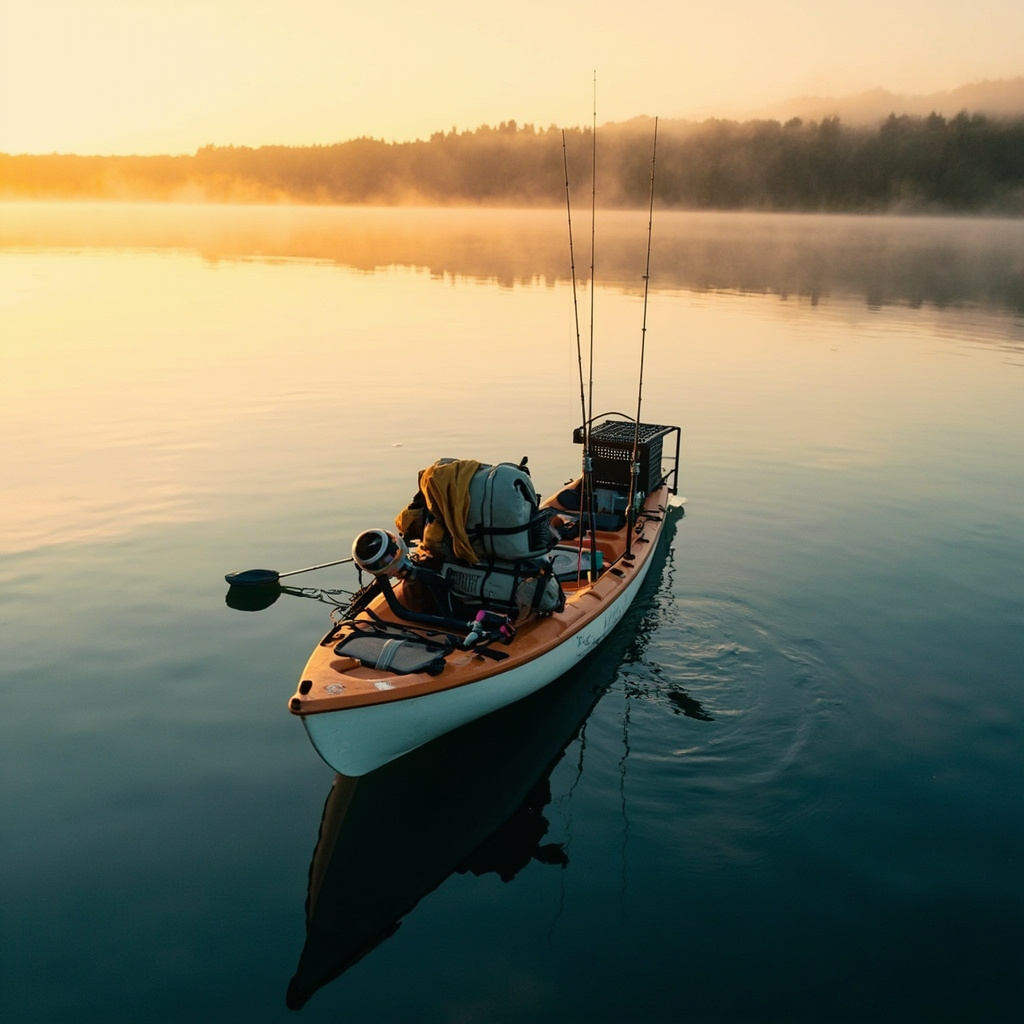
Table of contents
- About this Guide
- The "Why" Before the "How": The Kayak Fishing Advantage
- Section 1: The Essential Kayak Fishing Checklist
- 1.1 Safety and Legal Compliance (The Non-Negotiables)
- 1.2 The Tactical Fishing Rig
- 1.3 Personal Gear and Comfort
- Section 2: Safety First: Navigating the Elements
- Wind and Tide Management
- Navigation and Visibility
- Section 3: Lessons from the Water
- Hypothetical Example A: The Cluttered Deck
- Hypothetical Example B: The Stranded Navigator
- Section 4: Sizing Up Your Vessel
- 4.1 Sit-On-Top (SOT) vs. Sit-In (SIK)
- 4.2 Length Matters
- Section 5: The "Printable" Hook-Up Checklist
- Pre-Launch
- Gear & Tackle
- Personal
- Section 6: Keep Your Boat in the Game
- FAQ
- 1. Do I really need to wear the life jacket if I can swim?
- 2. Can I fish from a cheap recreational kayak?
- 3. What if I hook a monster?
- 4. How do I get this thing to the water?
- 5. Why is my reel always getting wet?
Ready to trade the roar of an outboard for the quiet slap of a paddle? Kayak fishing is easily the best way to reach the fish that powerboats simply can't touch. But before you launch, you need a solid plan. This guide walks you through the essential gear, the legal must-haves, and the tactical secrets that turn a frustrating first trip into a massive success. We're covering everything from USCG requirements to the "Minimalist" gear strategy so you can stay safe and focus on the bite.
About this Guide
By Sarah Mitchell, Contributing Editor, KayakLens. Sarah writes beginner-focused kayak fishing and paddling safety content, and every safety claim in this guide is cross-checked against current USCG boating resources and American Canoe Association publications.
Last updated: July 2026. Safety regulations and best practices evolve; we review this checklist quarterly against current USCG and ACA publications.
The "Why" Before the "How": The Kayak Fishing Advantage
Before you start zip-tying milk crates to your deck or making that first cast, let's talk about why kayak fishing is actually taking over. It isn't just a way to save a few bucks on gas; it's about becoming a ghost on the water. Sound travels incredibly well through water, and the heavy vibration of a 150hp outboard or the incessant "ping" of high-powered sonar is basically an alarm bell for every trophy bass or redfish in the area.
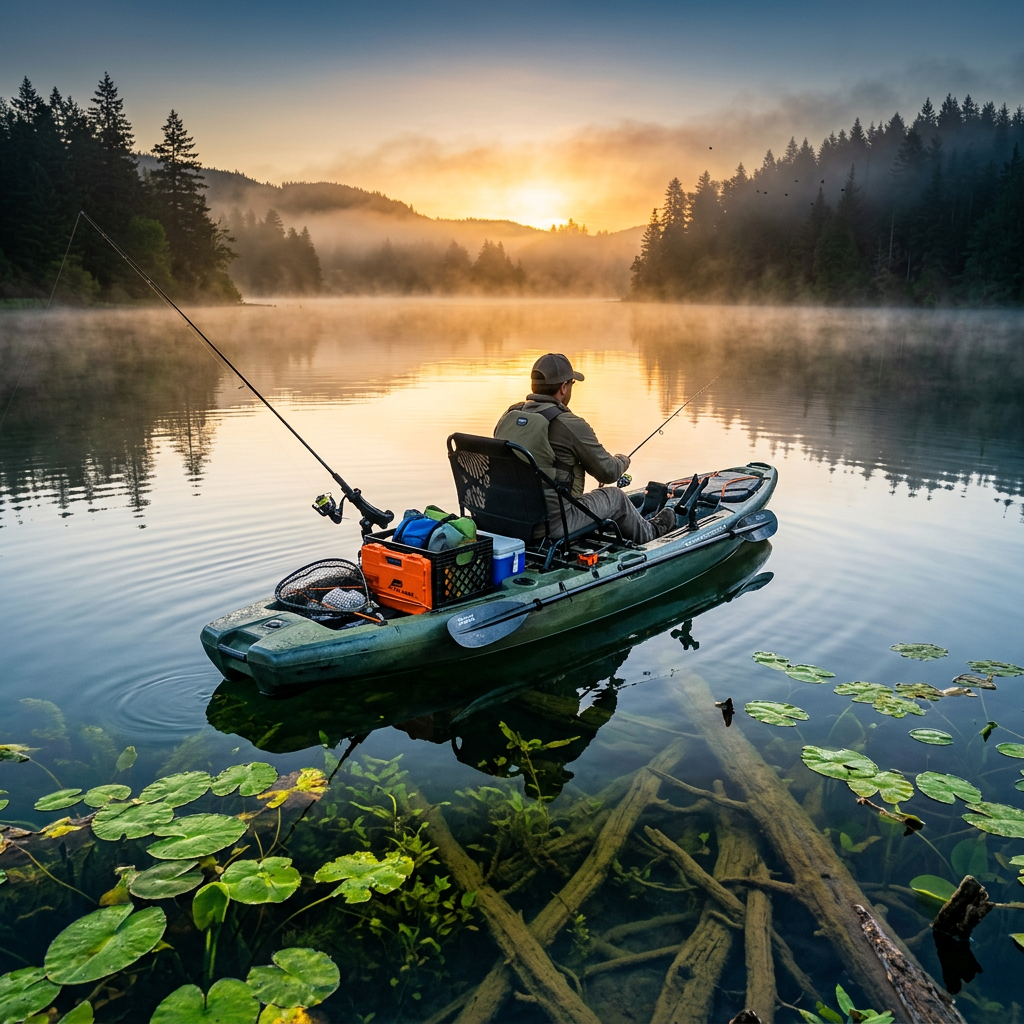
In a kayak, you're silent. Whether you're paddling or using a quiet pedal drive, you can glide over lily pads and through "skinny water" -- less than a foot deep -- where traditional powerboats would be grounded in seconds. You'll find pretty quickly that kayak fishing for beginners is most successful when sitting just inches off the surface, which makes you a sharper angler. You start keyed into the tiny ripples of baitfish, the push of the current, and subtle structures you'd glance right over from a high-sitting bass boat. This isn't just a gear list; it's your ticket to a much more tactical way to fish.
Section 1: The Essential Kayak Fishing Checklist
Think of this checklist in three layers: the legal stuff that keeps you alive, the tactical gear that lands the fish, and the comfort items that prevent you from bagging the trip early.
1.1 Safety and Legal Compliance (The Non-Negotiables)
The U.S. Coast Guard (USCG) classifies kayaks as "vessels under oars" under Navigation Rule 25. That means you carry real legal responsibilities on the water, spelled out across 33 CFR Part 175 (Equipment Requirements) and summarized in the Boater's Guide to the Federal Requirements for Recreational Boats. Don't blow these off -- wildlife officers are often extra diligent with kayakers because so many people ignore the basics.
- PFD (Personal Flotation Device): A USCG-approved wearable PFD is required for each person aboard. Skip the cheap, bulky orange vests. Look for a "high-back" fishing PFD. These have thin foam on the lower back so they don't awkwardly shove your head forward against the kayak seat. The USCG life jacket wear guidance makes one point clear: the best PFD is the one you'll actually wear.
- Sound Producing Device: A simple whistle meets the federal requirement and most state rules. Tether it directly to your PFD. If a fog rolls in or a wake-jumping powerboat is screaming toward you, you need to be heard.
- Visual Distress Signal: Heading into coastal waters or the Great Lakes at night? Federal rules under 33 CFR 175.101 require approved night-use visual distress signals on coastal waters more than two miles wide. Flares or an electronic SOS light will satisfy it.
- Navigation Lights: Out before dawn or past sunset? Under Rule 25(d) for vessels under oars, you must either display an all-round white light visible for at least two miles, or have an electric torch or lighted lantern ready at hand that you can show in time to prevent a collision. It's not just a rule; it's the only thing keeping you from getting run over in the dark.
- Fishing License: Grab your state license. Also, double-check if your local launch requires a "Launch Permit" -- state parks are notorious for this.
- Leashes: Use them. Your paddle and those $200 rod combos should be tethered to the hull. As the old saying goes: "If it isn't leashed, it's a gift to the river."
1.2 The Tactical Fishing Rig
- The Kayak Crate: You don't need a $150 specialized tackle system. A standard 13x13 milk crate is still the GOAT. Use zip ties to attach some PVC pipe for rod holders and you're in business.
- Anchor System: A 1.5lb to 3lb folding anchor handles most situations, but anchor weight is a starting point, not a guarantee. In light current over soft mud or sand you'll hold fine; in stronger current, or over rock, grass, shell, or thick vegetation, you need more weight or a different system entirely. If you're in shallow mud or sand, a "stake-out pole" (essentially a sharpened fiberglass stick) is quieter and way faster to deploy -- but only in substrates it can actually penetrate. It will not bite into rock, gravel, or hardpan.
- Rod Holders: You want at least one in front of you for active rigging and one or two behind you for storage.
- Fish Grip and Net: Stick with rubberized nets. They don't tangle with your treble hooks as badly, and they won't strip the protective slime off the fish.
- Long-Nose Pliers: Don't even consider launching without these. Trying to unhook a deep-set lure from a thrashing bass without pliers is a fast track to the ER.
1.3 Personal Gear and Comfort
- Dry Bag: For the stuff that absolutely cannot get wet -- car keys, wallet, and phone.
- Polarized Sunglasses: These are a literal game changer. They cut the surface glare so you can actually see the submerged logs and the fish holding near them.
- Sun Protection: Forget the greasy lotion. Go for UPF 50+ long-sleeve shirts and a neck gaiter. The sun reflects off the water and hits you from every angle; you'll fry twice as fast as you think.
Section 2: Safety First: Navigating the Elements
Safety usually feels like an afterthought until things get hairy. The American Canoe Association (ACA) emphasizes cold-water risk in its Smart Start for Safe Paddling program and the Paddler's Safety Checklist from its Paddle Safe series. The ACA's standing guidance is to "dress for immersion" -- choose your layers based on the water temperature first, not the air temperature. A paddler in 60F water without insulation can lose the ability to swim within minutes; that's cold incapacitation, and it claims lives faster than hypothermia. Once the water drops below about 70F, plan on a wetsuit or drysuit before you launch.
Wind and Tide Management
Check the wind forecast before you even load the truck. If you're new, anything over 10 mph is going to be a massive headache.
- Offshore Winds: Be paranoid about winds blowing away from the shore. They make it feel like you're flying when you head out, but you'll be fighting for your life trying to paddle back to the ramp.
- The "One-Third" Rule: Use one-third of your energy to get out, save one-third to get back, and keep the last third in reserve for emergencies.
Navigation and Visibility
On the water, you're the underdog. A boat doing 60 mph might not see a low-profile kayak until it's way too late.
- Safety Flag: Mount a bright orange flag a few feet above your head. It makes a massive difference in your visibility to motorized boats.
- Communication: Always share a "Float Plan" with someone on land. The USCG float-plan template is the same one used by kayak anglers and 90-foot sportfishers alike -- it works for both. Tell them where you're launching, which direction you're heading, and when they should call for help if they haven't heard from you.
Section 3: Lessons from the Water
Note: The two scenarios below are hypothetical teaching composites built from common first-trip mistakes reported across kayak-fishing forums, ACA safety briefings, and USCG recreational boating statistics. The names, dates, and specific locations are fictional; any resemblance to a real person or incident is coincidental. These are not firsthand reports.
Hypothetical Example A: The Cluttered Deck
Mark was hitting an Ohio lake for the first time. He loaded his kayak with four rods and three massive tackle bags. When he reached for a lure in the back, he shifted his weight just a bit too far, and -- splash -- the kayak flipped. The Fix: He went "Minimalist." One rod for topwater, one for the bottom. One small tackle tray. By rigging your kayak more efficiently, he lowered his center of gravity and stopped worrying about his gear so he could actually fish.
Hypothetical Example B: The Stranded Navigator
Jamie was fishing Redfish flats in Florida. She didn't check the tide. When the water dropped, she found herself miles from the channel, stranded in a mudflat for hours. The Fix: She started using a tide app and swapped her heavy anchor for a stake-out pole. She learned to let the incoming tide push her into the flats, using the water's energy instead of her own.
Section 4: Sizing Up Your Vessel
4.1 Sit-On-Top (SOT) vs. Sit-In (SIK)
For fishing, you almost always want a Sit-On-Top, and here's how the two hulls actually stack up:
| Attribute | Sit-On-Top (SOT) | Sit-In (SIK) |
|---|---|---|
| Drainage | Open deck with scupper holes that let water drain straight through the hull | Partially enclosed cockpit; can swamp and typically needs a bilge pump |
| Stability | Wider primary platform, built for standing and shifting weight | Narrower and more tippy underfoot, but more efficient to paddle |
| Storage | Open tankwell behind the seat for crates and coolers | Limited cockpit access; bulk gear goes in sealed hatches |
| Self-rescue | Easy to remount if you fall off | Harder to re-enter from deep water, especially solo |
| Typical use | Lakes, bays, flats, slow rivers, kayak fishing | Cold-water touring, whitewater, performance paddling |
4.2 Length Matters
| Length | Tracking | Maneuverability | Best For |
|---|---|---|---|
| ~10 ft | Wanders more, fights the wind | Very high -- turns on a dime | Small creeks, tight vegetation, tiny ponds |
| 12–14 ft | Tracks straighter with fewer paddle corrections | Moderate -- longer turning radius | Open lakes, bays, light coastal crossings |
Section 5: The "Printable" Hook-Up Checklist
Pre-Launch
- PFD on and buckled (It's useless if it's tucked under your seat)
- Whistle attached to PFD
- 360 Light (If it's dark or overcast)
- License in a waterproof bag
- Weather & Wind Check
- Float Plan sent to a friend
- DRAIN PLUG CHECKED (Seriously, make sure it's tight)
Gear & Tackle
- Rods leashed down
- Crate secured with bungees
- Pliers within reach
- Net/Fish Grip ready
- Paddle adjusted
- Anchor/Stake-out pole
Personal
- Water (At least 1 liter per 2 hours)
- High-energy snacks
- Sunscreen & Glasses
- Phone in a waterproof pouch
Section 6: Keep Your Boat in the Game
- Freshwater Rinse: Saltwater is a gear killer. Rinse everything -- reels, rod eyes, and your kayak's metal hardware -- with fresh water after every single trip.
- Unbuckle the Bungees: Don't leave your bungee cords under tension during storage. Constant pressure can warp the plastic hull over time (a fun phenomenon we call "oil-canning").
- Tighten the Bolts: Every few months, go over your bolts and gear tracks. The vibration from driving down the highway can wiggle them loose over time.
FAQ
1. Do I really need to wear the life jacket if I can swim?
Yes. If you flip in cold water, your muscles can seize up instantly -- that's "cold water shock." Even in warm water, your kayak will blow away from you in a breeze faster than you can swim to catch it.
2. Can I fish from a cheap recreational kayak?
You can, but be careful. They aren't designed for the extra weight of fishing gear and they tend to be much tippier. Keep your gear light and stay seated.
3. What if I hook a monster?
Never try to pull a huge fish over the front or back of the boat; you'll flip. Bring it in over the side, keep your weight centered, and use a fish grip so you don't have to lean out over the gunwale too far.
4. How do I get this thing to the water?
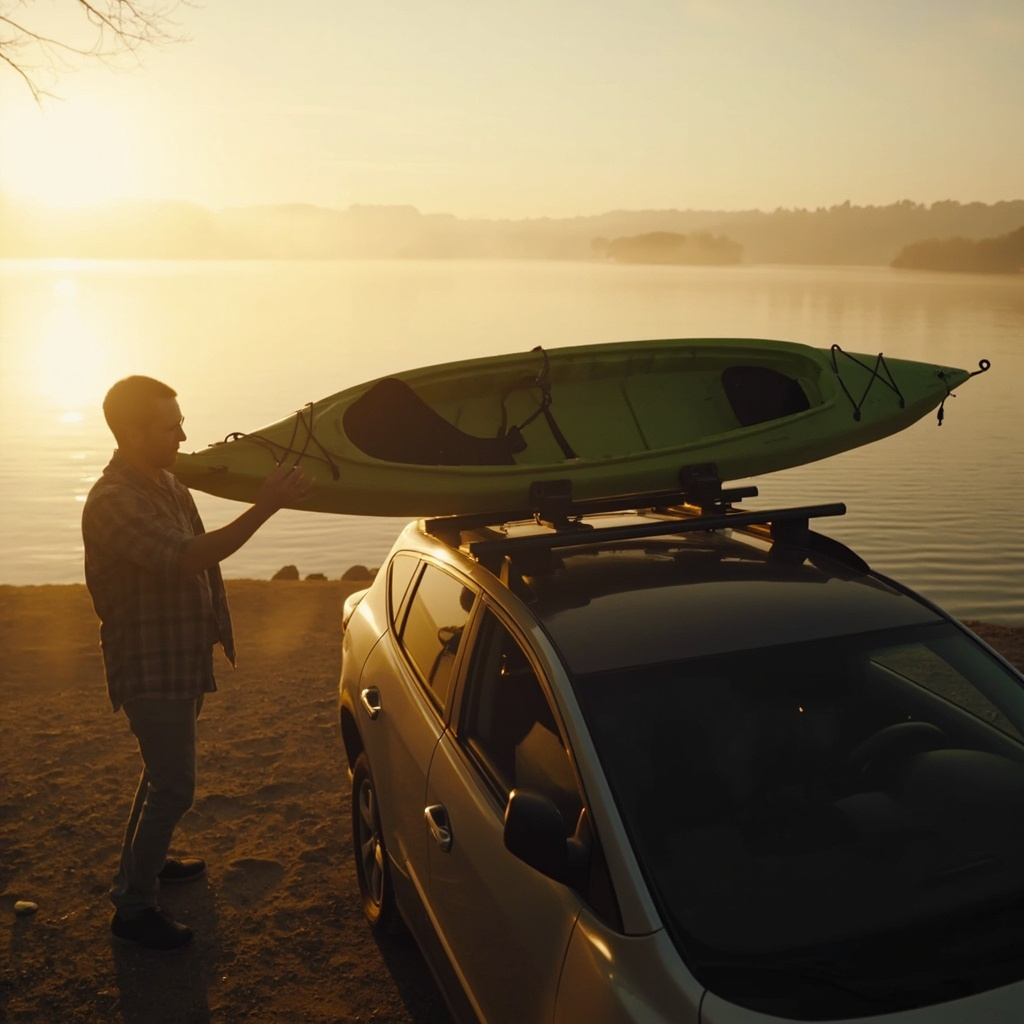
Fishing kayaks are notoriously heavy. Save your back and get a kayak cart (a dolly). When strapping it to your car, use cam-buckle straps. Avoid ratchet straps; they're so powerful they can actually crush or crack your hull.
5. Why is my reel always getting wet?
It's usually "paddle drip." Check that your paddle has rubber drip rings near the blades. If you're still getting soaked, your paddle might be too short, forcing the blades to drip directly over your lap.
Check your local laws before you head out. Every state has its own quirks for registration and seasonal closures. Stick to the plan, stay dry, and go find the bite.
The jump into kayak fishing is a total blast, but it requires a bit more situational awareness than just tossing a boat in the water. Use this checklist to dial in your systems before you leave the driveway. Once you're out there, respect the wind and know your own limits. The goal is to get home with a great story and all your gear still in the boat.
Got everything loaded up? Triple-check your drain plug one last time. See you on the water!
— About the author
Mason Rivera
Kayak Fishing, Gear Reviews · Fishing Kayak Specialist · Kayak Fishing, Gear Reviews
Mason Rivera focuses on kayak fishing equipment, rigging setups, and on-the-water performance. His articles compare popular fishing kayaks, electronics, and accessories while helping anglers find gear that matches their budget and fishing style.
View full profileRecommended for you
Related reads
guide
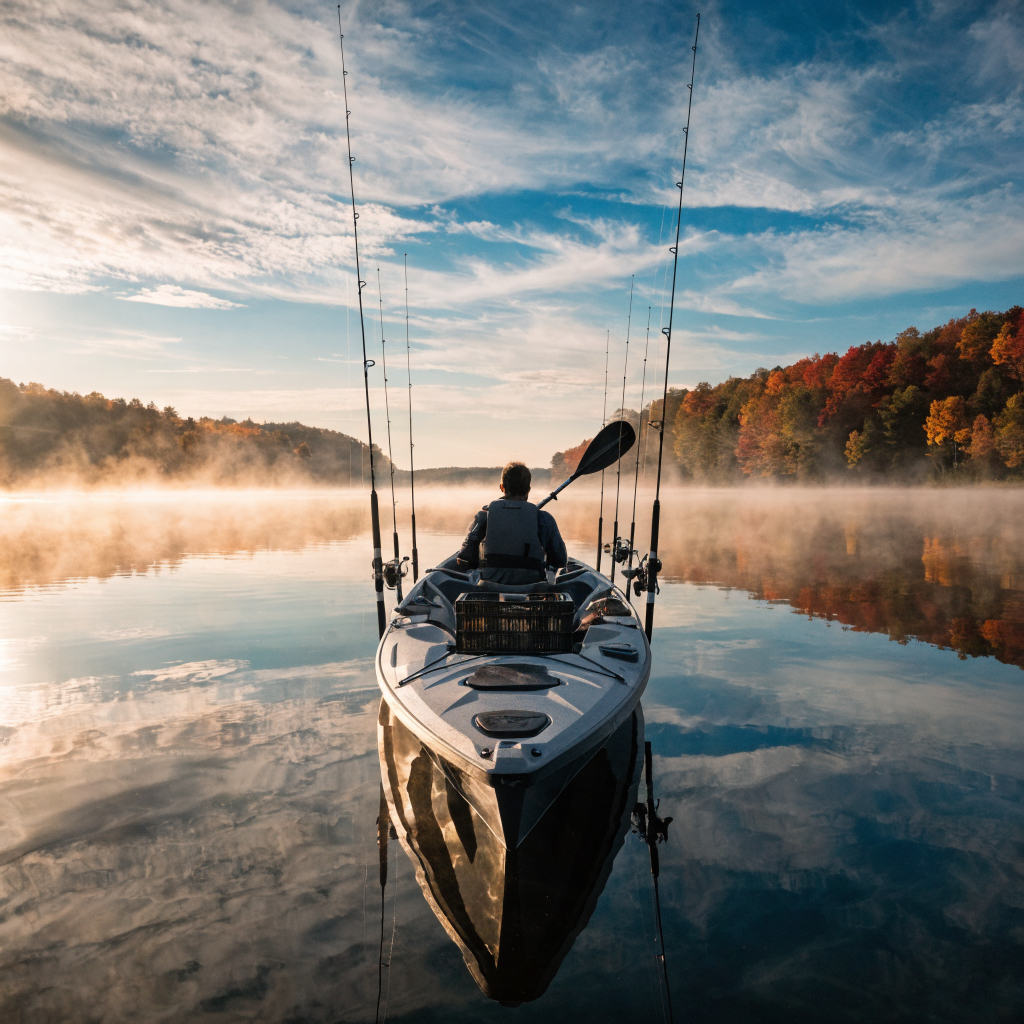
Kayak Fishing for Beginners: The Real-World Guide
The no-nonsense guide to starting kayak fishing safely, from choosing the right boat to landing your first big catch.
guide
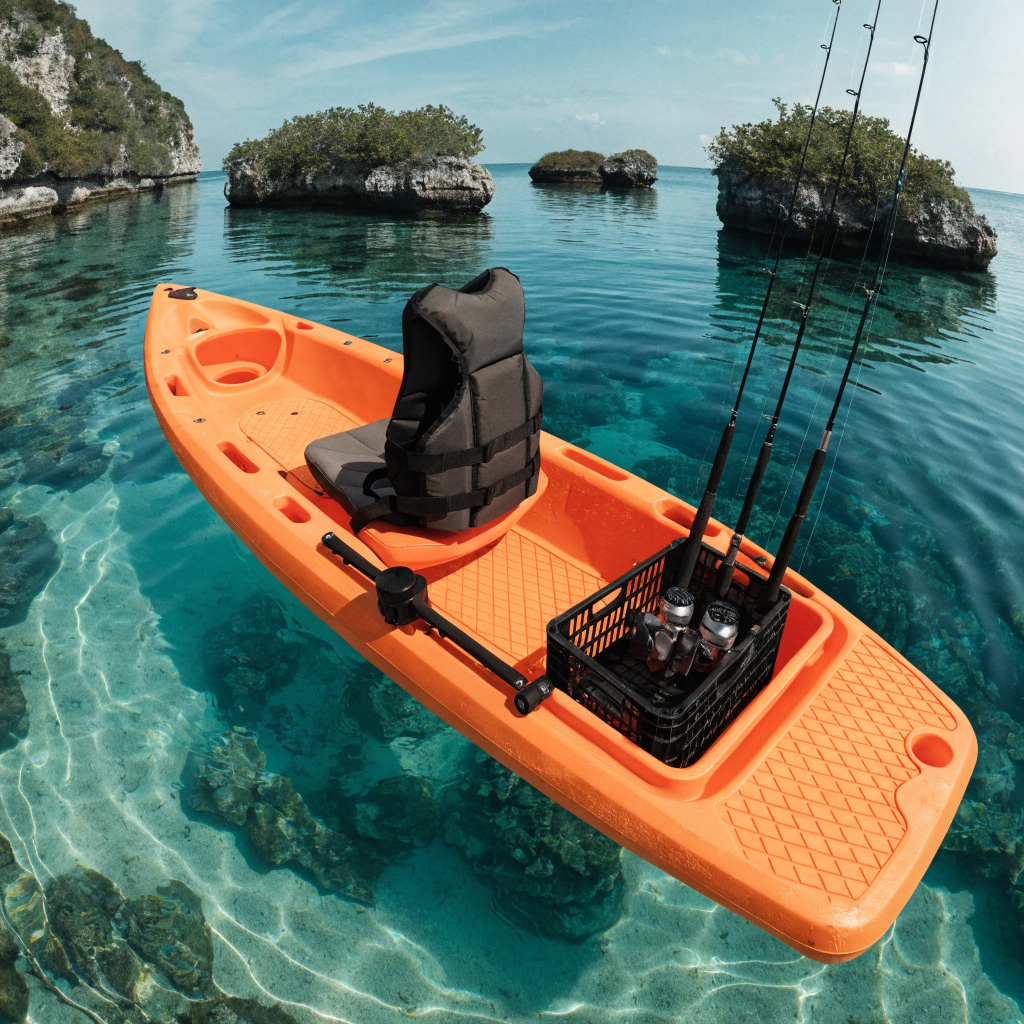
How to Rig Your Kayak for Fishing: A Beginner's Guide
Stop fighting your gear and start catching fish. Here is exactly how to rig your kayak for maximum efficiency and safety without overcomplicating things.
Species Guide
The Relentless Pursuit: Kayak Fishing for Bass Guide
The ultimate guide to chasing bass from a kayak, covering gear, stealth tactics, and safety.