Back to rentalsguide
Kayak Rental Dubrovnik: Best Caves & Hidden Beaches
Plan the ultimate Dubrovnik kayaking trip. Discover secluded sea caves, the best rental spots near Pile Gate, and vital USCG safety tips for the Adriatic Sea.
5 min readLast reviewed
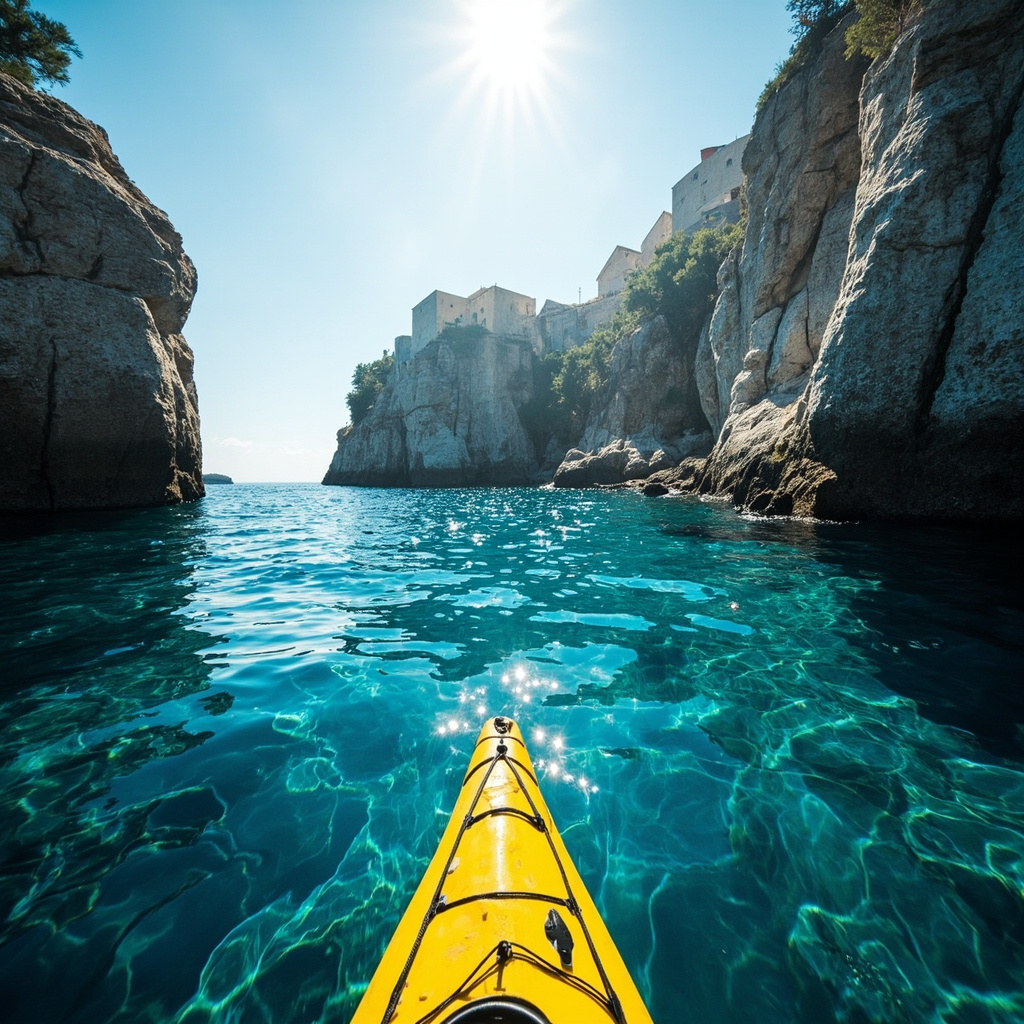
Table of contents
- Top Coastal Spots for Kayakers
- 1. Lokrum Island: The "Peacock" Pearl
- 2. The Walls of Dubrovnik from the Sea
- 3. Sveti Jakov Beach
- Essential Gear and Rental Logistics
- Weather and Wind on the Adriatic
- Safety: PFDs, Navigation, and Self-Rescue
- PFDs and the USCG Standard
- ACA Skill Levels and What to Be Honest About
- COLREGS and Right of Way on the Water
- Float Plan Basics
- Best Season to Paddle
- FAQ
- About the Author
If you want to experience the Adriatic's sapphire waters the right way, you've got to get off the shore and into a cockpit. For American paddlers, Dubrovnik's limestone cliffs and hidden caves offer a Mediterranean experience that's hard to beat. This guide covers everything from the best rental pits to essential safety tips from the USCG and ACA to ensure your coastal adventure goes off without a hitch.
Last reviewed: August 2026.
The allure of the Croatian coast for intermediate kayakers lies in its geographic diversity. The archipelago structure -- specifically the Elaphiti Islands and Lokrum -- acts as a natural buffer, creating everything from glassy, protected lagoons to the kind of open-channel crossings that really put your navigation skills to the test.
Unlike many crowded U.S. waterways where you're constantly dodging motorboats, the maritime culture in the Adriatic is deeply respectful of small craft. That said, don't let the scenery fool you; the coastal "Bura" (a powerful northeasterly wind) demands the same respect you'd give a "Nor'easter" on the Atlantic coast. Getting a handle on these local wind patterns -- I learned this the hard way off the seaward side of Lokrum when a forecast 8-knot breeze piped up to 25 by the time I cleared Betina Cave -- can transition a relaxing paddle into a stressful workout in under an hour.
Top Coastal Spots for Kayakers
1. Lokrum Island: The "Peacock" Pearl
Sitting just 600 meters from the Old Town harbor, Lokrum Island is the go-to destination for rentals. The island is a protected nature reserve, and a full circumnavigation is a perfect 2-to-3-hour loop.
- Betina Cave: This is the crown jewel of Dubrovnik paddling. It's a natural cave opening into a small pebble beach, and you can only get there by sea. The landing is tight -- a narrow shingle shelf with no dock -- so approach bow-first with a controlled paddle stroke and step out before the next wave bounce. If you're bringing a camera, the way the light bounces off the white limestone is something you have to see to believe.
- The Blue Cave (Golub Spilja): On the seaward side of Lokrum, there are deep caves where the water takes on a surreal, electric blue glow. It's not quite the size of the famous Blue Grotto in Bisevo, but it's much easier to access for self-guided rentals and feels a lot more personal. Aim for mid-morning when the sun angle throws the blue refraction deepest into the chamber.
2. The Walls of Dubrovnik from the Sea
Paddling right up against the UNESCO-protected city walls gives you a perspective the crowds on land will never experience. The walls tower nearly 80 feet above the water. Glancing up at the Minceta Tower while navigating the moderate swells at the base of the stone fortifications is a humbling experience for any paddler. Stay 30 to 50 meters off the wall -- the reflected chop stacks up unpredictably against the masonry, and submerged rocks line the toe of the foundation.
3. Sveti Jakov Beach
Want to ditch the heavy tourist traffic near Pile Gate? Paddle southeast toward Sveti Jakov Beach for a "local" vibe. This stretch of coast is dotted with unnamed sea notches and rocky outcroppings that are great for practicing technical maneuvers. The beach itself is about a 25-minute paddle from the Old Town harbor and offers one of the few sheltered landings on the southeast-facing shore.
Essential Gear and Rental Logistics
The two main rental concessions on the beach below Pile Gate sit within a five-minute walk of one another. Either will rent you a single sit-on-top or sit-inside sea kayak by the hour or half-day; expect roughly €25 to €45 for a half-day single and €40 to €70 for a double in peak season. Most include a basic PFD, a spray skirt for sit-insides, and a small dry barrel at no extra charge. A few shops also rent neoprene tops, water shoes, and action-camera mounts.
Here is what I always ask before signing a waiver:
- What kind of boat is it? A proper sea kayak has bow and stern bulkheads and a four-point PFD harness -- not just a foam slab in the seat. Push down on the bow and stern; if you feel water slosh, the bulkheads are open and the boat will be sluggish in any real chop.
- Is the PFD USCG or CE certified? Look for the approval label stitched into the shoulder. The U.S. Coast Guard's Boating Safety Division is clear: "a recreational vessel must have a U.S. Coast Guard Approved Wearable PFD for each person onboard," and the label is the only proof the device meets carriage rules.
- Is there a paddle-float or bilge-pump rescue kit on board? If the shop hesitates, move on. Self-rescue gear is what gets you home when a swim doesn't.
- Is there a real safety briefing? A reputable shop covers wind limits, a return-time check-in, and the local harbor master's VHF channel. If they hand you a paddle and a map and wave you off, the price is too good.
You will also want to bring (or pick up locally):
- Reef-safe sunscreen and a brim hat with a retainer strap
- 1.5 liters of water per person for every two hours on the water
- Water shoes with grippy soles -- limestone landings are sharp
- A small dry bag for your phone, wallet, and a light layer
- A whistle clipped to your PFD for short, sharp signals
Weather and Wind on the Adriatic
Three named winds dominate the Dubrovnik coastline, and knowing them is the difference between a postcard paddle and a survival situation.
- Bura (Bora): A cold, dry northeasterly that races off the Dinaric Alps in sudden gusts. It is most common in winter but can fire any month of the year. The Bora is famously gusty and tends to weaken out to sea, which means sheltered channels close to the coast can be the worst place to be when it kicks up. Winter gusts of 40 knots or more are routine in a strong Bura event.
- Jugo (Scirocco): A warm, humid southeasterly that builds slow swells over 24 to 48 hours. It is more predictable than the Bura but can shut down harbor access when long-period swells wrap around the Old Town breakwater.
- Maestral: A refreshing northwesterly summer thermal that fills in around midday and dies at sunset. On a Maestral day, an afternoon circumnavigation of Lokrum is typically downwind on the outbound leg and slower on the return.
For real-time small-craft forecasts, the Croatian Meteorological and Hydrological Service (DHMZ) issues dedicated bulletins for the South Adriatic with wind speeds in knots and sea state in meters. Local rental shops also check the marine forecast on Windy.com the morning of every rental day. If you see sustained winds forecast above 15 knots or gusts above 20, stay on the beach.
Safety: PFDs, Navigation, and Self-Rescue
Coastal Croatia is gorgeous, but the water is unforgiving: surface temperatures drop into the 16 to 19°C range from October through April, and an unplanned immersion of more than 30 minutes in those temperatures will compromise a paddler who is not wearing flotation.
PFDs and the USCG Standard
The U.S. Coast Guard's Boating Safety Division is explicit: "To meet U.S. Coast Guard requirements, a recreational vessel must have a U.S. Coast Guard Approved Wearable PFD for each person onboard." The same guidance recommends that a USCG Approved lifejacket or buoyancy aid "should be worn at all times when the vessel is underway" -- not just stowed in a hatch or under a bungee. Federal law also requires that children under 13 wear a USCG Approved PFD whenever the boat is moving.
For sea kayaking around Lokrum, a Type III or Level 70 foam PFD with a high-cut back and a paddler-specific fit is the right call. Inflatable PFDs are comfortable for long days on flat water, but the U.S. Coast Guard's Boating Safety Division is clear that they are not recommended for weak or non-swimmers and are built in adult sizes only -- so always read the label and confirm the device is rated for the wearer's weight and intended activity before choosing one over foam. If you fall out of a sit-inside near the city walls, you want a foam PFD doing its job the instant it hits the water -- no manual pull, no CO2 cartridge to wonder about.
ACA Skill Levels and What to Be Honest About
The American Canoe Association frames coastal kayaking in three tiers. A Level 2 (Essentials of Kayak Touring) paddler is "a competent paddler in mild, protected waters with regular access to landing areas" who "has the judgment to know when they should" stay on shore. A Level 3 coastal assessment assumes wind of 10 to 15 knots, waves of 1 to 2 feet, and tidal current of 1 to 2 knots -- conditions that match a building Bura on the seaward side of Lokrum.
If your honest self-rating is closer to ACA Level 1 (introductory, sheltered water only), stick to the protected channel between the Old Town and Lokrum's south shore. Save the seaward leg, the open crossing toward the Elaphiti Islands, and any cave that requires a swell entry for the days you have a Level 2 buddy in the group.
COLREGS and Right of Way on the Water
The U.S. Coast Guard Navigation Rules apply in international waters, and the same give-way logic is observed on the Adriatic: a power-driven vessel is expected to keep clear of a sailing vessel, and a sailing vessel is expected to keep clear of a vessel under oars. Kayaks, even with spray decks on, are treated in practice as vessels under oars. Translation: do not assume a tour boat, water taxi, or excursion dinghy sees you, especially in the cross-chop off the harbor entrance. Make yourself visible (bright PFD, blade high on cross-channel beats), and give way early rather than late.
Float Plan Basics
Before you launch, text or WhatsApp someone on shore your route, your planned return time, and the rental shop's phone number. USCG float-planning guidance boils down to three things: file a plan, stick to it, and check in when you are back on the beach. Most Dubrovnik rental shops also want a return-time check-in; honor it.
Best Season to Paddle
The shoulder months -- late May, early June, and September -- are the sweet spot for Dubrovnik kayaking. The water is warm enough for an unplanned swim (20 to 23°C), the Maestral is usually light, and the Bura has not started its autumn ramp-up. July and August bring heavy rental traffic, midday Maestral of 15 to 20 knots, and crowded cave landings; go at sunrise if you must paddle in peak season. November through March is cold-water season -- treat any paddle then as ACA Level 3 conditions regardless of your certification.
FAQ
Do I have to wear a life jacket to kayak in Croatia? Croatian maritime law requires a PFD to be aboard every vessel, and most reputable Dubrovnik rental shops require you to wear it. The U.S. Coast Guard standard, if you are used to the federal rule, is identical in spirit: a USCG Approved wearable PFD for each person on board, worn when underway.
Can a beginner paddle to Lokrum Island? Yes -- the crossing from the Old Town harbor to Lokrum's south shore is roughly 600 meters across a channel with active ferry traffic but generally manageable swell. Stay in the lee of the island, stay close to shore, and turn back if the wind pipes up. If you have never paddled before, take a guided tour for the first run rather than self-renting.
How do I know if the Bura is going to blow? Check the DHMZ marine forecast for the South Adriatic the morning of your paddle. Sustained winds above 15 knots or gusts above 20 are your cue to stay on the beach. The Bura tends to build from late morning onward, so an early launch is the safer bet in shoulder seasons.
Is it safe to swim inside the sea caves? The water inside the Blue Cave and Betina Cave is calm, but cave entries can surge without warning when a swell wraps around the headland. Wear shoes (limestone is sharp), never dive head-first into a low-ceiling chamber, and never swim into a cave alone. Always keep your PFD on when entering or swimming near a sea cave.
What happens if I do not return the kayak on time? Every shop charges an hourly late fee and a daily cap. More importantly, if you miss your return check-in, the shop will start calling your emergency contact -- so file a real float plan, and check in the moment you are back on the beach.
About the Author
Lauren Bennett is the Paddling Content Editor at KayakLens and an Outdoor Recreation Writer who specializes in beginner kayaking, safety, and buying guides. Her Dubrovnik recommendations draw on first-hand paddling around Lokrum and Betina Cave, including an outing when a forecast 8-knot breeze increased to 25 knots on the island's exposed seaward side.
Whether you're hugging the ancient stone walls or drifting through the electric blue depths of a sea cave, renting a kayak in Dubrovnik is the best way to see the coast. Just stick to the USCG and ACA safety basics, keep an eye on the wind, and maybe aim for those shoulder-season months to get the water all to yourself.
Ready to head out? Make sure you check the local wind forecast one last time before you leave the beach.
— About the author
Lauren Bennett
Paddling Content Editor · Outdoor Recreation Writer · Beginner Kayaking, Safety, Buying Guides
Lauren Bennett writes educational kayaking guides for beginners and recreational paddlers. She covers safety practices, kayak selection, paddling techniques, and trip planning with clear, easy-to-follow advice designed to make kayaking more accessible for everyone.
View full profile
You may also like
View all →Related rentals
 guide
guideKayak Rental in Erie, PA: Lake Erie & French Creek Guide
Planning a trip? Find the best kayak rental in Erie, PA. Explore Presque Isle State Park lagoons and French Creek with our guide to gear, safety, and spots.
 guide
guideKayak Rental Lake Tahoe: Best Alpine Paddling Spots
Plan your Lake Tahoe kayaking trip with our guide to the best rental spots, from Emerald Bay to Sand Harbor. Learn about cold water safety & gear requirements.
 guide
guideBest Kayak Rental in Austin Texas: Lakes & Rivers Guide
Heading to Austin? From the glass-calm waters beneath downtown skyscrapers to the crystal-clear springs of San Marcos, here's everything you need to know about renting a kayak in Central Texas.