Back to comparisonsComparison Guides
Kayak vs Canoe: Which Is Better for Fishing?
Choosing between a kayak and a canoe for fishing involves more than just preference. This guide analyzes stability, capacity, and ergonomics to help you decide.
5 min readLast reviewed
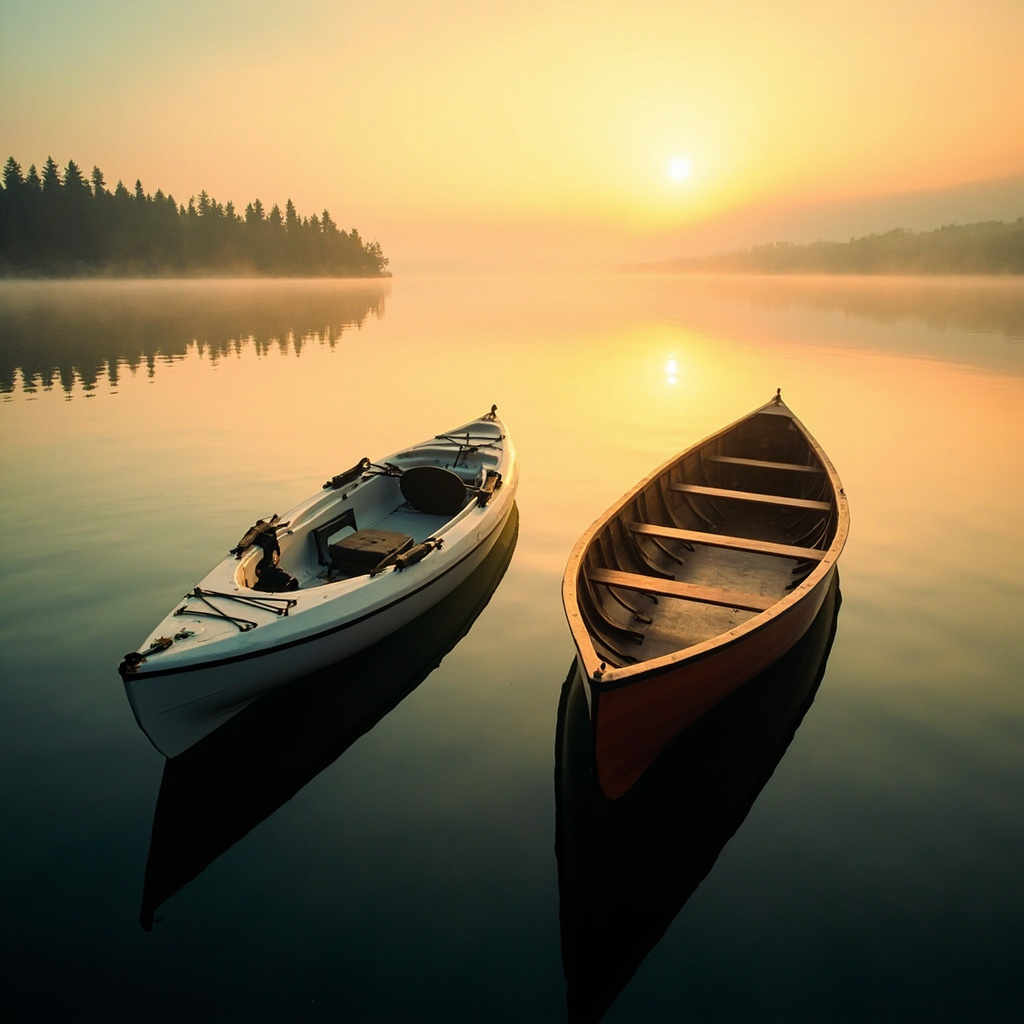
Table of contents
- The Kayak Advantage: Low Profile and Pedal Power
- The Canoe Advantage: Elevation and Articulation
- Structural Stability and Weight Capacity
- Displacement and Gear Hauling
- Primary vs. Secondary Stability
- Performance in Diverse Environments
- Rivers and Moving Water
- Lakes and Open Water
- Essential Safety Protocols for Paddle Anglers
- Niche Considerations: Solo vs. Tandem
- Maintenance and Durability
- The Final Verdict: Which One Should You Pick?
- FAQ
The "kayak vs. canoe" debate has been going strong at boat ramps and tackle shops for decades. While most people use the names interchangeably, any serious angler knows the choice is a major one. It changes everything from how accurately you cast to how fast your back gives out. As tech gets better, the lines between the two are blurring, but there are still some massive differences in how they feel on the water. This guide dives into the technical grit of both to help you figure out which one belongs in your garage.
The big split between fishing from a kayak or a canoe starts with your center of gravity and how you actually move through the water. Both boats get you to the fish, but the physical grind is a world apart, and once you have logged enough trips on each, you stop arguing about which one is "better" and start asking which one matches the way you actually fish.
The Kayak Advantage: Low Profile and Pedal Power
Modern fishing kayaks are built to hug the water. The American Canoe Association (ACA) walks paddlers through these same low-profile principles in its Golden Rules of Kayak Fishing and Top 5 Kayak Fishing Safety Rules videos, where sitting low gives you a deep center of gravity that becomes your best friend when things get choppy. Because you aren't sticking up like a sail, a sudden gust won't blow you halfway across the lake.
The real game-changer is the pedal drive. Using your legs to move means your hands stay on your rod and reel. There is nothing quite like fighting a stubborn bass while using your feet to keep the boat from drifting into the brush, and the moment you try to back off a snag in current without one, you remember exactly why you bought the drive in the first place. That "hands-free" edge is why many serious anglers won't touch a paddle anymore.
The Canoe Advantage: Elevation and Articulation
Canoes sit you up high. Yeah, it makes the boat feel a bit more "tippy" initially, but the view is worth it. If you are sight-fishing flats or looking for beds in clear water, you need that height. It is the difference between looking at the water's surface and looking into the world beneath it -- which is why the high-sitting seat still pays for itself on any clear-water flat where you spend half the day glassing for tailing fish.
Then there is the space. Canoes are wide open. If you are a fly fisherman, you will love the lack of gear snagging your back-cast. While kayak guys are constantly tangling their line on rear rod holders or high-back seats, a canoeist has a clear, 360-degree theater for casting, and once you have made a roll cast in a 17-foot canoe, you do not want to go back to a 34-inch wide kayak cockpit.
Structural Stability and Weight Capacity
Think of it this way: How much "stuff" do you really need? Whether you're a one-rod minimalist or a tournament adventurer with six tackle crates, capacity is the deal-breaker, and the moment you lean over to lip a fish at the gunwale is the moment you find out if your boat was actually the right call.
Displacement and Gear Hauling
Canoes are the pickup trucks of the water. A standard 16-foot prospector typically rates between 650 and 1,000 pounds of manufacturer-listed load capacity depending on the builder: Old Town's OTCA 16 is rated at 650 lb, while Nova Craft's Prospector 16 lists 1,000 lb / 454 kg. If you are planning a three-day river trip with a cooler, camping gear, and a Labrador, the canoe wins every time--no contest.
Kayaks, even the beefy fishing models, usually top out between 350 and 600 pounds of manufacturer-rated capacity. To ground that range, Old Town's Sportsman 120 PRO is rated at 540 lb (245 kg) total capacity, the lighter Sportsman 106 carries 440 lb (200 kg) total / 363 lb (165 kg) usable, and a mainstream crossover like the Wilderness Systems Tarpon 120 sits at 350 lb (159 kg). If you overload them, you lose your "secondary stability"--that is the boat's ability to resist flipping when you lean over to net a fish.
Primary vs. Secondary Stability
Let's talk hull dynamics without getting bogged down in physics:
- Primary Stability: How steady the boat feels sitting still on glass. Canoes, with their wide, flat bottoms, feel like a sidewalk on the water.
- Secondary Stability: How well the boat handles waves or leaning on an edge. This is where kayaks shine. Their "multi-chine" hulls roll with the punches rather than getting tossed around by every boat wake.
According to the U.S. Coast Guard's 2023 Recreational Boating Statistics, "a fall overboard, capsizing and cases where a person voluntarily departed a vessel accounted for over half of fatal incidents" -- which is exactly why everyone wants a boat they can stand in. While "stand-up" kayaks use pontoon-style hulls to try and match it, a wide canoe is still the gold standard for moving around without holding your breath.
Performance in Diverse Environments
Rivers and Moving Water
On a river, maneuverability is king. A kayak's double-bladed paddle allows for lightning-fast corrections -- the kind of corrections that matter when a submerged sweeper is suddenly three paddle-strokes away. For Class I or II rapids, a "sit-on-top" kayak with scupper holes is a common pick because it drains water instead of pooling in the hull. Keep in mind, though, that the ACA's Moving Water and Whitewater Equipment and Gear Policy is explicit that rapid-class recommendations only hold when the paddler already has the training (something like the ACA's Level 2: Essentials of River Safety & Rescue), the right helmet, a properly fitted PFD, and is dressed for the actual water temperature. If a wave splashes into a canoe, it is staying there. In a self-bailing kayak, it drains out the bottom, keeping you high and dry.
Lakes and Open Water
Wind is the canoe's kryptonite. Because canoes have high sides, they catch the wind like a sail. Trying to solo a canoe in a 15-knot crosswind is a workout nobody asked for, and the moment the wind clocks 90 degrees on you mid-cast is the moment you really wish you had a pedal drive. Kayaks sit low and cut through windage, making them the smarter choice for big reservoirs or coastal bays.
Essential Safety Protocols for Paddle Anglers
I don't care what you are paddling--don't be the person who skips the basics. Most paddlers who end up in the water wish they had spent the ninety seconds strapping on a PFD; the body count tells the same story. For those just getting started, the free ACA Smart Start for Safe Paddling course (developed in partnership with the U.S. Coast Guard) covers the same essentials in about 20 minutes, and following a real-world guide can help prevent common rookie mistakes. The USCG and ACA aren't just being cautious; they're trying to keep you alive.
- Wear Your PFD: Get a fishing-specific life jacket with a thin back so it doesn't push you out of your seat. According to the USCG 2023 Recreational Boating Statistics, 87% of drowning victims were not wearing a life jacket in 2023, and the USCG's 2023 Life Jacket Wear Rate Observation Study confirms that wear rates on the water are still under 30% for most adult paddlecraft users. A life jacket in the dry bag does nothing--wearing it is the only way it works.
- Light It Up: Fishing at dawn or dusk? You need a white light ready to go. A 360-degree LED pole is the best way to make sure a boat doesn't run you over.
- Dress for the Water, Not the Air: Cold water shock kills faster than you think. The old "add the air and water temperature" rule--a rough guideline that claimed combined air and water temperatures above 120°F meant you were safe to skip thermal protection--has been rejected by paddling safety authorities because it gives paddlers a false sense of security on warm, sunny days with cold water lurking underneath. The National Center for Cold Water Safety documents exactly why the "120 Rule" is dangerously misleading, including the worked example of 75°F air plus 53°F water (a total of 128°F, "above the threshold") landing a paddler in 53°F water that the NCCWS calls "immediately life-threatening." The NCCWS recommends wearing a wetsuit or drysuit any time the water is below 70°F. The USCG also reminds boaters to dress for the water temperature rather than the air temperature, and the USCG Auxiliary's Paddler's Guide to Safety reinforces the same rule.
- Make Some Noise: Keep a whistle or horn clipped to your PFD. The USCG's A Boater's Guide to the Federal Requirements for Recreational Boats treats sound-producing devices as required equipment for paddlers operating in conditions of reduced visibility, and it is your only way to call for help if you're out of breath.
- The Float Plan: Tell someone exactly where you are launching and when you will be back. Even a quick text can make the difference.
Niche Considerations: Solo vs. Tandem
Social fishing is where the canoe shines. Tandem kayaks are heavy, clunky, and usually lead to "divorce by paddling." A 17-foot canoe is perfectly balanced for two people--one person can steer from the back while the other hammers the shoreline from the front.
But if you are a lone wolf, stick with the kayak. It is the superior choice if you are in pursuit of bass and need the precision that a smaller craft offers. It is easier to hold position with a pedal drive or a small anchor than it is to wrestle a solo canoe in the wind.
Maintenance and Durability
Most fishing kayaks are rotomolded plastic--basically indestructible. You can drag them over gravel and bounce them off rocks without a second thought, and after a season of beaching on oyster beds you stop worrying about every little scratch.
High-end fishing canoes often use composites like Kevlar or Carbon Fiber. These are incredibly light--sometimes under 50 pounds--but they are like sports cars. They don't like hitting rocks and they need a bit of love in storage.
The Final Verdict: Which One Should You Pick?
Go with a Kayak if:
- You're fishing alone and want your hands free for the rod.
- You're hitting big, windy water or saltwater marshes.
- You want to plug in fish finders and gadgets without a DIY headache.
- You might end up in some rougher river water or ocean swells.
Go with a Canoe if:
- You're bringing a buddy, a kid, or your dog.
- You're packing for a "camping and fishing" weekend.
- You're sight-fishing and need that high-up view.
- You need something light enough to carry over land to a hidden pond.
FAQ
1. Are canoes more likely to tip than kayaks? Initially, a wide canoe feels steadier. But if you push a canoe past its tipping point, it is going to fill with water and sink. A sit-on-top kayak might flip, but it won't sink because the hull is sealed.
2. Can I use a trolling motor on both? Absolutely. Plenty of canoes have square sterns for motors, and many fishing kayaks come "motor-ready" now. Just remember: once you add a motor, most states require you to register the boat.
3. Which is easier to transport? A lightweight composite canoe is a dream to put on a roof rack. Fishing kayaks are shorter but can be incredibly heavy, often requiring a dedicated trailer or a very strong back.
4. Do I need a different paddle for a fishing kayak? Yes. Since fishing kayaks are so wide (often over 34 inches), a standard paddle won't reach the water comfortably. You'll want something in the 240cm to 260cm range, though paddle length also depends on paddler height, torso length, and seat height--taller paddlers and elevated seats generally push you toward the longer end of that range.
There’s no "best" boat, only the best boat for today's trip. If you’re a solo tech-junkie who wants to pedal through a windy bay, get the kayak. If you’re heading out for a three-day river float with a friend and a mountain of gear, the canoe is still king. Before you buy, think about where you'll be 90% of the time, grab your PFD, and get out there. The fish don't care what you're sitting in, but your back and your safety definitely will.
— About the author
Mason Rivera
Kayak Fishing, Gear Reviews · Fishing Kayak Specialist · Kayak Fishing, Gear Reviews
Mason Rivera focuses on kayak fishing equipment, rigging setups, and on-the-water performance. His articles compare popular fishing kayaks, electronics, and accessories while helping anglers find gear that matches their budget and fishing style.
View full profileRecommended for you
Related reads
 guide
guideKayak Fishing for Beginners: The Real-World Guide
The no-nonsense guide to starting kayak fishing safely, from choosing the right boat to landing your first big catch.
 Comparison
Hobie vs Old Town Pedal Kayaks: Which Reigns Supreme?
A deep-dive comparison between Hobie and Old Town pedal kayaks, focusing on real-world performance, drive durability, and which system fits your fishing style.
 Species Guide
The Relentless Pursuit: Kayak Fishing for Bass Guide
The ultimate guide to chasing bass from a kayak, covering gear, stealth tactics, and safety.
You may also like
View all →Related comparisons
 Comparison Guides
Sit-On-Top vs Sit-In Kayak: How to Choose the Right Hull
Should you sit on it or in it? From primary stability to self-bailing decks, we're breaking down the hard physics of kayak hull design to help you choose the right boat for your next launch.
 Comparison Guides
Inflatable vs Hard-Shell Kayak: Pros, Cons, and Best Picks
Struggling to choose between an inflatable or a hard-shell kayak? We break down the real-world performance, durability, and storage facts to help you pick the right boat for your lifestyle.