Back to rentals
Seattle Kayak Rentals: Best Spots, Prices & Safety Guide
Plan your Seattle paddling adventure! Discover top kayak rental spots like Lake Union and the Arboretum. Includes pricing, USCG safety rules, and gear tips.
5 min readLast reviewed
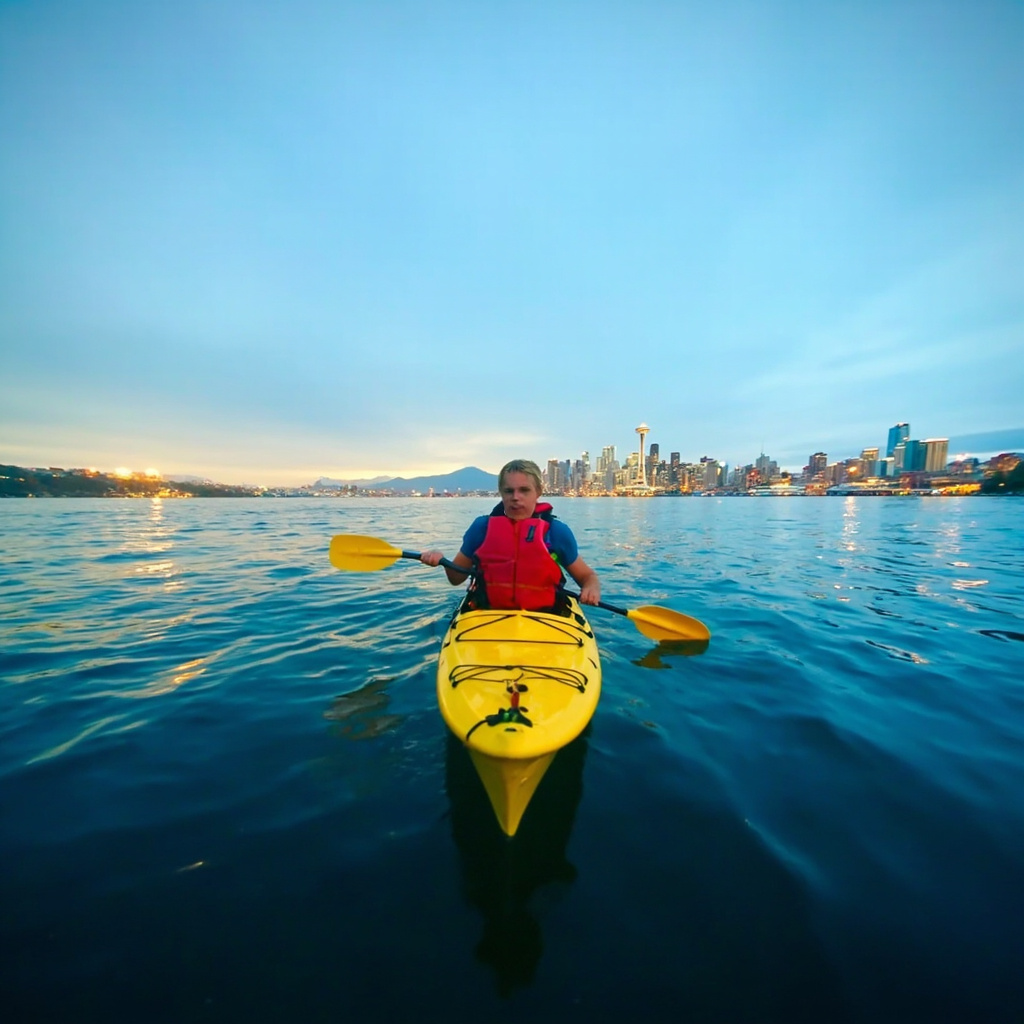
Table of contents
- Why Paddle Seattle?
- Industrial and Urban Exploration
- Expansive Recreational Waters
- Wild and Tidal Environments
- Safety First: Don't Underestimate the PNW
- Cold Water Safety
- Weather and Route Planning
- Navigation and Right-of-Way
- Top Kayak Rental Spots in Seattle
- Lake Union: The Classic Choice
- The Washington Park Arboretum: The Secret Garden
- Alki Beach: The Saltwater Standout
- Kayak Comparison and Rental Pricing Summary
- Kayak Fishing in Seattle
- Illustrative Planning Scenarios
- Example A: An Experienced Paddler's Morning on Lake Union
- Example B: A Family's First Afternoon on the Arboretum
- Pro Tips Before You Launch
- FAQ
- Sources and Verification
Seattle is a city defined by water. They call it the "Emerald City," but it's really a sprawling archipelago linked by bridges. You've got Puget Sound to the west, Lake Washington to the east, and Lake Union sitting right in the middle like the city's liquid heart. For anyone who loves a paddle, this isn't just a place with a few docks; it's a premier destination where you can transition from glass-flat freshwater to salty tidal currents in a single afternoon.
Whether you're a local trying to escape the office or a visiting paddler looking for a fresh perspective, seeing the Seattle skyline and the Olympic Mountains from the water is an experience that stays with you. Ready to get wet? Here is what you need to know about renting a boat in the PNW.
Published: June 19, 2026
Last updated: July 31, 2026
By: Sarah Mitchell, ACA Level 1 Kayak Instructor and Pacific Northwest paddling writer
Why Paddle Seattle?
Before you worry about where to snag a boat, you've got to understand the "lay of the water." Seattle isn't some inland town with a single muddy river. This city actually hands you three completely different paddling worlds on a silver platter.
Industrial and Urban Exploration
Lake Union is where the city's heart beats. It's a busy, beautiful crossroads where you'll share lanes with seaplanes roaring off to the islands and historic wooden schooners. Want to see the famous Sleepless in Seattle houseboat? This is your spot. Just be prepared to have an Alaskan fishing trawler loom over your shoulder—it's all part of the charm.
Expansive Recreational Waters
Lake Washington is the big brother. It's the second-largest natural lake in the state and perfect if you're looking to burn some calories or get lost in the Union Bay Natural Area. The maze of lily pads here feels miles away from the tech campuses just up the road.
Wild and Tidal Environments
Puget Sound is for when you want a little salt in your hair. It's where you test your mettle against tides and currents. Keep your eyes peeled; it's not unusual to see a harbor seal, a porpoise, or even an orca if the Salish Sea is feeling generous that day.
Safety First: Don't Underestimate the PNW
Paddling here isn't just a walk in the park. Cold water, changing weather, seaplanes, and commercial vessels all demand a conservative plan. Review the United States Coast Guard cold-water immersion guidance, wear a properly fitted life jacket, and choose water that matches your skills.
Cold Water Safety
The first danger after a capsize is cold shock, not just the hypothermia that may follow later. Washington State Parks reports that Puget Sound rarely rises above the mid-50s°F, while NOAA's Tacoma monitoring station provides current local observations. The National Weather Service's cold-water guidance explains that sudden immersion can cause involuntary gasping, rapid breathing, impaired thinking, and loss of muscular control.
The 1-10-1 rule is a useful memory aid rather than an exact stopwatch. Washington State Parks describes it this way:
- 1 Minute: Concentrate on controlling your breathing and keeping your airway clear.
- 10 Minutes: Attempt self-rescue or secure flotation before useful movement declines.
- 1 Hour: A life jacket may provide flotation during a period of useful consciousness while you wait for rescue.
The Golden Rule: Wear your PFD. The USCG's life-jacket guidance says a recreational vessel must carry an approved wearable PFD for each person and emphasizes that it can save your life only when you wear it. The American Canoe Association also recommends life-jacket wear for on-water activities.
Washington law applies to kayaks as well as larger vessels: carry one properly fitted, USCG-approved life jacket per person and a sound-producing device such as a whistle. Put the life jacket on and buckle it before you leave the dock.
Weather and Route Planning
Check the National Weather Service forecast for Puget Sound and Hood Canal, the rental operator's go/no-go status, and—if you're paddling from Alki—the NOAA tide predictions for Seattle immediately before launch.
Washington State Parks recommends checking weather before and during a trip, knowing your route, carrying emergency communication, and leaving a float plan with someone on shore. Set a turnaround time and stay within easy paddling distance of your launch when conditions are uncertain.
Navigation and Right-of-Way
Seattle's waters are basically marine highways. The ACA's Defensive Boating guide recommends staying out of the main channel and making your movements predictable.
- Hug the Shore: In Lake Union or the Ship Canal, stay out of the middle whenever it is safe to do so. Large commercial vessels have limited visibility and stopping ability.
- Follow the Lines: In the Montlake or Fremont Cuts, stay to the right and avoid erratic crossings.
- Watch for Seaplanes: Lake Union uses a seasonal seaplane warning system. The City of Seattle explains that flashing advisory buoys warn boaters about takeoffs and landings. Follow the rental staff's briefing and give active operations plenty of room.
Top Kayak Rental Spots in Seattle
Lake Union: The Classic Choice
This is where everyone goes for those "Gram-worthy" skyline shots.
- The Vibe: Calmer water, lots of boats, and nonstop sightseeing.
- Price Tag: Agua Verde Paddle Club lists regular and premium singles at roughly $24-$35 per hour and doubles at $32-$40 per hour. Northwest Outdoor Center charges $36 for a single or $46 for a double for its 90-minute minimum; additional time is $24 or $32 per hour, respectively, and is prorated every five minutes.
- Launch Points: Gas Works Park is the spot for big views, while the south end puts you right next to the MOHAI museum.
The Washington Park Arboretum: The Secret Garden
Looking to disappear into the greenery? This is where you go to hide from the city noise. These protected channels are a more approachable choice for a relaxed afternoon.
- The Vibe: Tree-lined channels and limited motorized traffic. It's a birdwatcher's dream—expect plenty of Great Blue Herons.
- Price Tag: The UW Waterfront Activities Center lists single kayaks at $19 for UW students, $22 for employees, and $25 for the public. Double kayaks are $21, $24, and $29 per hour, respectively. A valid Husky Card is required for discounted rates.
- Pro Tip: It gets shallow, so watch your rudder clearance. UW also restricts its rental boats from entering the Montlake Cut because of heavy traffic in the narrow channel.
Alki Beach: The Saltwater Standout
Head to West Seattle if you want to feel the ocean's rhythm.
- The Vibe: Launching from Seacrest Park gives you a wide-open view of downtown.
- Price Tag: Alki Kayak Tours lists single sit-on-tops at $26 per hour, single sea kayaks at $40 per hour, and doubles at $50 per hour.
- Heads Up: This area is exposed to wind, waves, tides, and vessel traffic. The operator may suspend rentals when conditions are unsuitable.
Kayak Comparison and Rental Pricing Summary
| Operator and Location | Single Price | Tandem Price | Primary Environment | Best For | Boat Length | Boat Weight | Per-Boat Capacity | Materials |
|---|---|---|---|---|---|---|---|---|
| Agua Verde Paddle Club (Portage Bay/Lake Union access) | $24-$35/hour | $32-$40/hour | Urban freshwater | Flexible routes toward Lake Union or the Arboretum | Confirm assigned model | Confirm assigned model | Confirm with operator | Confirm assigned model |
| Northwest Outdoor Center (Lake Union) | $36/90 minutes; $24/hour after minimum | $46/90 minutes; $32/hour after minimum | Urban freshwater | Skyline and floating-home views | Confirm assigned model | Confirm assigned model | Confirm with operator | Confirm assigned model |
| UW Waterfront Activities Center (Union Bay/Arboretum) | $19-$25/hour | $21-$29/hour | Protected wetlands | Beginners and wildlife viewing | Confirm assigned model | Confirm assigned model | 350 lb single / 500 lb double | Confirm assigned model |
| Alki Kayak Tours (Elliott Bay) | $26-$40/hour | $50/hour | Tidal saltwater | Experienced paddlers and skyline views | Confirm assigned model | Confirm assigned model | Confirm with operator | Confirm assigned model |
Prices were verified on July 31, 2026, using the linked operator pages. Agua Verde has a one-hour minimum and prorates in 10-minute increments after the first hour. Northwest Outdoor Center has a 90-minute minimum and prorates additional time in five-minute increments. Taxes, reservation rules, available boat models, and rates can change, so confirm the final cost and assigned boat specifications before launching.
Kayak Fishing in Seattle
Yes, you can fish from a kayak here, but most standard rental shops won't let you bring your gear on their recreational boats. You'll need to find a specialist or use a properly equipped personal kayak.
- What You're Catching: Smallmouth bass and perch in the lakes. If you're on the Sound, it's all about salmon such as Coho and Chinook, plus Lingcod.
- The Gear: Light spinning tackle works for the lake. For salmon, you'll want to troll with spoons.
- Timing: Summer and early fall are prime for salmon.
- Legal Stuff: Don't cast without checking the current Washington Department of Fish and Wildlife fishing-license requirements. WDFW says all fishers age 16 and older need a fishing license. Anyone fishing for salmon, including anglers younger than 16, must also carry a catch record card.
Illustrative Planning Scenarios
The two examples below are hypothetical planning exercises, not testimonials or documented accounts. They show how paddlers with different experience levels might use the information in this guide.
Example A: An Experienced Paddler's Morning on Lake Union
An experienced flatwater paddler wants skyline views but has never paddled around Lake Union's commercial traffic or seaplanes. Before launching, they ask the rental staff to identify traffic lanes, seaplane warning signals, wind limits, and useful turnaround landmarks. They choose a conservative shoreline route instead of chasing mileage and return before conditions are expected to change.
Example B: A Family's First Afternoon on the Arboretum
A family of first-time paddlers checks the operator's age, occupancy, and capacity rules before leaving home. They choose tandem kayaks, remain within the protected Arboretum waterways, and set a firm turnaround time. The plan prioritizes a simple route and an on-time return rather than covering as much distance as possible.
Pro Tips Before You Launch
- Pack a Dry Bag: Seattle weather can change quickly. Bring a shell and use synthetic or wool layers rather than cotton.
- Parking is a Pain: Spots near Lake Union and Alki fill up early. Consider public transit or allow extra time before check-in.
- Check the Reservation Policy: Rules differ by operator. UW says no reservation is required, NWOC accepts walk-ins when availability allows and offers reservations, and Alki advises checking availability during peak periods. Use the operator links above for the current policy.
- Respect Rental Boundaries: Rental-company rules may be stricter than general navigation rules. For example, NWOC states that its kayaks are not allowed through the Ballard Locks. Ask where your specific rental may go before leaving the dock.
FAQ
Q: Do I need a permit for my own kayak?
A standard non-motorized kayak does not require a general boating permit, but Washington State Parks lists a properly fitted USCG-approved PFD and a sound-producing device among the required equipment. You may also need a Discover Pass when parking at certain state-managed launches.
Q: Can I kayak right up to the Space Needle?
Not unless you can paddle on grass—the Space Needle is inland. Lake Union still gives you one of the best views of it from the water.
Q: What should I wear?
Dress for the water temperature rather than the afternoon air. Avoid cotton because it stays wet and loses insulation. Choose synthetic or wool layers, add a wind-resistant shell, and ask the operator whether a wetsuit or drysuit is appropriate. The National Weather Service cold-water guide recommends thermal protection such as a wetsuit or drysuit when conditions warrant it.
Q: Can I bring my dog?
Policies vary. NWOC permits well-behaved dogs that can sit comfortably in its kayaks or on SUPs, while the UW Waterfront Activities Center allows dogs in canoes but not in kayaks. Confirm before arriving and bring a properly fitted canine life jacket if the operator does not supply one.
Q: Are there age limits?
Yes, and they vary. UW requires at least one adult age 18 or older in each boat, limits single kayaks to adults, and sets additional rules for young children. NWOC requires paddlers younger than 18 to go with a parent or legal guardian and places paddlers younger than 16 in a double or triple kayak with an adult. Check the operator's current rules before booking.
Sources and Verification
Primary safety and regulatory references used in this guide include the USCG cold-water immersion guidance, USCG life-jacket guidance, ACA life-jacket guidance, ACA Smart Start for Safe Paddling, Washington State Parks cold-water guidance, NOAA and National Weather Service marine information, and WDFW fishing-license rules. Rental prices and operator policies are attributed to the primary operator pages linked in each location section and the comparison table.
Last reviewed: July 31, 2026. Pricing, rental policies, WDFW licensing rules, and USCG/ACA safety guidance were checked against the cited sources.
About the Author: Sarah Mitchell is a freelance paddling writer based in the Pacific Northwest. She has logged more than 800 miles of sit-in and SOT kayaking across the Salish Sea, Lake Washington, and the Columbia River, and holds a Level 1 ACA Kayak Instructor certification. Her safety sections are reviewed against USCG cold-water survival guidance and the ACA's paddling-safety resources before each seasonal update.
Safety Disclaimer: Respect the water. Check the tides, weather, and rental operator's status before you go. This guide is not a substitute for professional instruction. Wear your life jacket—it only works if you're wearing it.
Paddling in Seattle provides a rare intersection of urban vibrance and rugged natural beauty. By choosing the right "biome" for your skill level and respecting the cold-water safety protocols established by the USCG and ACA, you can enjoy one of the premier maritime experiences in North America. Whether you are gliding through the hushed channels of the Arboretum or navigating the salt spray of Alki Beach, the Emerald City is best viewed from the seat of a kayak.
— About the author
Lauren Bennett
Paddling Content Editor · Outdoor Recreation Writer · Beginner Kayaking, Safety, Buying Guides
Lauren Bennett writes educational kayaking guides for beginners and recreational paddlers. She covers safety practices, kayak selection, paddling techniques, and trip planning with clear, easy-to-follow advice designed to make kayaking more accessible for everyone.
View full profileRecommended for you
Related reads
 guide
guideKayak Rental Boston: Best Spots on the River & Harbor
From the Charles River's skyline views to the salt air of Boston Harbor, here is your expert guide to finding the best kayak rentals and staying safe on the water.
 guide
guideBest Kayak Rental in Austin Texas: Lakes & Rivers Guide
Your go-to guide for renting kayaks in Austin. We cover Lady Bird Lake, San Marcos, and Lake Travis with expert safety tips and local insights.
 guide
guideKayak Rental Lake Tahoe: Best Alpine Paddling Spots
The ultimate guide to kayaking Lake Tahoe, featuring rental locations, safety tips, and gear advice.
You may also like
View all →Related rentals
 guide
guideKayak Rental in Erie, PA: Lake Erie & French Creek Guide
Planning a trip? Find the best kayak rental in Erie, PA. Explore Presque Isle State Park lagoons and French Creek with our guide to gear, safety, and spots.
 Guide
GuideKayak Rental in Arizona: Lakes, Rivers & Safety Guide
Explore Arizona's best kayak rental spots from the Salt River to Lake Powell. Our guide covers top destinations, safety gear, and expert desert paddling tips.
 kayak-destinations
Boise Kayaking Guide: Top Idaho Paddling, Fishing & Rentals
Explore kayak rental options in Boise, Idaho. Compare the Boise River, Quinn's Pond, and Lucky Peak for your next paddling or kayak fishing adventure.