Back to rentalsguide
Maui Kayak Rental: Expert Guide to Ocean & Bay Tours
Map out a Maui kayak trip with USCG safety rules, trade-wind timing, and gear picks for first-timers and intermediate paddlers at Makena and Olowalu.
5 min readLast reviewed
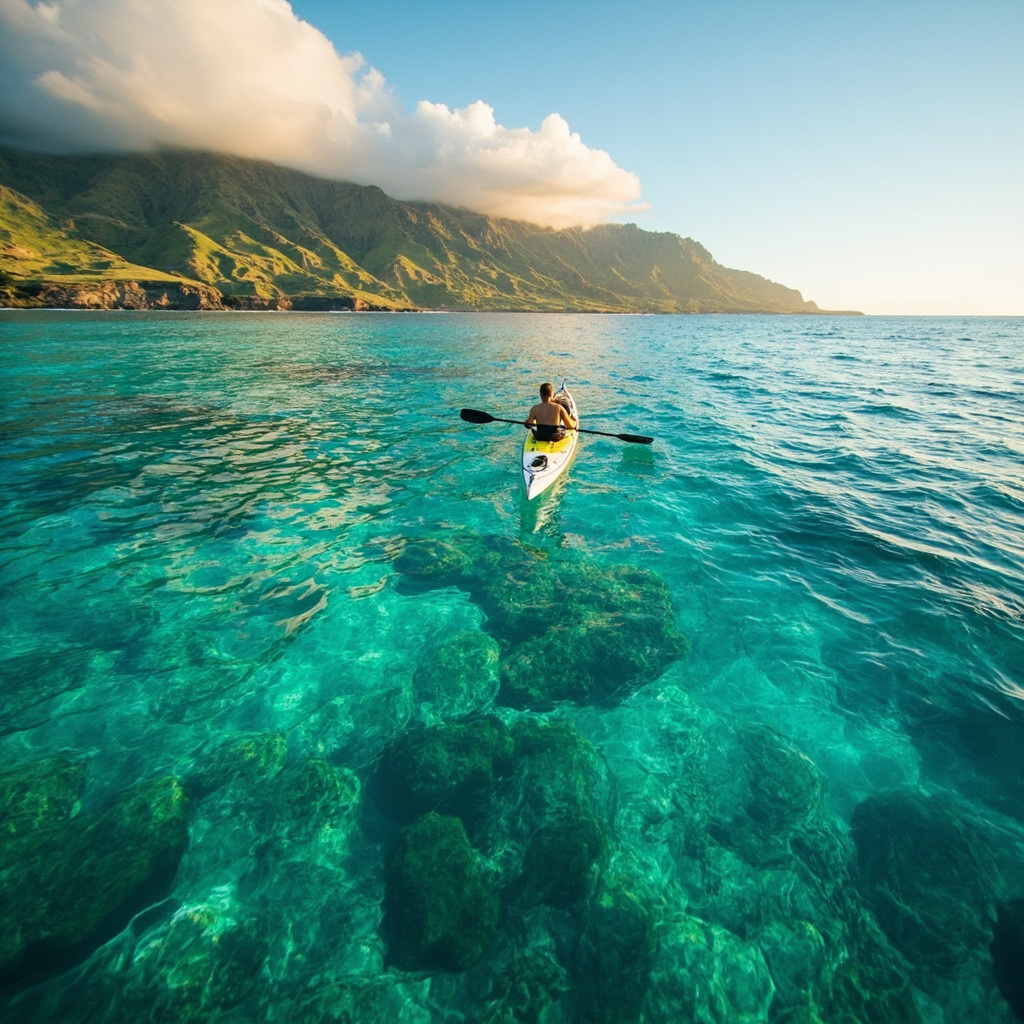
Table of contents
- Why Maui? Understanding the Island's Water Dynamics
- The "Alenuihaha" Effect
- Marine Biodiversity and Conservation
- Water Clarity and Bathymetry
- Safety First: Regional Compliance and Marine Standards
- USCG and ACA Standards
- Local "Leeward" Logic
- Top Spots for Ocean and Bay Tours
- 1. Makena Landing (South Maui)
- 2. Olowalu (West Maui)
- 3. Kapalua & Honolua Bay (Northwest Maui)
- 4. Kihei Coastline (Kalepolepo Park)
- Choosing Your Craft: Rental Logistics for Enthusiasts
- Gear Comparison Table
- Pedal-Drive Systems
- Illustrative Scenarios: Two Paths to the Paddle
- Scenario A: The Blue Water Photographer
- Scenario B: The Reef Stalker Fisherman
- Target Species Information
- Navigating the Legal and Ethical Waters
- FAQ: Frequently Asked Questions for Maui Kayakers
- Do I need a permit to launch a kayak in Maui?
- What is the best time of year for kayaking in Maui?
- Can I kayak to Molokini Crater?
- Are sharks a concern for Maui kayakers?
- What should I do if the wind picks up suddenly?
Welcome to the ultimate guide for exploring Maui's coastlines by kayak. For the dedicated paddle sports enthusiast, Maui offers a lot more than just pretty scenery; it delivers a technical challenge shaped by unique bathymetry and unpredictable Pacific weather systems. We’re diving into the "why" and "how" of Maui kayaking to make sure your next rental results in a successful expedition rather than an offshore rescue.
Maui is often described as a paddler's playground, but for anyone who takes the sport seriously, it's an intricate landscape of shifting wind patterns, micro-climates, and diverse marine topography. While a casual tourist might see a kayak rental as a simple afternoon distraction, experienced enthusiasts know "The Valley Isle" offers some of the most rewarding coastal exploration in the Central Pacific--provided you know where to launch and what to look for.
In this guide, we're skipping the generic resort fluff to get into the technicalities of Maui's coastlines. Whether you're looking to stalk bonefish on the flats of North Kihei or navigate the dramatic sea cliffs of the Pali Coast, understanding the "why" of Maui's water is the first step toward a successful expedition.
About the author & verification By Sarah Mitchell, contributing editor at KayakLens, with paddling and writing experience on Hawaiian waters. The USCG, ACA, NOAA, and DLNR references below were checked against each provider's current public guidance. Last reviewed: July 2026.
Why Maui? Understanding the Island's Water Dynamics
Before grabbing a paddle, you need to understand why Maui's kayaking experience feels so different from the mainland US or even neighboring islands like Oahu or Kauai.
The "Alenuihaha" Effect
Maui sits between Molokai, Lanai, and Kahoolawe, a positioning that creates natural "wind funnels." Trade winds--usually blowing from the northeast--accelerate as they are squeezed between Maui's massive volcanic peaks, Haleakala and the West Maui Mountains. This means a glass-flat morning in Ma'alaea Bay can transform into a gale-force offshore wind event in under thirty minutes.
Marine Biodiversity and Conservation
Maui is part of the Hawaiian Islands Humpback Whale National Marine Sanctuary. For the intermediate paddler, this means your ocean tour isn't just a workout; it's a journey through a protected nursery. Between December and April, the density of megafauna in the Au'au Channel is among the highest on the planet.
Water Clarity and Bathymetry
Unlike the murkier waters of the East Coast or Gulf Coast, Maui often offers vertical visibility exceeding 80 feet. This changes how you navigate; you aren't just scanning the horizon--you're "bottom-reading" to avoid shallow coral heads (puka) that can snag a rental hull or cause a sudden capsize.
Safety First: Regional Compliance and Marine Standards
When you're paddling in Hawaii, you fall under the jurisdiction of both the State of Hawaii Department of Land and Natural Resources (DLNR) and the United States Coast Guard (USCG).
USCG and ACA Standards
According to the USCG's "Life Jacket Wear" guidance, kayaks count as vessels and "[a] recreational vessel must have a U.S. Coast Guard Approved Wearable PFD for each person onboard." On Maui, that means in practice:
- PFD Requirements: A USCG-approved Type I, II, or III life jacket must be carried for every person. The American Canoe Association reinforces the point with a sobering statistic: "Where cause of death was known, 81% of fatal boating accident victims drowned; 83% of those were not wearing a life jacket," and reminds paddlers that "the best type of life jacket is one that you'll wear." Maui's tropical heat makes thin-profile, high-back fishing PFDs the savvy choice for enthusiasts.
- Whistle/Signaling Device: You must carry a sound-producing device (like a whistle) to signal for help.
- Visual Distress Signals: If you're out between sunset and sunrise, you need specific lighting.
Local "Leeward" Logic
Safety on Maui is dictated by the clock. Ask any local and they'll tell you: "Be back by 11." By noon, the trade winds typically kick in. If you're a mile offshore when those trades hit, you're in for a grueling, dangerous upwind grind. Implementing kayak paddle techniques for efficiency can be a lifesaver in these conditions. Always check the NOAA marine weather forecast and local surf forecasts for small craft advisories before you even pull the boat off the rack.
Top Spots for Ocean and Bay Tours
Maui's coastline is roughly divided into four main paddling zones. Each offers a distinct experience.
1. Makena Landing (South Maui)
Known as "Turtle Town," this is the premier spot for intermediate paddlers looking for a mix of reef exploration and open-water distance.
- The Draw: Easy entry via a protected sandy cove. From here, you can paddle south toward Five Graves or La Perouse Bay.
- Conditions: Generally the calmest water on the island during the morning hours.
- Kayak Fishing: Excellent for targeting Omilu (bluefin trevally) or Oio (bonefish) along the fringing reefs.
2. Olowalu (West Maui)
Olowalu is home to one of Hawaii's oldest and most expansive coral reefs.
- The Draw: The reef extends nearly a mile offshore but stays relatively shallow, creating a "lagoon" effect that protects you from the heavier channel swells.
- The Experience: Ideal for "kayak snorkeling." Many enthusiasts use sit-on-top rentals with scupper plugs removed to easily hop between the cockpit and the water.
- Technical Note: Be wary of the "Olowalu wind." It blows directly offshore, making the return to the beach a nightmare in high-volume kayaks.
3. Kapalua & Honolua Bay (Northwest Maui)
This is "big water" territory, best suited for advanced paddlers comfortable with swell.
- The Draw: Dramatic cliffs and deep blue water. Honolua Bay is a Marine Life Conservation District. While fishing is off-limits here, the sheer scale of the underwater topography is breathtaking.
- Warning: This area is highly exposed to North Pacific winter swells. From October to March, waves can exceed 20 feet, making kayaking impossible. Check local swell charts religiously.
4. Kihei Coastline (Kalepolepo Park)
For the kayak-fishing enthusiast, North Kihei offers access to ancient Hawaiian fishponds and expansive sand flats.
- The Draw: The most accessible area for a quick multi-hour rental.
- Niche Info: Its proximity to the Kealia Pond National Wildlife Refuge makes birdwatching from the water top-tier. Keep an eye out for the Hawaiian stilt (Ae'o) and Hawaiian coot ('Alae Ke'oke'o).
Choosing Your Craft: Rental Logistics for Enthusiasts
Don't settle for the heavy, bulbous plastic tubs often found on hotel beaches. Seek out specialized outfitters who offer gear meant for the open ocean. The comparison below uses representative models you can actually rent on Maui; daily prices reflect typical Maui retail averages and vary by outfitter and season.
Gear Comparison Table
| Feature | Recreational SOT (e.g., Ocean Kayak Malibu Two) | Pedal-Drive SOT (e.g., Hobie Mirage Outback) | Touring Sit-In (e.g., Delta 17) |
|---|---|---|---|
| Price (Avg/Day, Maui) | $45 - $65 | $95 - $130 | $70 - $100 |
| Weight | ~57 lbs (Malibu Two) | 85 lbs hull / 103 lbs rigged | ~50 lbs |
| Capacity | 350-450 lbs | 425 lbs | 360-410 lbs |
| Length | 12' | 12' 9" | 17' |
| Materials | Rotomolded Polyethylene | Rotomolded Polyethylene | Thermoformed Composite |
Pedal-Drive Systems
Given Maui's wind, renting a pedal-drive kayak is a game-changer. It keeps your hands free for fishing or photography while using your strongest muscle groups--your legs--to fight that afternoon headwind on the way back in.
Illustrative Scenarios: Two Paths to the Paddle
The narratives below are composite scenarios built to illustrate common Maui expedition patterns. They are not first-hand trip reports; the timings and distances are typical for the conditions described, not measurements of a specific outing.
Scenario A: The Blue Water Photographer
Objective: Capture images of humpback whales (at a legal distance). Tactics: An intermediate paddler rents a 14-foot touring SOT and launches at 6:30 AM from Maluaka Beach. By holding the NOAA sanctuary's 100-yard approach rule as a hard standoff, the stability of the touring hull lets them swap the paddle for a telephoto lens. They are back on the beach by 10:00 AM, just as the whitecaps start appearing.
Scenario B: The Reef Stalker Fisherman
Objective: Catch and release local trevally. Tactics: An experienced kayak angler opts for a rental equipped with a GPS unit and a pedal drive, launching at Olowalu. By pedaling, she maintains her position over a specific drop-off where the reef falls from 15 to 40 feet. She lands three Omilu before the 11:00 AM wind shift ruins the bite.
Target Species Information
- Habitat: Fringing reefs, coral heads, and deep drop-offs.
- Gear: Medium-heavy spinning rods, 20lb braid.
- Lures/Bait: Surface poppers for Omilu, shrimp flies for Oio.
- Best Season: Year-round; summer offers the calmest water for reef stalking.
Navigating the Legal and Ethical Waters
Maui has strict cultural and environmental protocols that you're expected to follow:
- Give Mammals Space: Under NOAA's sanctuary regulation, "[t]his important regulation prohibits approaching humpback whales by any means (e.g., an individual in the water, standup paddleboards, kayaks, canoes, vessels, and drones) within 100 yards (90 m) when on or in the water." Let them come to you if they're curious, but don't chase.
- Coral Awareness: Never anchor on coral. Find a sandy patch. Also, ensure your sunscreen is reef-safe (non-nano zinc oxide only).
- Respect Sacred Sites: Avoid landing on rocky shores that look like man-made structures (Heiau). These are sacred and off-limits.
- Commercial Tours Need a Permit: If you're running a paid tour, DLNR's Division of Boating and Ocean Recreation requires a commercial use permit under Hawaii Administrative Rule Section 13-256-3. Recreational paddlers launching from public beaches do not need this permit.
FAQ: Frequently Asked Questions for Maui Kayakers
Do I need a permit to launch a kayak in Maui?
For recreational paddling using a manually propelled kayak, you generally don't need a permit for public beach launches. If you're running a commercial tour, however, you'll need specific DLNR commercial use permits.
What is the best time of year for kayaking in Maui?
For calm water and whale watching, winter (December-April) is peak, though you have to watch for North Shore swells. If you want the flattest water across all shores, summer (June-August) is your best bet.
Can I kayak to Molokini Crater?
I wouldn't recommend it. The Alalakeiki Channel has punishingly strong currents. Most rental agencies actually prohibit taking boats to Molokini because of the liability--and common sense.
Are sharks a concern for Maui kayakers?
Incidents are extremely rare. Just use common sense: avoid paddling near river mouths after heavy rains and don't chum the water in areas where people are swimming.
What should I do if the wind picks up suddenly?
Don't fight it directly if it's too strong. Aim for the nearest diagonal point of land. If you're being blown offshore, stay with your boat. Use your whistle immediately to signal for help.
Maui is a premier destination for paddlers who actually respect the ocean's power. If you choose the right gear, time your launch to beat those trade winds, and play by the local rules regarding marine life, you'll see the island from a side of the shoreline most resort visitors never reach. Are you ready to trade the poolside drink for a morning out on the blue? Just remember: the wind doesn't care about your plans, so get out there early.
— About the author
Lauren Bennett
Paddling Content Editor · Outdoor Recreation Writer · Beginner Kayaking, Safety, Buying Guides
Lauren Bennett writes educational kayaking guides for beginners and recreational paddlers. She covers safety practices, kayak selection, paddling techniques, and trip planning with clear, easy-to-follow advice designed to make kayaking more accessible for everyone.
View full profileRecommended for you
Related reads
 Guides
The Essential Kayak Fishing Checklist for First-Timers
An essential printable checklist for first-time kayak anglers covering safety, gear, and tactics.
 paddling-guide
Kayak Paddle Techniques: Expert Guide to Efficient Strokes
Master the art of the perfect stroke. Learn the 'paddler's box,' torso rotation, and essential USCG safety tips to paddle further with less effort.
You may also like
View all →Related rentals
 guide
guideKayak Rental in Erie, PA: Lake Erie & French Creek Guide
Planning a trip? Find the best kayak rental in Erie, PA. Explore Presque Isle State Park lagoons and French Creek with our guide to gear, safety, and spots.
 guide
guideKayak Rental Lake Tahoe: Best Alpine Paddling Spots
Plan your Lake Tahoe kayaking trip with our guide to the best rental spots, from Emerald Bay to Sand Harbor. Learn about cold water safety & gear requirements.
 guide
guideKayak Rental Dubrovnik: Best Caves & Hidden Beaches
Plan the ultimate Dubrovnik kayaking trip. Discover secluded sea caves, the best rental spots near Pile Gate, and vital USCG safety tips for the Adriatic Sea.