Back to speciesSpecies Guides
The Ultimate Guide to Kayak Fishing for Redfish
Everything you need to know to hunt red drum from a kayak: from stealth tactics in the salt marsh to the best gear for landing a trophy.
5 min readLast reviewed
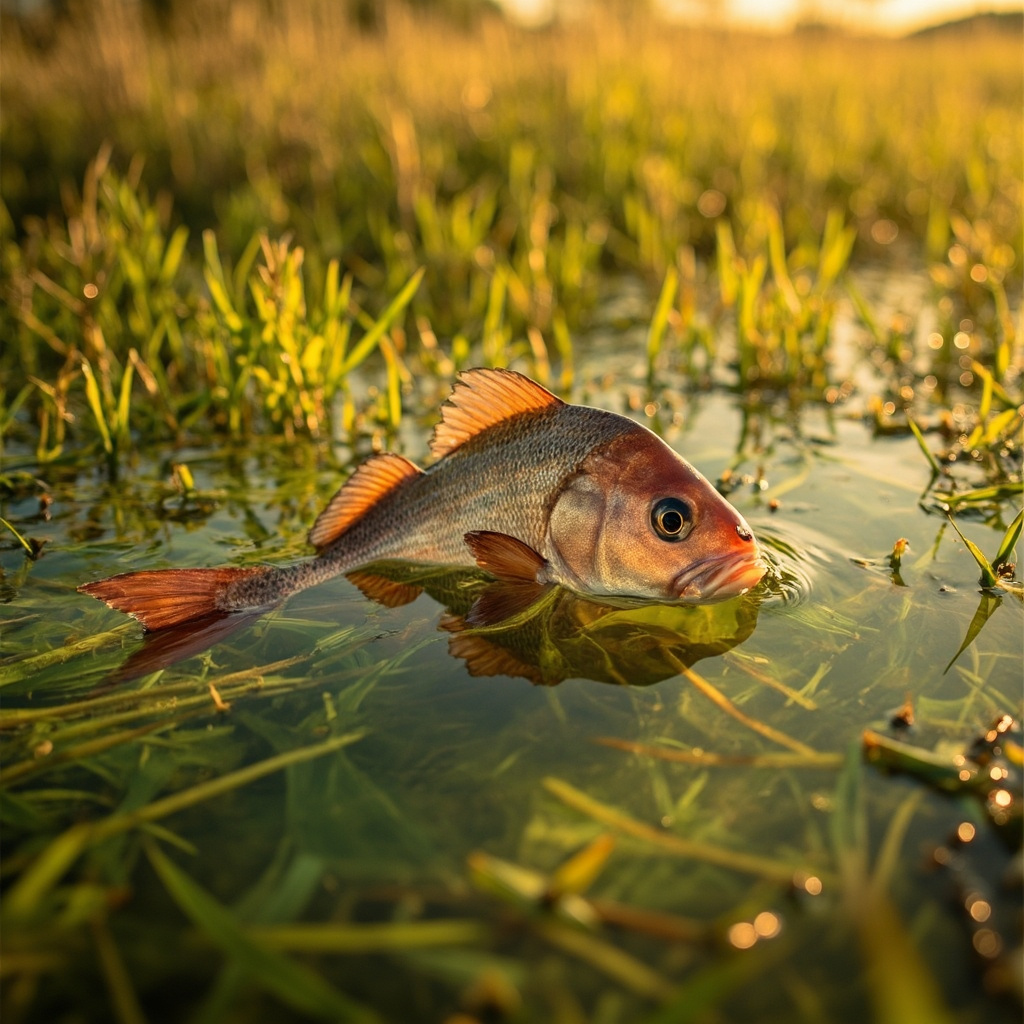
Table of contents
- Understanding the Species: The Red Drum
- Life Cycle and Size
- Identifying Characteristics
- Habitat and Seasonal Patterns
- The Salt Marsh and Grass Flats
- Oyster Bars and Structure
- Seasonal Transitions
- The Kayak Fishing Rig: Gear and Setup
- Choosing Your Craft
- Essential On-Board Tools
- Lures, Bait, and Tackle
- Rod and Reel Specifications
- Top Lures
- Safety and Navigation Compliance
- The PFD Requirement
- Visibility and Lighting
- Weather and Tides
- Technical Skills: Targeting and Stealth
- The "Quiet" Approach
- Sight Fishing Strategy
- Conservation and Ethics
- Top Kayak Fishing Locations
- FAQ: Frequently Asked Questions
- 1. What is the best tide for redfish?
- 2. Do I need a special license?
- 3. Can I catch Bull Redfish from a kayak?
- 4. How do I stop the wind from blowing me around?
- 5. What color lure should I use in murky water?
- References
There's nothing quite like the rush of seeing a copper tail waving at you from six inches of water. Kayak fishing for redfish is the ultimate game of stealth and strategy. We're breaking down everything from red drum habits to the specific gear you need to turn a quiet paddle into an epic day on the flats. No engine, no noise -- just you and the fish.
Red drum (Sciaenops ocellatus), or "reds" as most of us call them, are the ultimate prize for a kayak angler. They're powerful, stubborn, and perfectly suited for the kind of stealthy approach only a paddle-craft can pull off.
While powerboats are busy spooking fish with engine hum and hull slap, a kayaker can slip into "skinny water" -- sometimes just six inches deep -- where trophy reds are busy rooting for crabs. This guide dives into how to master the art of redfish kayak fishing, blending their natural biology with the technical skills you need to stay one step ahead of them.
Understanding the Species: The Red Drum
To catch redfish consistently, you have to get inside their heads. Redfish are part of the drum family (Sciaenidae). If you've ever heard a strange thumping sound through your hull, that may be a redfish; the Florida Museum's red drum species profile explains that the fish makes its namesake sound with abdominal muscles and its swim bladder.
Life Cycle and Size
Young redfish spend their early years in the relative shelter of estuaries, salt marshes, bays, and inlets. The Atlantic States Marine Fisheries Commission's red drum overview notes that juveniles are most abundant in estuarine waters while fish older than age four generally use deeper water. Anglers often call the smaller inshore fish "puppy drum" and reserve "Bull Reds" for the big adults.
Identifying Characteristics
The dead giveaway for a redfish is the black eyespot (ocellus) right at the base of the tail. Most have one, but it's not weird to see a fish peppered with multiple spots. Nature likely designed this to trick predators into biting the wrong end. Their color can shift based on the environment -- fish in muddy marsh water look like burnished copper, while those on white sand flats can look almost silver.
Habitat and Seasonal Patterns
Redfish aren't too picky, but they definitely have favorite neighborhoods. Success is all about knowing where they're hanging out based on current conditions.
The Salt Marsh and Grass Flats
This is the playground for kayak anglers. Redfish follow the tide into Spartina grass or seagrass meadows to hunt for shrimp and crabs.
- The "Tail": Keep your eyes peeled for "tailing" fish. This is the holy grail -- a redfish tips its head down to eat, and its spotted tail breaks the surface like a little flag.
- The "Push": In very shallow water, a cruising redfish displaces water, creating a "V" shaped wake. When you see that push, freeze. Put down the paddle and get your rod ready.
Oyster Bars and Structure
Think of oyster reefs as redfish supermarkets. They offer plenty of snacks and a bit of warmth. Kayakers have a massive advantage here; our plastic hulls can slide right over oyster shells that would rip a fiberglass boat to shreds.
- Tactical Tip: Look for spots where the tide is ripping across an oyster bar. Redfish love to sit on the leeward side of the structure, letting the current deliver lunch right to their mouths.
Seasonal Transitions
- Spring: As water temps climb above 65-F, fish start moving out of their deep winter holes and back onto the shallow flats. Look for dark mud bottoms -- they hold heat better than sand.
- Summer: High heat makes fish sluggish. Get out there at the crack of dawn or late in the evening. Look for "pockets" of cooler, oxygenated water near inlets.
- Fall: This is the absolute best time to be on the water. Redfish are gorging themselves for winter, making them aggressive and easier to fool. This is also when the big Bull Reds start their run through the passes.
- Winter: Their metabolism hits the brakes. Look for deep holes in tidal creeks. On a bluebird afternoon, they might venture onto shallow flats just to sun themselves.
The Kayak Fishing Rig: Gear and Setup
How you rig your boat will determine how much you struggle versus how much you fish.
Choosing Your Craft
Stability is everything. You want a platform solid enough to stand on because sight fishing is 90% of the game. Aim for a beam width of 31-34 inches so you don't feel like you're on a tightrope.
<table> <caption><strong>Pedal fishing kayak comparison</strong></caption> <thead> <tr> <th scope="col">Specification</th> <th scope="col">Hobie Mirage Outback</th> <th scope="col"><a href="https://oldtownwatercraft.johnsonoutdoors.com/us/shop/kayaks/fishing/sportsman-pdl-106">Old Town Sportsman PDL 106</a></th> </tr> </thead> <tbody> <tr> <th scope="row">Price</th> <td>$3,299 MSRP</td> <td>About $2,700 MSRP</td> </tr> <tr> <th scope="row">Weight</th> <td>85 lbs fitted hull; 103 lbs fully rigged</td> <td>107 lbs kayak; 450 lbs total capacity</td> </tr> <tr> <th scope="row">Capacity</th> <td>425 lbs</td> <td>450 lbs</td> </tr> <tr> <th scope="row">Length</th> <td>12 ft 9 in</td> <td>10 ft 6 in</td> </tr> <tr> <th scope="row">Materials</th> <td>Rotomolded polyethylene</td> <td>Rotomolded polyethylene</td> </tr> </tbody> </table>The listed specifications and MSRP are provided by the manufacturers; verify current pricing, included equipment, and capacity limits before purchase.
Essential On-Board Tools
- Stake-out Pole: Forget heavy anchors. A 6-to-8-foot fiberglass pole lets you pin yourself to the bottom silently.
- Trolley System: A must-have. It's a pulley on the side of your kayak that allows you to shift your anchor point from bow to stern so you're always facing the right direction.
- Silent Traction Pads: Stick some EVA foam padding to your deck. Sound travels fast underwater, and dropping a pair of pliers on a bare plastic hull is like ringing a "get lost" bell for a redfish.
Lures, Bait, and Tackle
Redfish aren't usually picky eaters, but they can get hyper-focused on whatever the "flavor of the week" is in the marsh.
Rod and Reel Specifications
- Rod: A 7' or 7'6" medium-power, fast-action spinning rod is the gold standard. You need the length for long casts and the backbone to winch a fish out of heavy grass.
- Reel: Stick with a 2500 or 3000 series reel rated for saltwater. You need a drag system that won't stutter when a red decides to head for the next county.
- Line: 10-15 lb braid is the way to go for sensitivity. Use about 2 feet of 20-30 lb fluorocarbon leader to handle those sharp oyster shells.
Top Lures
- The Gold Spoon: If it ain't broke, don't fix it. It flashes, it vibrates, and it looks like a wounded baitfish. Get a weedless version to save yourself a headache in the grass.
- Soft Plastic Paddle Tails: 3-to-4-inch swimbaits are versatile. "Electric Chicken" or "Root Beer" are the go-to colors. Tip them with a 1/8 oz jig head.
- Topwater Plugs: Nothing beats the "walk-the-dog" action on a quiet morning. The strikes are violent and will get your heart racing. If you enjoy this high-energy surface action, you might also be interested in kayak fishing for snook, another species known for explosive strikes.
- Scented Baits: Redfish hunt with their noses. In muddy water, using scented plastics like Gulp! can be the difference between a skunk and a limit.
Safety and Navigation Compliance
Let's be real: paddle-sports can be dangerous if you're careless. For those just starting out, checking a kayak fishing for beginners guide can provide essential foundational knowledge. The American Canoe Association's paddler safety checklist also recommends considering wind, fog, wave height, and your ability to travel back to shelter before heading away from shore.
The PFD Requirement
You need a USCG-approved life jacket. For fishing, look for a "high-back" PFD designed for kayaks; they don't interfere with your seat. Wear it. If you flip, you won't have time to dig a life jacket out of a storage hatch. The U.S. Coast Guard's life-jacket guidance says a recreational vessel must have a U.S. Coast Guard-approved wearable PFD for each person onboard and notes that a wearable PFD helps only when you wear it.
Visibility and Lighting
If you're launching before dawn or staying out past sunset, consult the American Canoe Association's visibility guidance and the U.S. Coast Guard Navigation Rules. Vessels under oars, including kayaks, must follow the applicable navigation-light requirements; carry an electric torch or lighted lantern readily available and use the lighting required for your conditions and vessel. Also, keep a whistle tucked into your PFD -- you need to be able to make noise if a powerboat is heading your way.
Weather and Tides
- Wind: Wind is a kayaker's arch-nemesis. Many kayak anglers stay off open water above 15 mph winds, but local exposure, waves, temperature, experience, and the return route matter more than any single number. The ACA advises paddlers to watch conditions for wind and fog and to understand how wind speed, wave height, and fetch affect a trip.
- Tidal Flow: In some areas, the current is stronger than you can paddle. Check NOAA's official tide predictions and try to "ride the tide" out and back.
Technical Skills: Targeting and Stealth
The "Quiet" Approach
Redfish in popular areas aren't stupid -- they know what a human sounds like.
- Watch the Hull Slap: When you're heading into the wind, waves hitting your bow make a distinct slapping sound. Angle your approach to quiet it down.
- The One-Handed Cast: Practice casting with minimal body movement. A tall person standing in a kayak waving a 7-foot rod creates a massive silhouette that will spook fish from thirty yards away.
Sight Fishing Strategy
Invest in a good pair of polarized sunglasses (copper or amber lenses are best). Look for:
- The "Shadow": Often, you won't see the fish itself, but you'll see its shadow moving across the bottom.
- Nervous Water: Any ripple that doesn't match the wind or tide is usually a fish moving.
- Mud Boils: If you see a puff of mud, you probably just spooked a fish. Take a breath, slow down, and stay alert.
Conservation and Ethics
We all want to keep catching these fish for years to come.
- Catch and Release: If that fish isn't going in the cooler, keep it in the water while you unhook it. A red-drum-specific study summarized by North Carolina Sea Grant exposed small and slot-sized fish to exhaustive exercise followed by one minute of air exposure. Larger fish recovered more slowly, and the researchers recommended shortening fight time and air exposure.
- Handle with Care: Wet your hands before touching a fish to protect its slime coat, or better yet, use a rubberized net.
- Protect the Grass: Don't drag your paddle or pole through sensitive seagrass. Those "prop scars" take years to grow back and ruin the habitat for everyone.
Top Kayak Fishing Locations
Looking for a road trip? Check these out:
- Charleston, SC: Giant salt marshes and classic Lowcountry scenery.
- St. Augustine, FL: Famous for the "Flood Tide" where reds tail in the grass.
- Rockport, TX: Some of the best shallow-water flats in the country.
- Louisiana Marshes: If you want to catch a "Cajun Puppy" the size of a mailbox, this is the place.
FAQ: Frequently Asked Questions
1. What is the best tide for redfish?
A falling tide is usually your best bet. As the water leaves the grass, the fish are forced into deeper holes and creeks, making them easier to find.
2. Do I need a special license?
Yes, you'll need a saltwater fishing license from whatever state you're in. Motor-registration and titling rules are state-specific, so check the U.S. Coast Guard's state boating law resources and your local boating agency before attaching or using an electric motor.
3. Can I catch Bull Redfish from a kayak?
You can, but be careful. A 40-inch fish in a heavy current will give you a "Chesapeake Sleigh Ride" that can pull you miles from your launch point. Never go after big salt-water reds alone.
4. How do I stop the wind from blowing me around?
A stake-out pole is your best friend in shallow water. If you're near mangroves, a "brush gripper" clamp is a lifesaver.
5. What color lure should I use in murky water?
When the water looks like iced tea, go with dark colors like "Root Beer" or "Black and Gold." They create a stronger silhouette that the fish can actually see.
References
The safety, regulatory, conservation, species, and gear-specification claims in this guide draw on the following sources:
- Atlantic States Marine Fisheries Commission red drum overview
- Florida Museum red drum species profile
- U.S. Coast Guard life-jacket guidance
- U.S. Coast Guard Navigation Rules (International & Inland)
- U.S. Coast Guard state boating law resources
- American Canoe Association Paddler's Safety Checklist
- American Canoe Association Recreational Kayaking Safety Essentials
- NOAA Tide Predictions
- Hobie Mirage Outback specifications
- Old Town Sportsman PDL 106 specifications
- North Carolina Sea Grant: "Does the Size of a Red Drum Affect its Recovery After Catch-and-Release?" (summary of Martin, Negrete, and Esbaugh's red drum study)
Last reviewed: June.
Next time you're out on the flats, remember: silence is your biggest advantage. That redfish might be five feet away from you, and if you're quiet enough, he'll never even know you're there until he feels the hook. Tight lines!
Redfish are the heart and soul of salt-marsh fishing. By pairing the natural stealth of a kayak with a solid understanding of the tides, you're looking at one of the most rewarding ways to spend a day on the water. Stay safe, wear your PFD, and always respect the flats. Next time you see a tail break the surface, take a deep breath and make that cast count. What's the biggest red you've ever landed from a plastic boat?
— About the author
Mason Rivera
Kayak Fishing, Gear Reviews · Fishing Kayak Specialist · Kayak Fishing, Gear Reviews
Mason Rivera focuses on kayak fishing equipment, rigging setups, and on-the-water performance. His articles compare popular fishing kayaks, electronics, and accessories while helping anglers find gear that matches their budget and fishing style.
View full profileRecommended for you
Related reads
 guide
guideKayak Fishing for Beginners: The Real-World Guide
The no-nonsense guide to starting kayak fishing safely, from choosing the right boat to landing your first big catch.
 species
Kayak Fishing for Snook: Stealth, Gear, and Tactics
Go deeper into the mangroves than the bay boats can follow. This guide covers the gear, tactics, and "racing stripe" biology you need to land a trophy snook from your kayak.