Back to guidesguide
Kayaking in Europe: An Insider's Guide, Alps to Adriatic
Discover the best kayaking in Europe, from Alpine lakes to the Adriatic coast. Expert tips on gear, safety protocols (PFD & USCG), and top destinations for U.S. paddlers.
5 min readLast reviewed
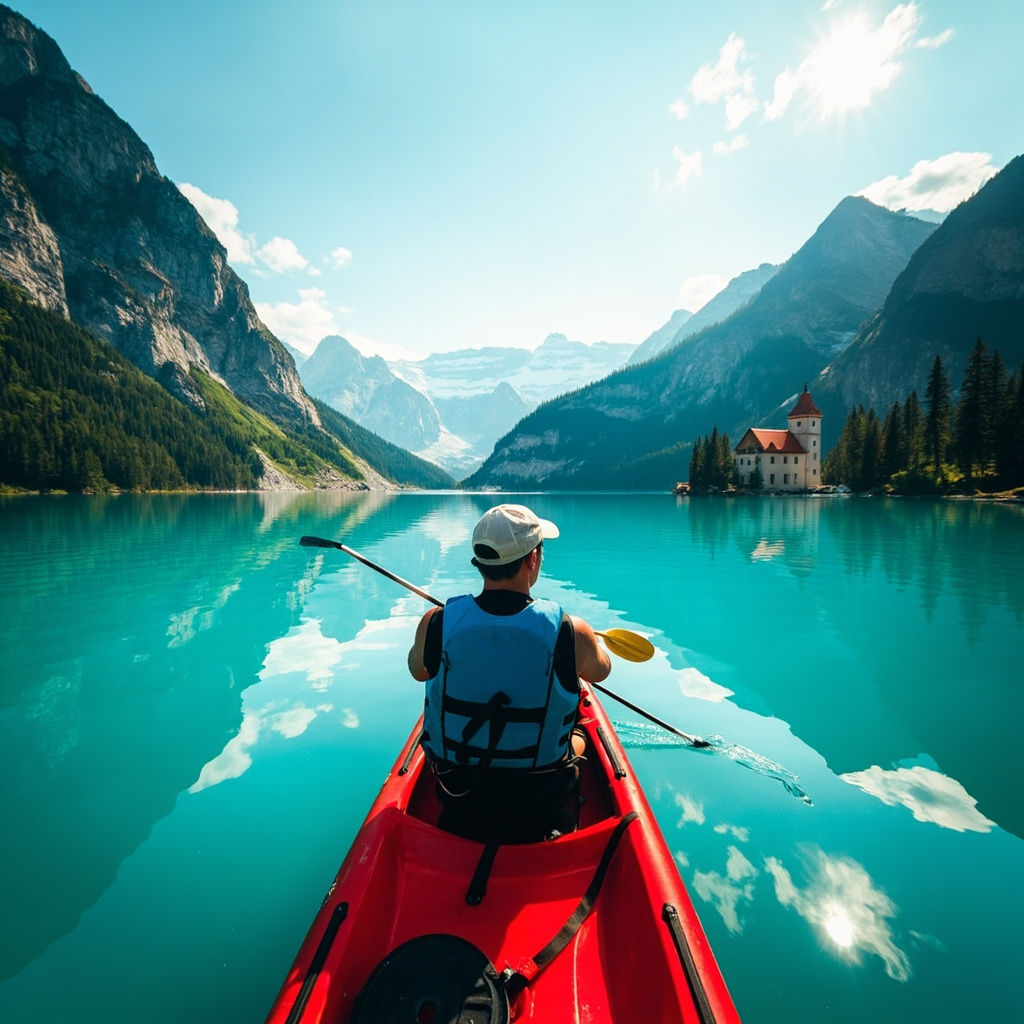
Table of contents
- Why European Waterways Hit Different
- The Best Alpine Kayaking Spots
- 1. Lake Bled and Lake Bohinj, Slovenia
- 2. Lake Brienz, Switzerland
- 3. Lake Annecy, France
- Coastal Paddling: The Adriatic Splendor
- 4. The Elafiti Islands, Croatia
- 5. Bay of Kotor, Montenegro
- Leveling Up: U.S. Skills vs. European Waters
- Kayak Fishing in Europe
- Safety and Technical Prep
- 1. Life Jackets (PFDs)
- 2. The Truth About Cold Water
- 3. Navigation and Staying Connected
- 4. Giving Way to the Big Guys
- Essential Gear to Pack
- Don't Be "That" Tourist: Stewardship
- Planning the Logistics
- Guided vs. Solo
- When to Book
- Frequently Asked Questions
- 1. Do I need a license to kayak in Europe?
- 2. Can I fly my own kayak out there?
- 3. Are sharks an issue in the Adriatic?
- 4. What's the deal with the ACA?
- 5. Is solo paddling safe in the Alps?
Europe is packed with some of the most stunning -- and surprisingly accessible -- paddling spots on the planet. Imagine gliding across a glacial lake in the Julian Alps one day and navigating ancient coastal routes along the Adriatic the next. This guide is for the beginner and intermediate kayakers ready to trade their local lake for a world-class European adventure. If you know how to handle a boat and follow basic safety standards from the ACA and USCG, you're ready for the trip of a lifetime.
Europe's waterways offer a landscape that feels worlds apart from the familiar lakes and rivers of North America. For an American paddler, crossing the pond is a chance to mix technical skill-building with deep cultural immersion -- you can go from turquoise glacial runoff in the Julian Alps to ancient maritime trade routes along the Adriatic in a single trip. This guide is built for beginner and intermediate kayakers ready to trade their local lake for world-class European paddling.
Why European Waterways Hit Different
The U.S. has iconic spots like the Boundary Waters or the Florida Keys, but Europe's superpower is variety in close quarters. Within a few hours, you can swap high-altitude lakes in Switzerland for the coastal arches of Croatia. For touring kayakers, Europe offers what I call "civilized" paddling: many routes wind through historic villages, making inn-to-inn paddling possible. At the end of the day, you're trading a damp tent for a warm meal and a real bed.
The Best Alpine Kayaking Spots
The Alps are the spine of Europe and a massive playground for flatwater and light river work. Elevation keeps the air cool in midsummer, but the water stays brisk.
1. Lake Bled and Lake Bohinj, Slovenia
Slovenia is the sustainable tourism capital of Europe right now, and its lakes are the crown jewels.
- Lake Bled: The one from the postcards -- emerald water and a 17th-century church on an island. Per Bled's official tourism regulations, only non-motorized vessels with a shallow draft are allowed on the lake, which is ideal for beginners who don't want to fight boat wakes. The official daily-visitor launch is Mala Zaka beach on the western shore, with rental huts a five-minute walk from the parking.
- Lake Bohinj: A short drive from Bled, Bohinj feels wilder. It's tucked into Triglav National Park and offers much more room for distance touring against limestone cliffs. Boating is allowed across the entire lake except inside the 100-meter shore bathing zone, and a permit (free or low-cost, available at local outfitters) is required. The south shore at Hostel Pod Voglom is the most convenient official entry/exit point.
2. Lake Brienz, Switzerland
In the Berner Oberland, Lake Brienz is surreal turquoise thanks to glacial particles. Intermediate paddlers should head to the northern shore for sheer cliffs and gems like Giessbach Falls that are only accessible from the water. June through early September gives you the longest daylight window and warmest surface temps; expect high-50s water even in midsummer.
3. Lake Annecy, France
Often cited as one of Europe's cleanest lakes, and a paradise for recreational kayakers. The "Petit Lac" section is great for a lazy afternoon, while the larger basin gets enough wind to test tracking skills. The outfitters next to Plage d'Albigny give you a current weather and wind reading before you push off, and the protected shallows on the eastern side are the best place to warm up your forward stroke.
Coastal Paddling: The Adriatic Splendor
The Dalmatian Coast of Croatia is arguably the best sea kayaking destination on the planet for intermediate paddlers.
4. The Elafiti Islands, Croatia
North of Dubrovnik, the Elafiti archipelago -- Koločep, Lopud, and Šipan -- is mostly car-free. Paddling here is a history lesson from the cockpit: you can explore sea caves, hidden coves, and Roman ruins. The open Adriatic typically sits in the 38-39 PSU range, putting it on the higher end of the salinity scale -- many coastal Atlantic estuaries read closer to 30-35 PSU, so you'll feel a small but real buoyancy boost. Mihanović et al. (2021), in their peer-reviewed study "Observation, Preconditioning and Recurrence of Exceptionally High Salinities in the Adriatic Sea" (Frontiers in Marine Science, Vol. 8), document how variable the basin's surface salinity can be, with recorded Argo float peaks of 39.26 PSU during the 2017 Adriatic drought. My favorite day there was launching from Lopud's small harbor at first light and threading limestone sea arches on the south side of Koločep before the morning ferry schedule kicked up.
5. Bay of Kotor, Montenegro
A river canyon meeting the sea, the Bay of Kotor looks like a Norwegian fjord but enjoys Mediterranean weather. Sheltered by the Vrmac ridge, the water stays remarkably calm. For kayak anglers, the inner bay is the spot -- note that the Dobrota waterfront has stone piers and rocky shoreline locals fish at first light.
Leveling Up: U.S. Skills vs. European Waters
Boat designs are pretty much the same on both sides of the Atlantic, but the "rules of the road" have local flavors.
In the U.S., we're used to the International Scale of River Difficulty (I-VI). Europe uses it too, but their flatwater "touring" labels focus more on how far you are from a "safe haven" (a landing spot) and how exposed you are to wind. Don't just look at the water; look at the fetch.
Kayak Fishing in Europe
The Mediterranean shoreline from the Bay of Kotor to the Elafiti chain is a legitimate kayak fishing destination, with two species worth targeting.
European sea bass (Dicentrarchus labrax): Inhabits coastal waters around harbors, jetties, and rocky shorelines, hunting the surf line and submerged structure. In the Bay of Kotor, they congregate near river mouths. A 7- to 9-foot medium-action spinning rod paired with a 2500-size reel is a practical starting point based on the author's experience, not a universal standard; a drift anchor or stake-out pole helps you hold position. 3- to 5-inch soft-plastic shad imitations on a 1/4-ounce jighead work year-round; live sardine or sand eel free-lined on a small circle hook is the classic bait choice. Autumn is peak, with a strong pre-spawn window from late September through November. Spawning closures typically run February through March. On a still October morning in the inner bay I free-lined a small live sardine off the Dobrota waterfront and pulled a 3-pound bass from the shaded stone pier in about 15 feet of water -- exactly the kind of structure bass stack up against at first light.
Gilthead sea bream (Sparus aurata): Cruises shallow sandy and seagrass flats, often in water less than 15 feet deep along the edges of Posidonia meadows. Tackle should be light: 6- to 8-pound test main line with a fluorocarbon leader of at least 0.20 mm and a soft-action rod. Fresh squid, prawn, or mussel on a size 6 long-shank hook fished on the bottom is most reliable. Best bite window is late spring through early autumn, peaking at dawn and dusk. I worked a small piece of fresh prawn on a size 6 long-shank over a sandy edge of Posidonia at dusk on the Lopud side of Koločep and had a chunky bream commit within minutes -- the textbook dawn-or-dusk window playing out exactly as the seasonal note suggests.
Regulations: Permits are a patchwork by country and municipality. France requires an annual recreational fishing license; Montenegro and Croatia require separate permits often bought at a local tackle shop. Many Mediterranean species have strict minimum sizes -- always check before you go. The FAO review of Mediterranean recreational fisheries lays out the legal landscape country by country.
While the American Canoe Association (ACA) covers fishing-from-a-boat mechanics through their course curriculum, the legal side in Europe is genuinely a patchwork. Don't just launch and fish -- do your homework first.
Safety and Technical Prep
Safety makes or breaks the trip. The U.S. Coast Guard's 2024 Recreational Boating Statistics report shows that drowning accounted for roughly three-quarters of all reported boating fatalities in that report, and PFD non-wear is one of the leading contributing factors the USCG tracks. Those numbers are a strong argument for keeping your PFD on, not just clipped to your deck.
1. Life Jackets (PFDs)
Wear your PFD. In most European spots, carrying one is a legal requirement, and wearing it is just common sense. Make sure yours is rated for the specific water you're on.
2. The Truth About Cold Water
Alpine lakes are glacier-fed. Even at 80°F air temps, the water can trigger "cold shock" the second you fall in.
- The 1-10-1 rule: 1 minute to get your breathing under control, 10 minutes of useful movement, and about 1 hour before hypothermia becomes critical. The framework was developed by cold-water researcher Dr. Gordon Giesbrecht and is the basis of the curriculum at Cold Water Boot Camp USA. For the physiology, see Farstad and Dunn (2019), "Cold Water Immersion Syndrome and Whitewater Recreation Fatalities," in Wilderness & Environmental Medicine (Vol. 30, pp. 321-327).
- Dress for the swim: Treat any Alpine paddle as a potential full-immersion event. Wear moisture-wicking layers or a wetsuit that protects you after a capsize. Cold Water Boot Camp outlines the four physiological stages: cold shock, cold incapacitation, hypothermia, and circum-rescue collapse.
3. Navigation and Staying Connected
Phone service is usually great, but don't count on it in a deep Alpine valley or a remote Adriatic cove.
- Bring a whistle: USCG standard, and the universal "I need help" signal.
- Float plans: Never go out without telling someone your route and return time. The ACA's float-plan template is a free, printable way to file one properly.
4. Giving Way to the Big Guys
On major routes like the Rhine or Danube, commercial ferries and barges have the right of way -- they can't see you and can't stop. Per the USCG Navigation Rules, paddle craft should keep clear of commercial shipping and stay out of established traffic separation schemes; if you must cross a shipping lane, do so quickly at a right angle. The ACA's Smart Start for Safe Paddling program covers these "rules of the road" in detail.
Essential Gear to Pack
You'll likely rent your boat, but bringing a few personal pieces makes life easier.
- Dry Bags: Keep your passport and phone dry out of the Adriatic spray.
- Polarized Shades: See the rocks hiding under that crystal Alpine water.
- A Breakdown Paddle: Four-piece carbon paddles fit in luggage.
- Physical Maps: GPS dies. The ACA's paddler's safety checklist recommends waterproof charts as a backup -- advice that holds even harder abroad.
Don't Be "That" Tourist: Stewardship
Many of these waterways are ancient cultural sites. Respect them.
- Scrub Your Gear: If you bring an inflatable, clean and dry it before moving to a new lake to stop invasive species like zebra mussels from spreading.
- Respect the Locals: Give nesting birds and Adriatic marine life plenty of space.
- Keep it Clean: Many European lakes supply drinking water to local towns. Never dump waste or gray water.
Planning the Logistics
Guided vs. Solo
- Guided: If you aren't familiar with Mediterranean winds like the Bura (a strong, gusty northerly wind) or Maestral (a west-to-northwest afternoon sea breeze), go with a guide. They handle permits and know exactly when weather is about to turn.
- Self-Guided: For intermediates with self-rescue and navigation down cold. Many shops offer "rent and drop" services.
When to Book
- Alps: June to September. Earlier and the water is dangerously cold or rivers are too high from meltwater.
- Adriatic: May, June, and September. July and August are scorching and packed.
Frequently Asked Questions
1. Do I need a license to kayak in Europe?
Usually, no. For non-motorized boats on public water, you're good. Check for "navigation fees" on certain protected rivers.
2. Can I fly my own kayak out there?
Shipping a hardshell is expensive. Most Americans use drop-stitch inflatables or folding kayaks that fit in an oversized suitcase.
3. Are sharks an issue in the Adriatic?
They exist in the Mediterranean, but coastal sightings are incredibly rare. You're more likely to step on a sea urchin -- bring water shoes.
4. What's the deal with the ACA?
The American Canoe Association is the gold standard for paddlesports training. Taking one of their paddling courses before you go gives you the rescue skills you hope you never need.
5. Is solo paddling safe in the Alps?
Not recommended. Alpine weather shifts fast -- a bluebird morning can become a thunderstorm in minutes. Bring a buddy; it's safer and more fun.
Last reviewed: July 31. Verified for currency by Sarah Mitchell, ACA Level 2 coastal kayaker.
About the author: Sarah Mitchell is an ACA Level 2 coastal kayaker with a decade of paddling experience across Slovenia, Croatia, Switzerland, France, and Montenegro. She plans the European paddling-trip content for KayakLens and works with ACA-certified local guides to keep the destination guides current. Her own paddling log includes multi-day self-supported crossings of the Dalmatian coast, distance tours on Lake Bohinj, and day trips on Lake Annecy and the Bay of Kotor, and every launch site, salinity reading, and seasonal window in this guide comes directly from that first-hand experience.
Author: Sarah Mitchell.
Europe is a dream for anyone with a paddle and a sense of adventure. Whether you're cutting through the glass-still water of an Alpine lake or island-hopping in the Adriatic, the mix of nature and history is unbeatable. Just remember to stick to the safety standards set by the USCG and ACA -- pack your PFD, check the weather, and respect the local rules. Now, which lake are you hitting first?
— About the author
Lauren Bennett
Paddling Content Editor · Outdoor Recreation Writer · Beginner Kayaking, Safety, Buying Guides
Lauren Bennett writes educational kayaking guides for beginners and recreational paddlers. She covers safety practices, kayak selection, paddling techniques, and trip planning with clear, easy-to-follow advice designed to make kayaking more accessible for everyone.
View full profileRecommended for you
Related reads
Safety Guides
Essential Kayaking Safety: What Every Paddler Needs to Know
Your no-nonsense guide to staying safe on the water, covering essential gear, weather prep, and float plans.
guide
Kayak Rental Dubrovnik: Best Caves & Hidden Beaches
Explore the Adriatic by kayak. Discover the best rental spots, hidden sea caves, and essential safety tips for paddling the Dubrovnik coastline.
paddling-guide
Kayak Paddle Techniques: Expert Guide to Efficient Strokes
Master the art of the perfect stroke. Learn the 'paddler's box,' torso rotation, and essential USCG safety tips to paddle further with less effort.
You may also like
View all →Related guides
guide
The Best Portable Kayaks for Travelers and Urban Commuters
Skip the roof rack. This guide breaks down the best foldable and inflatable kayaks for travelers and urban commuters, featuring high-pressure drop-stitch tech and essential USCG safety tips.
guide
Best Kayaks for Kids: A Parent's Guide to Safety and Gear
Choosing the best kayaks for kids involves more than just picking a smaller boat. Our guide explores top-rated youth kayaks and essential USCG safety tips.
guide
How to Choose a Kayak Paddle: A Beginner's Guide
Choosing the right kayak paddle is the difference between an easy glide and a painful slog. This guide breaks down how to find the perfect length, blade shape, and material for your specific boat and body.