Back to guidesSafety Guides
Essential Kayaking Safety: What Every Paddler Needs to Know
Don't hit the water without a plan. From USCG-approved PFDs to the non-negotiable float plan, here is the essential safety breakdown every kayaker needs to stay out of trouble.
5 min readLast reviewed
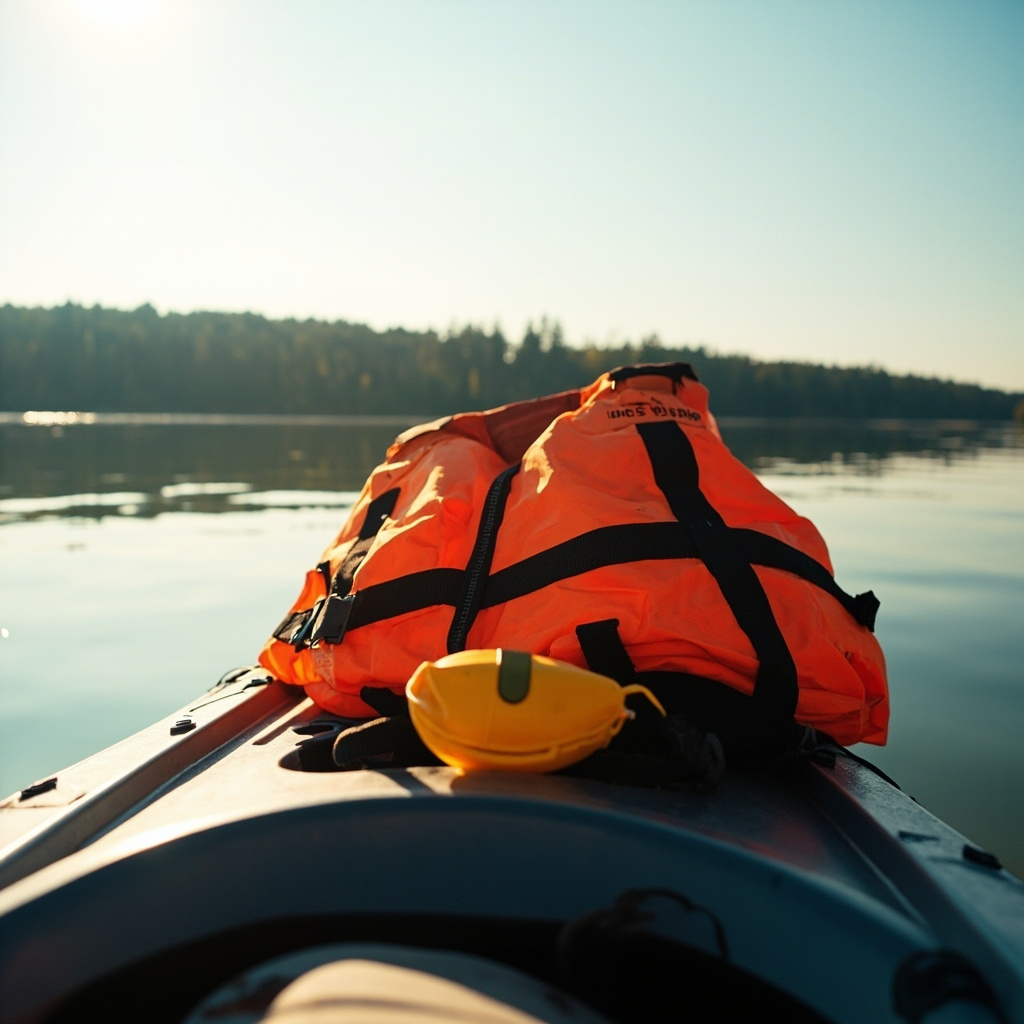
Table of contents
- The Gear That Actually Matters
- Respect the Elements
- The Float Plan and Staying Found
- Navigation, Charts, and Waterway Markers
- Self-Rescue: What to Do When You Go Over
- Entrapment Hazards: When the Cockpit Becomes a Trap
- Signaling Beyond the Whistle
- Paddling With Others: Group Safety Basics
- Safety Equipment Comparison
- Frequently Asked Questions
- About the Author
Kayaking is one of the best ways to clear your head, but nature doesn't always play nice. To stay safe, you need more than just a paddle -- you need a solid grasp of the basics. This guide breaks down the essential protocols that keep a great day on the water from turning south.
Kayaking is easily one of the best ways to clear your head and explore the outdoors, but let's be real -- the water doesn't care how much you're enjoying yourself. Safety isn't just a box to check; it's the foundation that makes the whole trip possible. Whether you're drifting across a glassy pond or navigating a river with a bit of a bite, sticking to these protocols keeps a fun day from turning into a rescue mission.
The Gear That Actually Matters
If you take away nothing else, remember this: the United States Coast Guard (USCG) isn't kidding about personal flotation devices (PFDs). The USCG requires that a recreational vessel carry a USCG-approved wearable PFD for each person on board, and they strongly recommend wearing it at all times while underway -- not just stowed under a bungee. A life jacket only works if you're actually wearing it. It doesn't matter if you were on the swim team or if the water is only four feet deep -- accidents happen in the blink of an eye. By the time you're in the water, it's too late to scramble for a vest tucked under your bungees. Clip it on, cinch it tight, and leave it there. Pair the vest with a properly fitting inflatable or foam PFD that you have actually tested in shallow water, because a PFD you have never buckled is a PFD you will not buckle correctly in a panic.
While you're at it, tether a loud whistle to that vest. The USCG Navigation Rules distinguish maneuvering and warning signals from distress signals, so learn the patterns in the signaling section below instead of assuming that any single blast means danger. A pealess whistle, a bail-out bilge pump, and a spare paddle round out the minimum kit that belongs on every boat, every trip.
Respect the Elements
Before you even lift your boat off the rack, you need to know what the sky and the water are doing. Check the forecast, but keep your eyes open. High winds and sudden lightning don't care how far you are from the launch point, and a forecast that calls for "ten knots" can easily turn into a whitecapped mess by the time you're a mile from the ramp. One of the biggest mistakes new paddlers make? Dressing for the sun instead of the water temperature. If you capsize, that 75-degree air won't save you from the "cold water shock" of a 55-degree lake. I have watched students in a Hood Canal Smart Start clinic shrug off a 58-degree water temperature in July because the air was 78 -- and then struggle to keep their hands on the paddle during a T-rescue drill ninety seconds later.
The American Canoe Association (ACA) codifies this in its 60/120 rule, summarized in the ACA's Best Practices for Paddlers: if the water temperature is below 60 degrees Fahrenheit, or the combined air and water temperature is below 120 degrees Fahrenheit, participants must wear a wetsuit, drysuit, or other appropriate insulation. Cold water steals your ability to swim, self-rescue, and even grip a paddle long before hypothermia sets in, so the right insulating layer is not optional safety gear in shoulder seasons or northern lakes. Understanding how to choose a kayak paddle also ensures you have the right leverage to handle tough conditions without burning out your shoulders halfway through a crossing. Think of proper clothing as insurance you hope you never have to use.
The Float Plan and Staying Found
Don't be the person who disappears into the horizon without telling a soul where they're going. A float plan sounds formal, but it's really just a text or a note to someone reliable. The USCG float planning page walks paddlers through the basics: where you're launching, your planned route, your expected return time, and what your contact should do if you don't check in. The USCG notes explicitly that a float plan is equally effective for the owner of a ten-foot kayak as it is for a 90-foot sport-fishing boat, and that all paddlers -- not just the boat operator -- should know that one has been filed.
A float plan is also a core part of any kayak fishing checklist to ensure someone knows your whereabouts. Tell them where you're launching, where you're heading, and exactly when they should expect a "home safe" message. I keep my own float plan honest by setting the check-in thirty minutes after my planned return, not at the planned return itself -- it gives me a buffer for slow currents or extended landings and still leaves a reasonable window for someone to raise the alarm. If you aren't back by then, they'll know exactly where to send the cavalry. Once you're out there, keep your head on a swivel. Watch the currents, stay hydrated, and don't underestimate the sun -- heat exhaustion can sap your strength just when you need it most. Pair your float plan with a small dry bag holding a phone in a waterproof case, a basic first-aid kit, and a flashlight or headlamp in case you're out longer than planned.
Navigation, Charts, and Waterway Markers
Good paddlers don't just follow the shoreline; they know where they are on it. The USCG Navigation Rules and the U.S. Aids to Navigation System cover both the rules of the road on the water and the buoys, beacons, and daymarks that mark channels, hazards, and safe water. Even on a small pond, recognizing a red "nun" buoy (kept on your starboard when returning toward shore) or a green "can" buoy (kept on your port) can keep you out of a shoal or a propeller-eating rock bed.
Start simple. Carry a waterproof chart or a phone-based nautical chart app, and learn to take a basic compass bearing before you launch. A handheld GPS or a GPS-enabled phone is a fine backup, but never trust it as your only navigation tool -- batteries die, screens fog, and cell coverage disappears the moment you paddle behind a cliff or a marsh. Practice dead reckoning: note your launch heading, your pace, and the time, then track your drift as wind and current push you sideways.
For crossing and meeting situations, the Amalgamated International and Inland Navigation Rules are surprisingly short and worth skimming once. Rule 15, in the official Navigation Rules PDF, puts the give-way burden on the vessel with the other on its starboard; Rule 14 says head-on vessels both alter course to starboard. As a paddler you are the most maneuverable craft in nearly every encounter with a powered vessel, so yield early, cross behind, and signal with a paddle raise rather than relying on a motorboat to read your mind. The ACA's Smart Start for Safe Paddling curriculum includes a dedicated module on waterway hazard identification and trip planning that pairs well with any local chart.
Self-Rescue: What to Do When You Go Over
Gear and float plans are only half the safety picture. The other half is knowing what to do when a paddle slips, a wake catches your edge, or a sudden gust flips you into the water. The ACA's flatwater kayak safety and rescue skills guide lays out three skills every paddler should be able to perform before paddling out of sight of shore:
- Wet exit. Practice releasing your spray skirt and pushing yourself out of the cockpit while underwater in a controlled setting, ideally with a certified instructor. The first time I tried one in cold water, my hands shook so hard I missed the grab loop twice -- that one drill is the reason I now run a "wet exit station" at every Smart Start clinic I teach. Once you trust your hands to find the grab loop on a skirt without panicking, a real capsize becomes a manageable event instead of a worst-case scenario.
- Solo re-entry. With or without a paddle float, you should be able to get back into your kayak from deep water. Even imperfect solo re-entry, paired with a solid PFD, gets you out of the swim and back into a stable platform where you can paddle to shore. Practice with the paddle float deployed until the steps feel boring, then practice without it.
- T-rescue (or assisted rescue). When you paddle with a buddy, the swimmer stays with the upside-down boat while the rescuer pulls the bow across their own deck to form a "T," drains the cockpit, and helps the swimmer re-enter. This is the rescue you'll actually use on group trips, so practice it until it feels boring.
If you're not confident in these skills yet, the ACA and most local outfitters run short rescue clinics that are well worth an afternoon. A paddler who can wet-exit and re-enter on their own is dramatically safer than one who only hopes it never happens. Reviewing solid kayak paddling technique also keeps you upright longer by making your forward stroke and bracing more efficient, which is the cheapest capsize prevention you can buy.
Entrapment Hazards: When the Cockpit Becomes a Trap
A capsize becomes a recovery when you can get out of the boat; a capsize becomes a drowning when you cannot. Sea Kayaker magazine defines entrapment as any scenario where a capsized paddler is held underwater -- by the spray skirt, by their own body wedged in the cockpit, or by an external object in the water. It is the scenario nobody wants to talk about, which is exactly why it deserves a paragraph of its own.
Most entrapment falls into three buckets. The first is the skirt itself: the grab loop hides, the cockpit rim is too tight, or the paddler simply forgets it is there. The second is body-pin: a foot or knee wedges between the seat and hull, especially in boats with bulkheads or molded foot braces that have not been adjusted for the paddler. Adjust your foot pegs before every launch and never paddle in a boat that fits someone else's body. The third is environmental: a low-volume boat in current can pin against a strainer, submerged rock, or undercut ledge and hold a swimmer under. If your route includes a known strainer or pour-over, portage it on your first run until you know the line.
The simplest prevention is also the most ignored: never paddle out of your depth without a properly fitting, tested spray skirt and a practiced wet exit. If you paddle a recreational sit-on-top, you have removed one of the most common entrapment risks along with the spray skirt itself, and you trade it for some cold-water exposure and a harder re-entry. Either is a reasonable choice; the unsafe choice is a skirt you have never tested.
Signaling Beyond the Whistle
A whistle on your PFD is the bare minimum for being heard. For real signaling, think in layers. A small mirror or a reflective surface can flash a beam to a rescue boat far beyond whistle range, and a waterproof flashlight or strobe doubles as a navigation light at dusk and a distress signal at night. The USCG's Annex IV list of international distress signals includes orange smoke, handheld red flares, and an SOS signal made by any signaling method: three short, three long, three short (· · · — — — · · ·), repeated. Do not confuse SOS with the Rule 34 danger-or-doubt signal: at least five short, rapid whistle blasts when vessels in sight are approaching and one vessel does not understand the other's actions or doubts that enough is being done to avoid a collision.
Before you load any of this into your dry bag, take a state-approved basic boating safety course. Many USCG Auxiliary and ACA partner courses cover the legal distress signals for your state, what "mayday" actually means on a VHF radio, and when to call the Coast Guard versus 911. A two-hour online class is one of the highest-leverage safety moves a new paddler can make, and it shows up in your wallet too -- many insurance providers offer a small discount for completed boating safety education.
Paddling With Others: Group Safety Basics
Solo paddling is fine on a familiar, sheltered pond in calm conditions, but the moment you head out on moving water, open coast, or a large lake, group protocols start to matter. Keep the weakest or least experienced paddler in the middle of the group, run a sweep boat at the back, and agree on hand signals before you launch. Stay within sight of each other, and call a break every thirty to forty-five minutes so the group can count heads, hydrate, and adjust layers.
If you're paddling into wind for an outward leg, plan to come back with the wind at your back or off your quarter. Fighting a headwind on a tired body is one of the most common ways paddlers get caught out past their comfort zone. Make sure everyone in the group has filed a float plan, even if it's just a "we'll be back by 4 p.m., call this number if we're not" text. For paddlers who want a deeper safety foundation, our guide to kayak fishing safety essentials covers the gear and habits that matter most when the boat is your platform for hours at a time.
Safety Equipment Comparison
| Feature | Importance | Recommended Source |
|---|---|---|
| PFD | Non-Negotiable | USCG Approved |
| Signal Whistle | High | USCG sound-signal rules |
| Dry Bag | Essential | Protects phone/radio |
| Hydration | Critical | 1 liter per 2 hours |
| Compass or Chart | High | Waterproof, backup to GPS |
| Paddle Float | Recommended | Aids solo re-entry |
Frequently Asked Questions
Do I really need a PFD if I am a strong swimmer? Absolutely. Even Olympic swimmers cannot suppress the involuntary "gasp reflex" that fires the instant cold water hits the skin -- peer-reviewed research on cold-water immersion shows that sudden cutaneous cooling produces an immediate inspiratory gasp, hyperventilation, and loss of breathing control long before hypothermia sets in. A PFD keeps your head up when your muscles stop listening to your brain, and the USCG requires one for every person on board a recreational vessel.
What is a float plan? It's your safety net. It's a simple summary of your route and timeline left with a friend on land. If you don't check in by the agreed time, they call for help. The USCG float planning page walks you through the format and offers a free fillable PDF.
How should I dress for kayaking? Always dress for the swim, not the paddle. The ACA's 60/120 rule is the rule of thumb: if the water is below 60 degrees Fahrenheit, or the combined air and water temperature is below 120 degrees Fahrenheit, a wetsuit or drysuit is the right call to prevent the kind of cold-water incapacitation that turns a swim into an emergency.
What is a wet exit, and why should I practice it? A wet exit is the controlled release of your spray skirt and cockpit so you can escape an overturned kayak. Practicing it in a safe setting with an instructor turns a real capsize from a panic moment into a manageable one, and it's the foundation for every other self-rescue skill.
Can I rely on my phone's GPS for navigation? Use it as a backup, not your only tool. Batteries die, screens fog, and cell coverage is unreliable on the water. Carry a waterproof chart and know how to take a basic compass bearing so you can find your way home without a signal.
About the Author
This guide is reviewed by Sarah Mitchell, an ACA-certified Level 2 kayak instructor with experience coaching flatwater and coastal paddlers across the Pacific Northwest and the Great Lakes. She has led ACA Smart Start for Safe Paddling clinics and contributes regularly to KayakLens on safety fundamentals. Her firsthand notes in this guide come from a Hood Canal Smart Start clinic, a cold-water wet-exit drill in which she missed the grab loop twice, and the 30-minute check-in buffer she uses for her own float plans. Her background is in outdoor education, and she has logged hundreds of cold-water paddling days, including guided trips where students practiced wet exits and T-rescues in real conditions.
Safety is about more than just the gadgets in your dry bag; it's about the respect you show the water. Use common sense, listen to the USCG guidelines, and always make sure someone knows your plan. Now, get out there and enjoy the view -- just make sure you're prepared to handle whatever the current throws your way. Do you have your whistle clipped to your PFD yet?
— About the author
Lauren Bennett
Paddling Content Editor · Outdoor Recreation Writer · Beginner Kayaking, Safety, Buying Guides
Lauren Bennett writes educational kayaking guides for beginners and recreational paddlers. She covers safety practices, kayak selection, paddling techniques, and trip planning with clear, easy-to-follow advice designed to make kayaking more accessible for everyone.
View full profileRecommended for you
Related reads
guide
How to Choose a Kayak Paddle: A Beginner's Guide
Stop guessing your paddle size. This expert guide explains how to choose the right kayak paddle length and style based on boat width, your height, and paddling technique.

Guides
The Essential Kayak Fishing Checklist for First-Timers
An essential printable checklist for first-time kayak anglers covering safety, gear, and tactics.
review
Inflatable PFDs for Kayak Fishing: Top Picks
Ditch the bulk. We field-tested the best inflatable PFDs for kayak fishing to find the perfect balance of comfort, safety, and "forget-you're-wearing-it" design.