Back to comparisonsComparison
Pedal Kayak vs Paddle Kayak: Which Is Right for You?
Discover the ultimate breakdown of pedal vs. paddle kayaks. Learn about efficiency, biomechanics, and which propulsion style fits your fishing or touring needs.
5 min readLast reviewed
Table of contents
- The Biomechanics of Propulsion: Legs vs. Arms
- Pedal Drive Efficiency
- The Paddle Stroke and Core Engagement
- Pedal Kayaks: The Hands-Free Revolution
- Pros of Pedal Kayaks
- Cons of Pedal Kayaks
- Paddle Kayaks: The Versatile Classic
- Pros of Paddle Kayaks
- Cons of Paddle Kayaks
- Side-by-Side Comparison
- Safety and Navigation: Don't Skip This
- PFDs Are Mandatory
- Be Visible
- Watch the Horizon
- Specialized Needs: Fishing vs. Touring
- The Angler's Perspective
- Long-Distance Touring
- Frequently Asked Questions (FAQ)
- 1. Do I still need a paddle if I have a pedal kayak?
- 2. Can I use a pedal kayak in the ocean?
- 3. Is a pedal kayak really faster?
- 4. How deep does the water need to be?
- 5. Can I just add a pedal drive to my old kayak?
Propulsion technology has split the kayaking world into two distinct camps: those who use their arms and those who use their legs. Whether you're an angler looking for hands-free stability or a recreationalist seeking a full-body workout, understanding the technical differences between these two systems is essential before you drop a few thousand dollars on a new boat.
The choice between a pedal-drive system and a traditional paddle is the biggest fork in the road for modern kayakers. Back in the late '90s, the first pedal drives were seen as a bit of a gimmick. Fast forward to today, and they've practically taken over the North American fishing scene. But don't let the hype fool you -- the classic paddle still reigns supreme in plenty of environments.
Picking your propulsion isn't just about how much cash you want to drop or how fast you want to go. It's about your body, the specific spots you plan to explore, and what you actually want to get out of your time on the water. Let's dig into the technical grit, the physical toll, and the hidden costs of both systems so you can figure out what truly deserves a spot in your garage.
The Biomechanics of Propulsion: Legs vs. Arms
At its core, this is a battle of muscle groups. The American Canoe Association (ACA) points out that traditional paddling is a high-engagement activity that leans on core rotation and "push-pull" dynamics. Pedal kayaks, on the other hand, let your "big movers" -- the quads, hamstrings, and glutes -- do the heavy lifting.
Pedal Drive Efficiency
Let's be real: humans are basically built like bicycles. We're much better at using our legs for long, steady cardio than our arms. Pedaling a kayak is essentially cycling on water, which lets you maintain a clipping pace that would leave most casual paddlers gasping for air. If you're nursing a shoulder injury or just have limited upper-body mobility, a pedal drive is your ticket to staying on the water without the "day-after" ache of repetitive overhead movements.
The Paddle Stroke and Core Engagement
Sure, paddling is more work for beginners, but it's a hell of a full-body workout. A proper paddle stroke -- the kind taught in ACA coastal courses -- isn't just about arm strength. It starts at your feet (bracing against the pegs), moves through your core, and finishes in your back. You're building trunk stability and rotational power, which is great for your posture and overall fitness. If you are going this route, knowing how to choose a kayak paddle for your height and boat width is critical for efficiency.
Pedal Kayaks: The Hands-Free Revolution
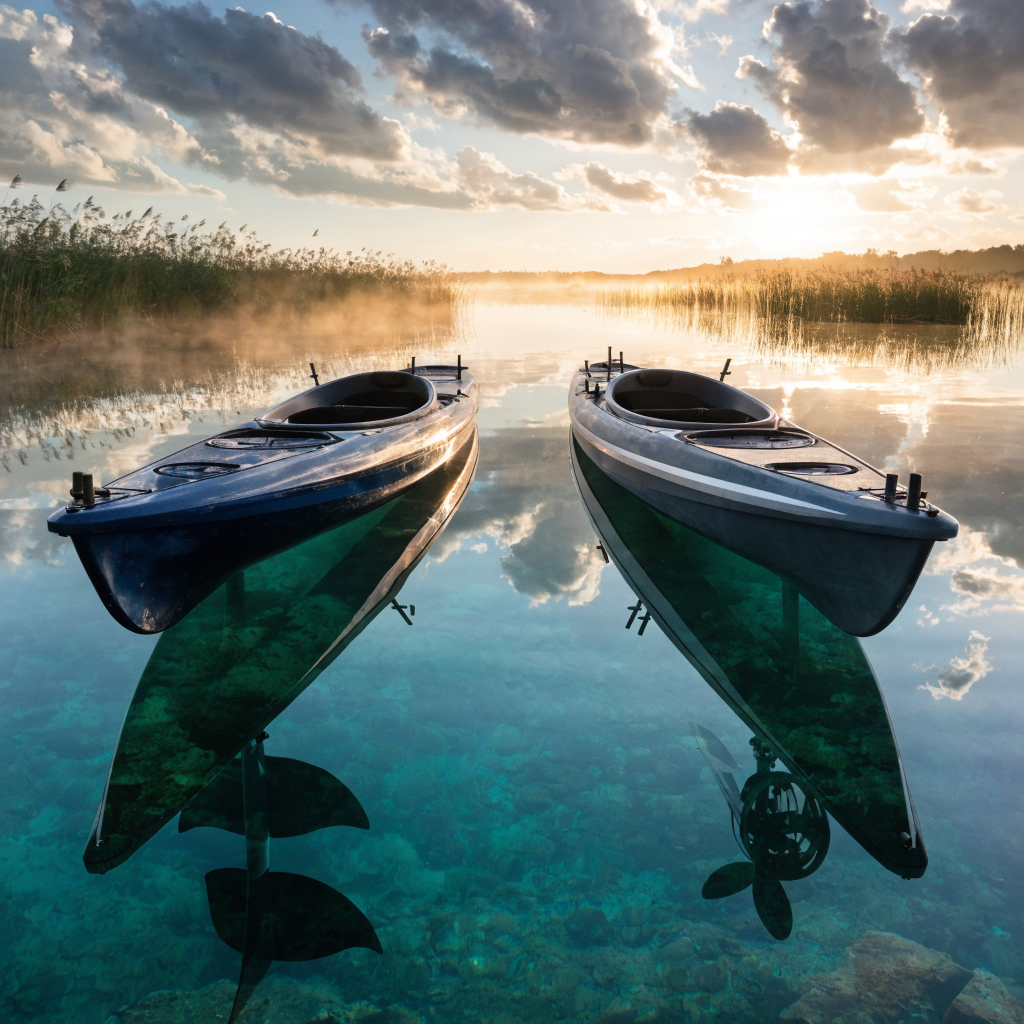
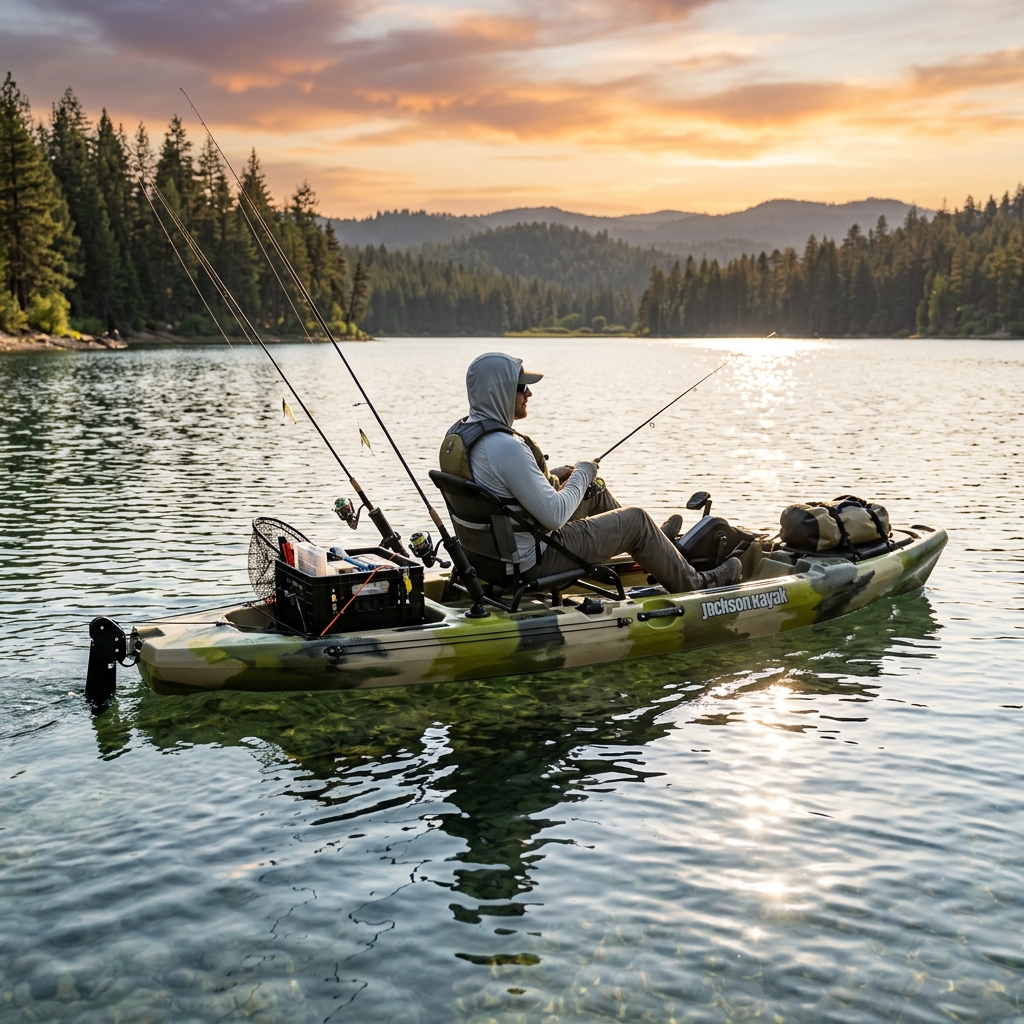
Most pedal setups fall into two camps: Rotational (Propellers) and Oscillating (Fins). Propellers are great because you can pedal backward to reverse instantly -- perfect for staying put when the wind tries to push you off your honey hole. Fin systems, like the Hobie MirageDrive, usually handle shallow water better because the fins can "flutter" or tuck flat against the hull. Major brands often compete on these drive types; for instance, many anglers find themselves debating Hobie vs Old Town Pedal Kayaks when looking for the highest performance.
Pros of Pedal Kayaks
- True Hands-Free Fishing: This is why anglers love them. You can nudge your position, hold a drift, or fight a stubborn fish while still keeping the boat moving.
- Serious Range: Most people can sustain a 3.5 to 4.5 mph pace for miles. You'll cover more ground with way less exhaustion.
- Holding Your Spot: If you have instant reverse, you can make tiny adjustments in current or wind to stay "on the spot" without ever putting down your rod.
Cons of Pedal Kayaks
- Mechanical Moving Parts: A pedal drive is a machine. It has gears, cables, and bearings that need love. You've got to rinse it, grease it, and carry spare shear pins or chains just in case.
- The Depth Issue: You usually need at least a foot to 18 inches of clearance. If you're hitting rocky rivers or weedy shallows, you have to pull the drive up or risk a very expensive "crunch" sound.
- Heavy Lifting: With reinforced hulls and the drive itself, these boats are heavy. Many push past 100 lbs empty, so good luck tossing one on a high SUV roof by yourself.
Paddle Kayaks: The Versatile Classic
The traditional paddle kayak is still the gold standard for simplicity, getting into the "skinny" water, and technical handling.
Pros of Paddle Kayaks
- Shallow Water Kings: A paddle boat can skim over three inches of water, slide over sunken logs, and glide through lily pads that would chew up and spit out a pedal drive.
- Surgical Maneuverability: If you know your strokes -- draws, prying, and sweeps -- you can move a boat sideways or spin it on a dime.
- Low Maintenance: No moving parts to break. It's light, reliable, and you can store it on a simple wall rack without worrying about mechanical failure.
Cons of Paddle Kayaks
- The "Paddle Management" Shuffle: If you're a photographer or an angler, the constant "drop the paddle, grab the gear" routine is a pain.
- Upper Body Burn: Facing a stiff headwind at the end of a long day? Your arms and shoulders are going to feel it. This becomes a safety issue if you're miles from the launch and the weather turns nasty.
Side-by-Side Comparison
| Feature | Pedal Kayak | Paddle Kayak |
|---|---|---|
| Primary Propulsion | Legs (Cycling/Stepping) | Arms & Core (Rotating) |
| Average Speed | 3.5 – 5.0 mph | 2.5 – 4.0 mph |
| Water Depth Req. | 12"+ (to avoid damage) | 3" - 6" |
| Hands-Free? | Yes | No |
| Avg. Weight | 85 – 140 lbs | 40 – 80 lbs |
| Maintenance | High (Lubrication/Rinsing) | Very Low |
| Drafting/Stealth | Potential mechanical noise | Nearly silent |
| Best Environment | Open lakes, salt flats, deep rivers | Creeks, rocky rapids, weedy ponds |
Safety and Navigation: Don't Skip This
It doesn't matter how you move the boat; safety isn't optional. The U.S. Coast Guard (USCG) looks at both pedal and paddle kayaks as "vessels under oars" (Rule 25).
PFDs Are Mandatory
A USCG-approved Life Jacket has to be on the boat, period. We recommend a Type III or Type V vest. If you're in a pedal kayak with one of those high-back "stadium" seats, look for a "high-back PFD." They're designed so the foam sits above the seat back, which keeps the vest from pushing up into your chin.
Be Visible
If you're out between sunset and sunrise -- or in the fog -- you MUST have a white light (like a 360-degree LED or a solid flashlight) to signal other boats. Since kayaks sit so low in the water, a bright safety flag is a smart move in high-traffic areas.
Watch the Horizon
Check the wind and tides before you even load the truck. A 15-mph headwind is no joke. It can make a return trip feel impossible for a tired paddler and will drain a pedaler's legs fast. Always tell someone your "Float Plan" -- where you're going and exactly when you'll be back.
Specialized Needs: Fishing vs. Touring
The Angler's Perspective
Tournament kayak fishing has shifted almost entirely toward pedals. Being able to "troll" at a set speed while holding your rod or staying pinned against a bridge piling is a total game-changer. If you are looking to enter this world on a budget, you might check out the best pedal kayak for fishing under $2,500. But if you're a "skinny water" specialist chasing redfish in 4 inches of water or Smallmouth in a rocky creek, stick to the paddle. In those spots, a pedal drive is just an anchor waiting to snag.
Long-Distance Touring
For multi-day trips, paddle kayaks often take the win. Pedal drive wells eat up a lot of room in the center of the boat. A traditional sea or touring kayak gives you massive, clear hatches in the bow and stern for gear. Plus, if you have to portage (carry the boat over land), you'll hate yourself for bringing a 100-pound pedal boat.
Frequently Asked Questions (FAQ)
1. Do I still need a paddle if I have a pedal kayak?
Yes. No exceptions. Both the USCG and every pro on the water will tell you to carry a backup. Drives fail -- chains snap, pins shear. Plus, you'll eventually hit water that's too shallow for the drive.
2. Can I use a pedal kayak in the ocean?
Absolutely, but you better be religious about maintenance. Saltwater destroys metal and bearings. Rinse that drive unit with fresh water the second you get home and keep it greased up with marine-grade lubricant.
3. Is a pedal kayak really faster?
Usually, yes. While a pro in a sleek sea kayak can fly, the average person in a pedal boat will outdistance a paddler in a similar boat. Legs simply have more stamina than arms.
4. How deep does the water need to be?
Most propeller drives need 12 to 18 inches. Fin-style drives can "short stroke" in about 6 inches, but you really want a foot of water to get any real power.
5. Can I just add a pedal drive to my old kayak?
Usually, no. Pedal boats are built with a specific "well" in the hull and reinforced floors to handle the stress. Trying to mod a standard kayak to take a pedal drive is usually a recipe for a leaky boat and a lot of frustration.
Deciding between a pedal or paddle kayak really comes down to where you plan to launch and what your body can handle. If you're an angler who wants to stay on the move while casting in deep water, the pedal drive is an absolute dream. If you're looking to sneak into narrow, shallow creeks or you just love the rhythm of a good stroke, stick with the paddle. Just make sure you've got your PFD on before you push off -- the water doesn't care how you're powered once you're in it.
— About the author
Olivia Hayes
Kayak Comparisons, Buyer Guides · Outdoor Equipment Analyst · Kayak Comparisons, Buyer Guides
Olivia Hayes researches and reviews kayaks from leading manufacturers including Hobie, Old Town, Perception, Bonafide, Native Watercraft, and Wilderness Systems. She specializes in side-by-side product comparisons that evaluate hull design, pedal systems, comfort, stability, storage, and overall value. Her goal is to help readers make informed purchasing decisions through detailed, unbiased analysis based on manufacturer specifications and extensive market research.
View full profileRecommended for you
Related reads
 guide
guideHow to Choose a Kayak Paddle: A Beginner's Guide
Stop guessing your paddle size. This expert guide explains how to choose the right kayak paddle length and style based on boat width, your height, and paddling technique.
 Comparison
Hobie vs Old Town Pedal Kayaks: Which Reigns Supreme?
A deep-dive comparison between Hobie and Old Town pedal kayaks, focusing on real-world performance, drive durability, and which system fits your fishing style.
 Kayaking
Best Pedal Kayak for Fishing Under $2,500: Top Picks
A no-nonsense look at the best pedal fishing kayaks under $2,500. We tested drive efficiency, hull stability, and real-world durability to find the best value for your money.